2 hours ago
How realistic is a digital economy in Albania?
Periskopi(9 months ago)
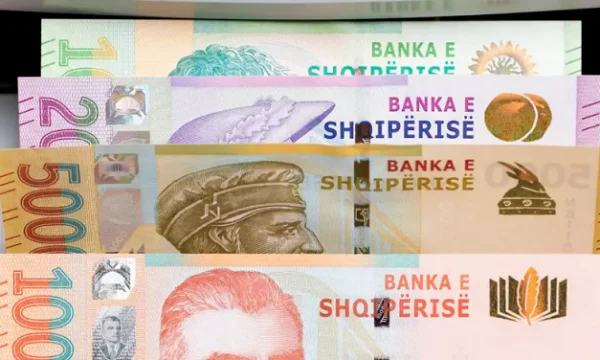
(9 months ago)Albanian Prime Minister Edi Rama recently announced an ambitious plan: it will turn Albania into the world's first state that does not use the “cash” until the end of this decade. Prime Minister Edi Rama won the fourth governing mandate in May of this year, promising citizens that he would membership [...]
Albanian Prime Minister Edi Rama recently announced an ambitious plan: it will turn Albania into the world's first state that does not use the “cash” until the end of this decade.
Prime Minister Edi Rama won the fourth governing mandate in May of this year, promising citizens that he would join the European Union by 2030.
In mid-July he announced another major plan, according to him feasible within the same period of time. “We have an ambition: by the end of this decade, Albania will be a society that does not use “cash” money, which means that all financial actions and transactions will be fully digital” unjustly declared Rama in front of representatives start-up and technological and innovative sector, during a meeting called “Albania 2030 vision towards European integration”.
“What we need is more qualification” Rama followed, stressing that the means necessary for digital Albania currently exist. “I believe that if we properly manage the path to this ambition, the goal is completely attainable and will relieve the country of a heavy burden of outdated practices and the inefficiency that burdenes on daily life” he said.
It all sounds very simple and straightforward. But how realistic is it?
I prefer to pay in cash”: In daily life, Mimoza A., a 62-year-old from Tirana, says that the only cases when she uses the bank card is when she withdraws her salary from the ATM near the house.
It's not common for people my age who pay by card when buying food or at the hair shop. I'd rather pay cash and so I'll always do” She told Deutsche Welle.
Mimoza is not the only one who thinks so. Like that, most Albanian citizens think.
Dream ambition?
When Albania “cuffed” of the dictatorial regime 35 years ago, the country lacked a modern banking and financial system. Progress during the transition was slow, and for the first time, ATMs were used in 2004.
Arben Malaj, who served as finance and economics minister from 1997 to 2005, currently senior finance and teacher expert, thinks Rama's ambition for a digital economy is populism.
Malaj says there are a series of factors that make a reform difficult without “ ” in the next five years.
The high record of informality, especially in the agricultural sector that represents a considerable part of Bruto's domestic production, is much higher than in any other region. A large part of the population lives in rural areas. Also, most of the money from immigrants is sent outside official payment channels. And Albania's leading trade partners -- Turkey, Greece and Italy -- also have high levels of informality” -- says Malaj for DW.
He warns that any progress in limiting cash requires major investments in cyber security.
Dangerous “Ambition”
Cyber security expert Besmir Semanaj considers Prime Minister Rama's plan not only unrealistic, but also dangerous “”.
Semanaj pays attention to cyber mass attacks on government institutions in recent years. In their mark was e-Albia, official pages of the Parliament and the Institute of Statistics.
According to expert Semanaj, these attacks, among the largest in the region, clearly indicate that “Albania is very exposed to these threats, and there is still no strong resistance architecture to protect critical infrastructure”.
Even the most developed countries in Europe, such as Sweden or Norway, are reevaluating the need to keep a minimum cash in circulation, precisely for security reasons and emergency and cyberattacks or” he told DW.
So, while the most digitized nations are guarding “forecasts offline”, Albania claims it will become 100% digital in less than ten years, without building basic cyber defence capacities. An economy totally dependent on digital systems, with no alternative, is a vulnerable economy and exposed to total paralysis by a virus or bruckout” argues Semanaj.
“
Hazis I. has been working in the tourism sector for about 40 years. Today it manages one of Tirana's best-known hotels, which is frequented by tourists from around the world.
Mostly, foreign tourists prefer to use bank cards for their accounts. This is a strong contrast to Albanian customers, who pay almost always with cash. That means higher costs for the hotel, as businesses have to pay banking commissions for every card transaction.
Hazis I. is not very enthusiastic about the prime minister's plans for a society without “cash”.
I'm against this target, because we can accept that tourists want to pay with a card for a coffee that costs $1.50. But how should I deal with vegetable suppliers or cheese?” he says.
“during the summer season, for example, I regularly buy watermelons from a little merchant who sells here in the corner. He's never used digital payments, and I'm convinced he'll never use them in the future. This plan will put small merchants out of business. Even we're going to suffer a lot” he told DW, broadcast Periscope.
Lack of Practical Goals
For financial expert Arben Malaj, the objective for a digital economy is inaccurate and therefore, neither measurable. He says the government can set concrete targets and mandatory deadlines, only after a deepening study by responsible institutions, interest groups and academic circles.
There is actually no economy in the world with zero “cash”. And in countries with poor state culture, with minimal financial education, with low levels of digital knowledge, in countries where governance is weak, where the quality of essential public services -- education, health, cohesion and social solidarity -- are low and where perception of corruption is high, it is impossible to achieve great and sustainable successes in the short time of” Malaj says.
The Bank of Albania has noted increases in electronic payments over the past ten years.
“Public has benefited from lowering costs, adjusting products according to needs, and increasing access to payment services, what has been reflected in a digital increase in the use of electronic payments, reaching 21 electronic payments per capita, from only two payments in 2015<1> said Bank of Albania Governor Gent Sejko, at a public release last year.
Long way ahead?
For Semanaj, the increase in these numbers remains far from EU standards, where member states reach over 300 transactions per capita per year.
“E-commerce in Albania is very limited. International platforms such as '%Stripe) do not operate at all in Albania, and small businessmen or middle businesses depend on some local banks offering their own closed and often expensive routes for integration. PayPal exists as opportunities for individuals, but it is not an integrated solution for Albanian businesses. This means that online trade is virtually limited and hinders Albania's access to the global digital trade” he says.
So, despite the fact that Prime Minister Rama wants to catch up with the European pace as soon as possible, it seems that Albania has a long way ahead to become a society that does not use “cash” and will take more than a decade to adapt to this new financial culture. /Periscope