3 hours ago
Rashi wants “a form of association”
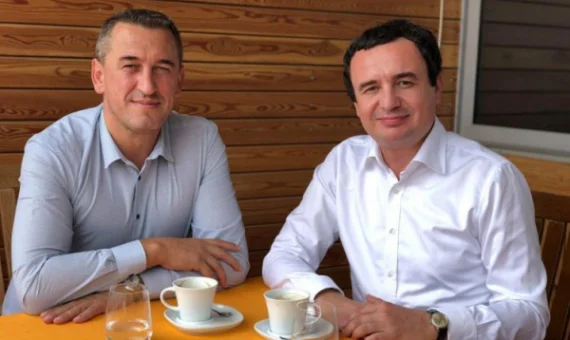
Periskopi(9 months ago)
(9 months ago)The acting minister for the Community and Kthim, Nenad Rassic, says that the integration of Serbian education and health into the Kosovo system is a process that will have to happen, but that should be carried out through consultation and harmonisation of attitudes, so that there will not be painful consequences for the Serb community. In one [...]
In an interview for Radio Free Europe, he says, as well, that Serb List, the largest Serb party in Kosovo, will be invited in this process, which has already been promoted against the integration of the health and education sector into the Kosovo system.
“They will be invited, if I am part of the process, and I will certainly be, and if they refuse co-operation, their responsibility is”, Rassic says.
According to him, “a form of association” is important to exist, because it would offer Serbs an initial guarantee that integration would not leave jobs and security, thus ensuring needed stability, follows Periscope.
Speaking of the Kosovo Parliament's binding, on the eve of expiring the interim measure of the Constitutional Court, Rassic says: “Honestly, I wouldn't want to run for Vice President”.
Radio Free Europe: The reason for this conversation is that the issue of the integration of Serbia's education and health system into Kosovo has been actualised in recent weeks.
For this late on, he also spoke in charge of work at the US Embassy in Kosovo, which stressed that these institutions should be integrated into the Kosovo system, but only in consultation with the Serb community.
Last week, Kosovo's acting prime minister, Albin Kurti, spoke of it in a message addressed to the Serb community, in which he stressed that the dualism of the health and educational system is not sustainable, and warned that during the next mandate, along with the Serb community, including the future mayors of municipalities, will be worked for, as he said, “fit health and education into a single system of”.
I believe that you, as minister in the government's office, are up to some extent informed of a plan, if there is a plan for that. So if you can tell us first, what is it about?
Nenad Rassic: So first of all, in front of all the others, including Mrs. [Annu] Prattipati or Mr. Kurti, I've been talking about this several times, over the last two years, perhaps. Especially from the Ohrid Agreement, which was then made or drafted in Ohrid. I've been talking about this that we Serbs, above all, should be prepared for different types of preparation, that should be within our capacities, institutionally, that at some point we'll have to think about this, how to incorporate, so it's painless, and similar things.
So this has been a topic for me several times, even over the last 2-3 years, because I've known since then that at some point, as Mrs. Pratttipati said, this system will not be sustainable, but at some point we will have to.
I, always, have stressed that this must be a process, as I said last time, when I gave a statement about it that it is a process, which means it will last, in terms of communication, consultation and harmonisation of what is most important to happen, so that even then, as you mentioned a little earlier, the parties agree on what way this can be done.
In this regard, you know, for example, that we have some parts that we have not yet implemented by the Ahtisaari Plan.
When you mentioned, for example, education, that's where it matters to the commission that the ministry should form, which would be responsible for the curriculum, or better say educational programs, that should be harmonised in the same way...
Radio Free Europe: That means that Serbia's plan and programme should be determined, whether it is in line with the Constitution of Kosovo or not...
Nenad Rassic: Yeah.
Radio Free Europe: But, we know that for this... probably that plan and program would immediately fall.
Nenad Rassic: Yeah, well, that's why the commissions are. The commission would have to consist of three Albanian representatives, three representatives of Serbs and one of the international community, possibly this would be harmonised through QUINT.
Radio Free Europe: And these representatives of Serbs on the commission are elected through the Kosovo Assembly, if I am not mistaken.
Now, frankly, that detail I don't remember. Maybe we could get to it, deep down or technical solutions, when it started.
In general, though, let's go back to the beginning. Like I said, this is going to be a process, which will at some point lead to our having to think about how we can be processed.
In this regard, if we also talk about that last proposal, which could be called the draft Association of Serb-run municipalities... There, I think there's a complete void. I've read it once, so I can see what's there for those main pillars, such as health and education. And, literally, in that statute I saw nothing important. I even saw some contour information...
“The process is not in the plan, but we know it's going to come”
Radio Free Europe: There, more is envisioned “privatisation” of health and education, for health and education institutions to function as private institutions, but within the framework of the Serb majority municipalities' association.
Nenad Rassic: Yeah, well, come on, you gave him the interpretation. To me, it has been absolutely unclear. I've already said that I would probably have a lot of questions about it, because it doesn't literally say exactly as you say, but there are two pillars, especially health, which is said to be primary health in charge of municipalities, and private health. For that, I would probably have questions: When you say private health, what does that really mean? Do you say we have to form some private health institutions, or do you? Who should work there? I repeat, that process, which would mean communication, co-ordination, and harmonisation, has not even begun. That process is not even planned yet.
Radio Free Europe: Can we say that some preparations are now under way for beginning [of integration], or is it just preparing public opinion?
Nenad Rassic: If we have not so far been able to learn from our mistakes, which unfortunately have been many, even hundreds, let us prove that, for such important questions, immediately plan what we can do, in the sense of protecting our interests, along with those representatives who would be there, whether it be representatives of education or educational institutions or health institutions.
Of course, it would be very good to have a plan, at least basic, of some points, which are essentially the most important.
Hence, even now, I will take the opportunity to make counsel whenever any initiative is made. For ourselves to have such a joint meeting that could lead to the establishment of some basic principles that would later have to be applied.
So, I mean, the process is not in the works, we know it's coming, but why not get into that process more prepared than we've been until now.
You mentioned the Ahtisaari Plan earlier, and I will talk about health, which is, most likely, just as important [such as education], but I would give you a little health priority.
From the Ahtisaari Plan are the two hospitals that have to be built. In Gracanica, perhaps as the central municipality in southern Kosovo, only the first phase, the first of three, has been established, buildings that now seem ugly.
One of our goals for local elections is to create the capacity of that hospital. And, hopefully, in the sense of becoming a central institution, where we know many people are treated even often come from other parts of Kosovo to our Serbian specialists. And imagine what could be done if the capacity of a thousand and five hundred workers was created, as foretold, for large, well - equipped halls, where there is capacity not only for workers but also for patients.
Radio Free Europe: Would Kosovo Serbs in that case have the opportunity, if necessary, to continue further treatment in Belgrade, as it has been so far? We know that for any complications, they were sent for treatment there. What would that look like in the future?
Nenad Rassic: Well, in the future, it should look like they're all in one place. Or, maybe there's... well, you caught me a little bit by surprise with this question, I'm not some big health connoisseur...
Radio Free Europe: But, possibly, this worries Kosovo Serbs, will they still have the opportunity to be treated in Belgrade or Nis?
Nenad Rassic: Yeah, sure. But, you know, the process of going to a serious operation in Belgrade means a lot of money before the operation itself, plus being on the waiting list. And, unfortunately, what's tragic, if you don't have someone there [connect], and that's a loss to our society, then nobody takes you seriously.
We are all aware that local institutions, especially health institutions, have very limited capacities. For everything more serious, they give instructions to go somewhere else. For them to send you, it must be an emergency to arrive on time. Any delay ] the disease advances, and when you are appointed six months later, it's often all in vain.
Therefore, this would likely represent a centre of primary health, which we have said is guaranteed by both the Ahtisaari Plan and the law, but with a broader character, which would enable visits by specialists from Belgrade or other countries, because successful interventions could be made, so the quality of the staff working there would be high-level.
Radio Free Europe: So there should be a collaboration with Serbian health institutions?
Nenad Rassic: Well, not only with Serbian ones, but with any health institution...
I'm sure, if we had such communication, especially in a equipped hospital, we could invite doctors from Belgrade, Turkey, London, because they would come for human reasons...
Radio Free Europe: As for their going to Kosovo health institutions, which already exist in Pristina and other cities, do you see hesitation?
Nenad Rassic: Yeah, there's always a hesitation. Many times I have intervened, I have called, not to insist that Petri or anyone else should go somewhere... but there is a hesitation in our fellow citizens. When I say disbelief, it's a harsh word, but, you know, hesitation exists. Where am I going to Pristina? Not only medical distrust but also the language barrier, communication is difficult.
I'm glad these from the Family Medicine Center or the hospital in Gracanica, when it's an emergency, thank God, first they send him to Pristina, because there are better equipment and doctors are better prepared...
Radio Free Europe: As opposed to...?
Nenad Rassic: Compared to what we have, both in our capacity and in our equipment and with our doctors. Because even the best doctor, if he doesn't have enough emergency equipment... that's the main thing to save his life. Institutions such as Gracanica or the village of Llapnasell, I am giving as an example, absolutely do not have the capacity. Thank God that instructs people to go to Pristina, because at the emergency or Pristina hospital, if not otherwise, injuries, or illness can be cited for a certain period of time.
Radio Free Europe: This hospital, is it your personal plan or something you've talked about with Prime Minister Kurti or at the government level?
Rasp: This is part of the Ahtisaari Plan, which has been adopted since 2008. If I again take Gracanica as an example, he is conceived as a project for this purpose. There was supposed to be at least 750 operating halls. About 250 beds per patient were envisioned.
Radio Free Europe: Who's gonna finance that hospital?
Nenad Rassic: If you want to, that's a government duty.
Radio Free Europe: Kosovo?
Nenad Rassic: Yeah. I've tried to start this case before, but there's no understanding in the municipality. They must act on directives that give them a dictatorial regime, which says they should not co-operate with Kosovo institutions.
Radio Free Europe: But if doctors, medical staff, refuse integration, what would be your plan to convince them to accept it?
Nenad Rassic: If we happen to build a modern space, halls and hospitals, and if in that case they refuse any cooperation or communication to enter those objects, then they really have to rip off the Hippocratic Vow and finish the job there, and give up their profession. I think so.
Radio Free Europe: Does this mean that objects that now operate within the Serbian system will be closed?
Nenad Rassic: Probably... if you have new objects, why should you stay in the old ones?
Radio Free Europe: What will happen to the north and the Clinical Hospital Centre in northern Kosovo?
Nenad Rassic: This, perhaps, could be restored more easily - to be rebuilt. With its spaces, it can become functional. First of all, it must be equipped, not as it now works.
What does the Clinical Center do? If anyone knows otherwise, let them oppose me. They, practically, don't even have the most basic things, including gas, injections, all the most common things needed, but, repeatedly, they don't want to get from Kosovo institutions.
I, even sometimes I've tried to help you personally, to tell you that whatever you need will be available. No one dares write a simple request, let alone something else.
That's because, I'm saying again, the regime ʹ in such a dictatorial way prevents the director or doctor from heading to Kosovo institutions in any way, because they have to pass, as they call themselves, “the non-receptive health dogma for citizens in the north” and then use it as argument to complain.
Radio Free Europe: How will the integration of health in the north be achieved if we already see the starting point?
Nenad Rassic: Like I said, this is a process that requires communication, coordination and decomposition. So if all three elements that I mentioned earlier, we do it with the escorts of Gracanica, because it's preambled with the Ahtisaari Package, creating not only good conditions, but more than good for the functioning of such an important institution, then I think it's obvious who doesn't accept such a thing, it's the enemy of his people.
I can't imagine otherwise: if as a doctor you get conditions to treat your fellow citizens practically better, and you won't accept it just because someone told you, that's unacceptable.
Radio Free Europe: So far, for the integration of education and health, it has been spoken under the Association of Serb majority municipalities. Is that still the plan? Will it start with forming Association now when we talk about integration of health and education, or is it a separate process, which you and the incumbent prime minister are talking about, that integration will start before the formation of the Association?
Nenad Rassic: I mentioned that statute, which is officially unofficial, or unofficially official, because it has been passed as a draft that has supposedly originated in public. Nobody denied it, nobody said yes or no...
Radio Free Europe: And the prime minister refused to send him to the Constitutional Court for review...
Nenad Rassic: It's another matter, it's another matter. I'm talking about the authenticity of the report, which was proposed by the QUINT, because no one has denied it, has no support or no support. Perhaps it is the silent support that indicates that the purpose was so.
The problem is I first see a lot of gaps and confusion. You have primary health and private health. What does that mean? It's not clear to me at all. As far as health and education are concerned, things are totally unclear.
I would very much like the idealist or the inventors of that document to explain what this means and then discuss it. When they explain it to me, I would consult others in the field of health or education to interpret it. Because it's written to me so briefly that I don't understand what this is about.
That leaves me doubting the principles or ideas of the authors of that draft status . What did the author mean? I didn't get it.
Radio Free Europe: I'm reading a piece of that statute: The statue envisions existing institutions becoming private under OmbRadio Europe's Free Association of Serb majority municipalities, while Serbia offers financial contributions. Education and health institutions in Kosovo are determined to have the status of private, foreign institutions.
Nenad Rassic: That's even more scary.
Radio Free Europe: This is the statute we had access to and that a European official confirmed.
Nenad Rassic: Yeah, I forgot, you read it now. That's even worse.
Radio Free Europe: So here it seems to be talking about a separate process of integration, not under the Association...
Nenad Rassic: Yeah, I think that's even more scary. Here's how I interpret it, tell me if it's different. So you already have this health that's like that, without giving you epithets, and you have private health, right?
In private health, as far as I know, there's no way to go and get free services, but you pay them like everybody else.
If it's private, then there's gotta be a record of how to generate it... which is even more terrible to me, because we're always turning to the same thing: to form new private institutions, which will cost our citizens even more. I would disagree first.
“An association form is very important”
Radio Free Europe: When we're at the Association, what is your attitude, should it be formed or not?
Nenad Rassic: Yeah, I said I should. But I see it as a form that can help our fellow citizens on the issue with which we started the subject if health and education are integrated, how will be done and so on. Because I think we can integrate in a way. So people who are in those institutions will be accepted in a form that would be legalized, that is, in the sense of the Serbian (most) municipalities' association.
Therefore, I always see it as economic or social issues, not political. I often say it with both the prime minister and other colleagues, not in front of cameras but in conversations, that the number of Serbs is shrinking and we have to do something to keep.
The only way is to offer a package, which means that those working in Serbian institutions, we go to our institutions without pain. The loss of every family is a disaster for us.
After that, general panic arises among others who remain, as if they were left with nothing. For this, we need a strong element to provide at least initial security and stability to those who are welcome to institutions. Then, if a person has other plans, he cannot be held violently, but it is important to be able to adjust to his new circumstances. It doesn't matter what it's called either association or anything. It's important that people stay there and have permanent space.
An association form is very important because it would ensure that the first impact was not meant negatively. Then, we can discuss forms, if it's going to be primary health plus private, even though that sounds very unclear. So I said I'd like someone to explain what it means. But whatever it is, we need to find answers.
So I think it should be a process, with harmonised coordinates and attitudes, that we as Serbs can protect our basic interests, both on staff and in services to be offered.
Radio Free Europe: In all of this process, co-operation and communication with the Serbian List seem inevitable, the party that usually receives the majority of local population votes. The prime minister also mentioned future mayors would be involved. Does that mean you will talk to the Serbian List?
Nenad Rassic: Of course, the nature of work is such that if they are mayors, yes. This has never been an obstacle. To them yes, but not to me.
Radio Free Europe: Okay, but there were also LVV actions to keep disqualifiedFrom local elections, especially after Banjska.
Nenad Rassic: Let's share. I'm not talking about freedom, justice and survival as my party's head “, but as minister. Whoever is mayor, even from the Serbian List, should think as mayor, not according to what he tells the party. So, for me, it's important that they understand that as heads, they have a responsibility to the citizens. They will be invited, if I am part of the process, and I will certainly be, and if they refuse cooperation, their responsibility is theirs.
So it doesn't happen like that statute that came out of nowhere, nobody says it's the only one, and it's all... that we don't get a <x0... take it or leave it”. We better plan for ourselves what is most important to us and then impose conditions, not someone else force them.
I am the head of a Serbian party, but I am also the minister of the Communists, which means I have to take care of other communities, not just Serbs. I hope that even the future chairman will realize that there are citizens who have long lived in difficult conditions, have problems in the health system, where, I repeat, there are no syringes or gases. When you go for an intervention, no matter how small, you have to go to the pharmacy and buy it all and then to the doctor. This is unacceptable.
Radio Free Europe: What role do you expect from the international community in this process? KFOR and QUINT are mentioned. What role should they have in integrating health and education? What are you waiting for?
Nenad Rassic: These actors you mentioned, KFOR, etc., are organisations of another nature and cannot be technical or administrative mediators.
But, the EU office is inevitable, I wish it were. Also, in broader consultations, at some point we should consult the QUINT countries. I think that's completely enough in the sense of broader political perfection.
For technical level, at lower levels... it is normal to have more actors consulted or invited to meetings, especially those who can give “thoughts within” what is most needed.
“
Radio Free Europe: You mentioned that you are a minister, but aspire to become deputy head of the Kosovo Assembly. September 30th is approaching, when the Constitutional Court's provision for forming government expires. What do you expect regarding the House Constitution process?
Nenad Rassic: I think the Constitutional Court will first restore the election of vice-presidents from non-communities. I'll give you another deadline, according to me about 30 days. If the two vice-presidents are not elected by then, then the president will have the right to declare new elections.
Radio Free Europe: Will you run again?
Nenad Rassic: Honestly, I wouldn't want to run.
Radio Free Europe: Wouldn't you like that? Why?
Nenad Rassic: I wouldn't, I said. I wouldn't.
Radio Free Europe: Why?
Nenad Rassic: Because it's a personal decision, I'll call it that.
Radio Free Europe: When you first ran, did you?
Nenad Rassic: Yeah, yeah. Because there was no one else. I said before, I repeat: I see the Serbian list as those who have done everything wrong.
Radio Free Europe: They? The Serbian list?
Nenad Rassic: Yes. Everything's done wrong. On the last two mandates, I've never heard of the deputy head of the Assembly whether he was alive or dead. Has he said a word not only in the Parliament but also out of it?
The Assembly is the biggest scene of political action. And if the vice president doesn't say a word eight years, maybe he doesn't even know how to turn the button on his seat... If they are, it would be beneath my honor not to be the countercontinent of such a representative.
Radio Free Europe: Will you vote for the subheading package?
Nenad Rassic: This shows that I disagree with their policy. To me, they're the past. That's why I wanted to run, and why didn't these others vote on me...
Radio Free Europe: No, I wanted to ask you if you would support the election, if two candidates -- Emily Rexhepi and someone else from the Serbian List -- were you to vote?
Nenad Rassic: I can support the election of Emily Rexhepi, but not Slavko Siqim.
Radio Free Europe: What if they're in a package together, like they were voted in before?
Nenad Rassic: I told you.