3 hours ago
What did Paul Williams show at the Special Court?
Periskopi(9 months ago)
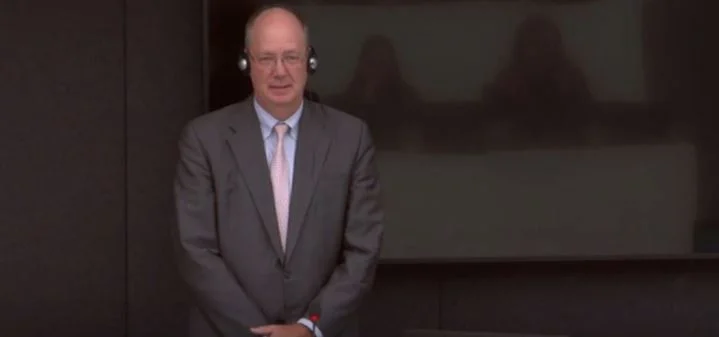
(9 months ago)Paul Williams, who was legal adviser to the Kosovo delegation during negotiations in Rambouillet in 1999, has completed the two-day testimony before Kosovo's Specialised Chambers in The Hague, where he spoke of the role of the Kosovo Liberation Army in Rambouillet, Hashim Thaci's position in the delegation, and the decision-making process within KLA structures. Williams was [...]
Williams was former Kosovo president Hashim Thaci's second defence witness, who along with two former prime ministers Jakup Krasniqi and Kadri Veselini and former deputet, Rexhep Selimi are charged with war crimes and crimes against humanity, records Periscope.
All four former KLA superiors have been declared innocent.
During the second day of his testimony, Williams answered the court's questions. He said the Kosovo delegation in Rambouille had about 16 members, citing among others Ibrahim Rugova, Blerim Shala, Hashim Thaci, Rexhepa Qrudin, Bujar Bukoshi, Edita Tahiri, Jakup Krasniqi and Bajram Kosumi.
He added that the leader was elected by majority of votes and that Thaci was elected head of the delegation I asked why Thaci was elected in the post, Williams said someone representing the KLA was needed in the delegation.
The Kosovo independence process was multidimensional. Rugova was the pacifist who did not open his mouth without mentioning independence. Bukoshi was working in a better way with Americans and Europeans. Meanwhile, the action of non-state armed actors was important, as in any movement for self-rule. And then there was the dimension of peace negotiations there needed a figure representing the KLA, but that looked and acted as diplomat, negotiator, reliable partner”, he testified.
One of the court's main questions to Williams was whether, from a legal point of view, the approval of local or regional KLA commanders was needed for the signing of an agreement by Thaci.
Williams said he wasn't aware of any design or order, adding that he would be a very surprised “” if something written existed. According to him, the process was <x2 most normative, cultural, based on authority and power, and less on written rules”.
The American lawyer was also asked by the court about Rugova's role in the Rambouillet process. He said he became the delegation's pro-bond adviser, at the request of Rugova, who named him a respected figure.
Each one of the international conversations with him began and ended with two sentences: independence and lack of force. Rugova played an important role in Rambouille, representing the people of Kosovo. It epitomised pacifism and aspirin for independence, but it was not negotiator”, the American lawyer said.
On the first day of the testimony, Williams had described political activity and human rights activist Adem Demac, as a person with “ideological balances” in the KLA.
Demac had rejected the agreement, demanding Kosovo's independence be included.
Meanwhile, on the second day of his testimony, he indicated that during the process in Rambouillet, members of the delegation had informed him that Thaci had travelled to Slovenia to meet with Demac, a step he described as the necessary politically and culturally “to ease objections to the deal.
This was necessary because Demach spoke a lot from the outside as an ideological figure. Thaci had to show that he was engaged. I did not create the impression that his approval was required or a formal consultation was a necessary step to proceed before”, Williams said, adding that Thaci's departure from the castle caused concern.
During the session on September 18th, the court also cited parts of a document prepared by Williams and Mark Welle ʹ as also legal adviser to the Kosovo delegation in Rambouilles where full co-operation with the Tribunal for the former Yugoslavia (ICTY), including the arrest and transfer of accused persons and unlimited access to investigations, was required.
Williams confirmed that Thaci understood and supported this, even if this included investigating KLA members. But asked if The KLA or the provisional government had really co-operated with the Tribunal for arrests or transfers, he said he does not remember concrete examples, and added he does not want to speculate.
The court also presented Williams with public statements in late 1998 and early 1999, including interviews on the “Kosovo Office”, where KLA leaders criticised Kosovo's exiled prime minister, Bujar Bukoshi and <x2-initiationists for managing funds from the diaspora and lack of support for the KLA. Williams said there was no evidence of misuse or financing of desertion, but acknowledged that tensions over the issue of funds existed and that the Democratic League of Kosovo had largely gathered them for the education and health sector in the parallel system.
During the first day of his testimony, Williams said Thaci had no influence over local KLA commanders. According to him, Thaci “had no authority to sign the agreement without the approval of regional commanders”.
Even the first witness called by Thaci's defence, former US Assistant Secretary of State James Rubin, said during the three-day testimony that the former Kosovo president had a mostly political role and that he had to get the commanders' approval for any important military decision.
The trial of four former KLA superiors began in 2023.
Thaci was political leader of The KLA before and during the 1998-99 war, Wessel was leader of the KLA intelligence service, Krasniqi was a spokesman, while Selimi was among the general staff.
The act against them includes charges of unlawful imprisonment, torture, murder, crimes against humanity, forced extinction and persecution of hundreds of civilians and people who did not want to participate in the fighting.
In defense of former KLA superiors are expected to testify a few more witnesses, except Ruby and Williams.
The next witness called by Thaci's defence team will appear before the tribunal on 22 September.
Protection of the accused told Radio Free Europe last week that the list of those who will testify on their side is confidential.
In the media, however, several names circulated among them: Wesley Clark, William Walker, Bernard Kouchner and others.
The same were mentioned in one list box revealed protection in 2022.
The Special Court expects the trial against former KLA leaders to be concluded by the end of December. /REL/