5 hours ago
Mothers talk of obstetric violence, state silent, ombudsman found human rights violations
Periskopi(9 months ago)
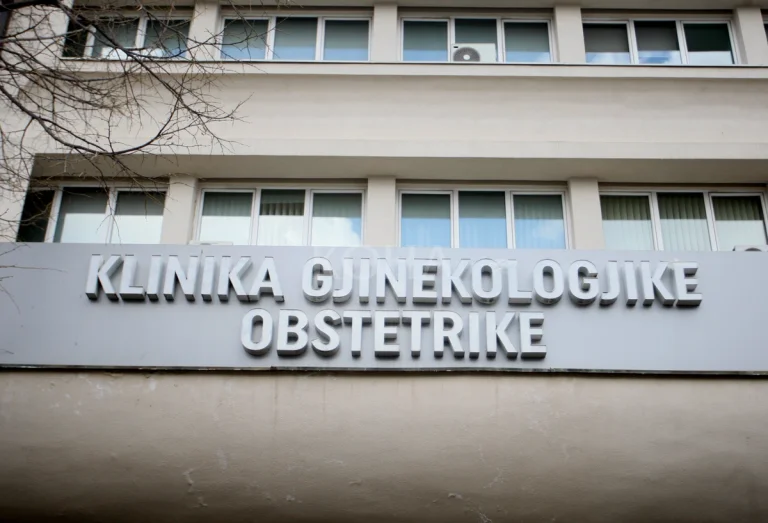
(9 months ago)An alarming reality that the state is reacting to recently brought women with their confessions of mistreatment to the QKUK Clinic of Gynecology and not alone! The same find that obstetric violence has become part of the dailyity of the delivery halls. Verbal words, inhuman treatment, lack of care and privacy violations are experiences [...]
The same find that obstetric violence has become part of the dailyity of the delivery halls.
Verbal words, inhuman treatment, lack of care and privacy violations are experiences women have shared publicly, highlighting a deep crisis in the health system.
Despite numerous public statements and research launched by institutions as ombudsman, no concrete measures have been taken against the responsible, adds the fact that research has been conducted since 2021 and there is no improvement despite recommendations.
This lack of reaction is normalizing an unacceptable phenomenon, leaving women vulnerable to one of the most sensitive experiences of their lives.
After the interest of Kankosova.tv, in a more detailed response, the Ombudsman Institute, confirms that there has been an ex officio investigation concerning women's and girls' rights violations at Sexual and Reproductive Health Services, including treatment during birth.
According to the report, which with recommendations was handed over to relevant institutions in December 2022, many women have claimed to have been treated with insulting language, unconventionally and discriminated against by health personnel, especially in public institutions.
” During the development of investigations and contact with women and girls, it has been confirmed that in terms of the birth process they have faced challenges that in the introduction of public health institutions, such as violation of privacy, unaware and unacceptable treatment by health staff, and their difficulties have continued even at birth halls. They also claimed that nurses and midwives did not offer them adequate health care, and they offended them with such grave words as: “Why did you come so late?
According to this research, women and girls have stated that if any of your health personnel are family, relatives, social connections, or any other connection, then the necessary medical services are offered and you have dignified treatment. On the contrary, you will face unconventional treatment, especially from nurses and midwives.
The Ombudsman's Institute says, among other things, that privacy violations, disrespectlessness, and non-professional approach have also been highlighted, especially against women with limited abilities and minority communities.
” Essentially, according to them, the violation of privacy and privacy is more expressive in health institutions in small cities, during gynecological visits or taking of the services of this nature, but they are no exception to general hospitals and KDP/ QKUK”, says this institute.
As for treatment and language used against patients, the Ombudsman confirms that not all women and girls who seek birth services are treated with dignity and adequate by health staff in public institutions.
”Grat and girls from minority communities have complained about the discrimination language on the basis of ethnicity in cases where they have asked for gynaecological checks or births in public hospitals “from which you're from... ..”, points out further in this institution's response to this Institute for Crancosova.tv.
Women and girls have also raised the issue of their treatment by doctors at the public hospital and in private over another not uncommonly heard phenomenon, broadcasts Klankosova.tv.
” Have stressed that often personnel who have provided services in the private sector have been the same with personnel offering services in the public health sector. However, the same behavior and treatment from the same ones have been inappropriate and deignive in the public health sector, while in the private sector, there has been increased care and more acceptable approach”.
However, women often do not complain, fearing revenge or distrust in institutions.
” Linked to eventual complaints by SSF service seekers, very few have claimed to have knowledge of the possibility or complaint mechanism. However, some of the women and girls have given other reasons why they do not file complaints. Most of them have claimed to have no information about where they might complain, since some of the women or girls have said that at the city hospital where they receive services, they have placed a box of complaint but have not done so, since they do not believe they will be examined by anyone. Others have said that “I didn't want to complain, that we're all familiar with” or “m) I don't think to complain, but I don't believe my complaint affects change.” Also, some women and girls have expressed reluctance if they are able to sum up their plight and bring health personnel into a written complaint”, the institution says.
Regarding the issues raised in this report, the Ombudsman after the investigation ended has praised:
- As for the possibility of a complaint, the state is obliged to provide continued information and functioning and make complaints effective and effective. Only in this way does the state meet the positive obligation to ensure everyone's access to justice and in effective and meaningful means, whenever human rights are violated.
- Treating with dignity, protection of privacy and privacy, personal and health data protection, is guaranteed rights, in health institutions, both public and private.
- Public health institutions must create adequate conditions for women and girls with disabilities to conduct gynecological and birth checks in a dignified way.
- That unconventional treatment and violation of women's privacy, especially of those with disabilities, in health institutions, poses human rights violations. Insurance and delivery of health services should always be done in view of the patient's dignity and respect for their privacy, including when counsel and services are offered to the SSRU.
But in the response given to the Klkosova.tv, this report includes another detail where the Ombudsman has asked the Ministry of Health and KSF for measures, including training for staff and increased oversight, which seems to be far from realised based on the established reality of mistreatment.
” include training for providing information, services and dignified treatment, in co-operation and co-ordination with the Medical Oda and the Nurses' Oda, within the training manual for health personnel”.
I want to promote the line for free citizen complaints under current legislation”.
Hospital Service and Kosovo University Clinic:
” In collaboration with the Infermies' Oda and the Medical Oda, to hold special training for health personnel, in terms of proper access and treatment with dignity and indiscriminate treatment for all patients/, separately in the abortion or money process, over and LUKE”.
Among other things, this institution's report says there are doubts about abuse of essential drugs and suspicious references in the private sector, while institutions have been called upon to guarantee dignity, privacy and equality in treatment.
The Ombudsman's institute cites that inaction risks further deepening the crisis of confidence in women in the health system.
We remember that, until now, despite all actual confessions of violence and mistreatment, publicly reported on by women who brought new lives to this clinic, the prosecution has not yet opened cases of investigation into the situation in these departments.
Meanwhile, the Kosovo University Clinical Hospital Service only awaits the patients' official complaints, but does not report on the findings that themselves have managed to identify among all these cases publicly revealed by the media.