5 hours ago
So today we are living to survive” how are war veterans treated in Kosovo and Croatia who came out of war?
Periskopi(9 months ago)
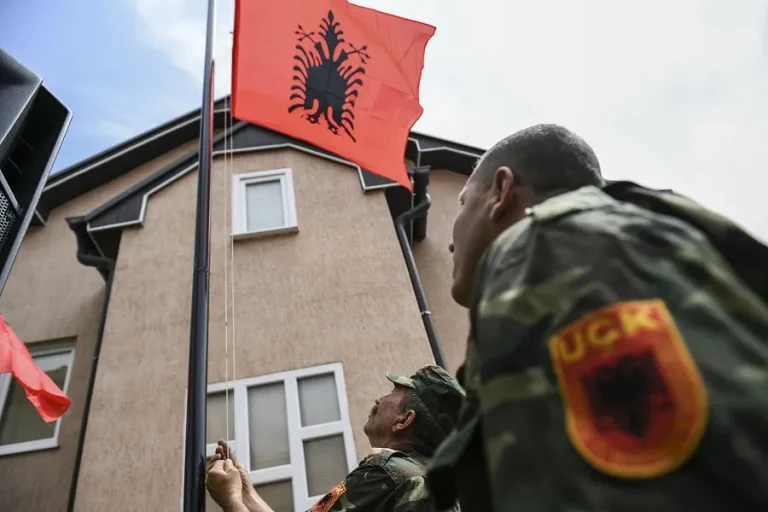
(9 months ago)“Today we are living to survive”, so reports former Kosovo Liberation Army soldier (UÇK), Bahri Shala. The 56-year-old man from Peja, who is the father of two children, has his only monthly income from the war veteran's pension. This amount says it is insufficient, since it is not allowed to do other work. [...]
“Today we are living to survive”, so reports former Kosovo Liberation Army soldier (UÇK), Bahri Shala. The 56-year-old man from Peja, who is the father of two children, has his only monthly income from the war veteran's pension. This amount says it is insufficient, since it is not allowed to do other work.
The government earlier this year raised pensions for all war-free categories, but not even minimum salaries in the country. With this increase, war veterans receive a 204-euro monthly pension.
Bahri Shala, who was part of the 133 “Adrian Krasniqi”, speaks of the heavy post-war life.
Today it's almost to survive, for tomorrow, today we eat, we have to see what's helping us, or what's coming somewhere. That you with 200 euros can't survive. The right to the job has stopped us, we've been stopped, some of the benefits don't allow anything that the state would have needed, if Croatia has a social situation, the state can drop things off for a month, and you can spend it, and you don't mind bread or basics. The nine - or eight - year - old child does not ask you, whether you have a son, he says, "How to say breadbabe=x1>.
At the time of genocide by the Serbian state in Kosovo, Bahri Shala says he had joined the fight with the ideal for freedom.
As he recalls his life after the liberation of the country, he shows that he was barely able to provide lodging while up to four years ago there was no roof above his head.
With the law on 1998-1999 war veterans, the pension sum cannot be less than the minimum wage set in Kosovo.
Bahri Shala from Peja requires revision of the law to be enabled employment.
After the heroic fall of the Jashar family in Prekaz, the liberation war was joined by Aziz Hyseni from Podujevo, who was then living in Croatia. Initially he had gone to Tropoj, Albania, to arm himself -- and then to Morina, Junik and Llap's operational zone, where he was also deputy brigade commander.
He voiced his criticism of the lack of institutional treatment of war veterans for nearly three decades.
The war values law adopted in 2014 envisions rights to free services, where the NLA <x0vetians and close family members enjoy free health service rights”.
However, this law has not been implemented as a whole, says Deputy Chairman of the Association of Veterans of the Kosovo Liberation Army (OVL-UÇK), Gazmend Syla.
Regarding the establishment of the posttraumatic stress centre, Kosova Prees has sent questions to the Ministry of Finance, Labour and Transfers, but until the publication of this article, they have not returned answers.
Since the afternoon, Syla says about The government that about 60 fellow fighters have committed suicide.
As a result of what they have experienced in the war, Aziz Hyseni, who has been deputy brigade commander in the Lapi's operational zone, says many veterans today still need treatment.
Before joining the KLA, Aziz Hyseni in 1991 had been voluntarily notified of locks in Croatia's military, where he participated in fighting for nearly a year.
He says that in Croatia “veterians are treated with respect and dignity”.
Tom Kacinari, who is the head of the community of volunteer associations in Croatia, shows how categories derived from the Croatian Ministry of Veterans are handled.
The Croatian state has enabled the employment of war veterans, Kacinari says, among other things, for which he adds that there are great value to volunteers whose pensions differ, even according to military degrees.
War veterans in Croatia can be employed and do not get pens, while when they reach age retirement, they receive no lower than 45 percent of the average wage in the country.
In Croatia there are 518 thousand registered veterans, among them are 32,000 Albanians, where 2300 have volunteer status, 87 martyrs, 37 missing and 250 are disabled.
Meanwhile, in Kosovo, according to data from the Kosovo Statistics Agency, there are 37 thousand veterans who receive the pension, up from the total of 47 thousand registered./Periscopi/