4 hours ago
UN: Kosovo made efforts, but not enough against human trafficking
Periskopi(8 months ago)
(8 months ago)The United States ranked Kosovo Level 2 in the latest Human Being Trafficking Report. This category includes countries where governments make considerable efforts to combat human trafficking, but still fail to fully meet the minimum international standards. Other Balkan countries rank in the same category [...]
This category includes countries where governments make considerable efforts to combat human trafficking, but still fail to fully meet the minimum international standards.
Other Western Balkan countries rank in the same category: Albania, Serbia, Montenegro, Bosnia and Herzegovina and Northern Macedonia.
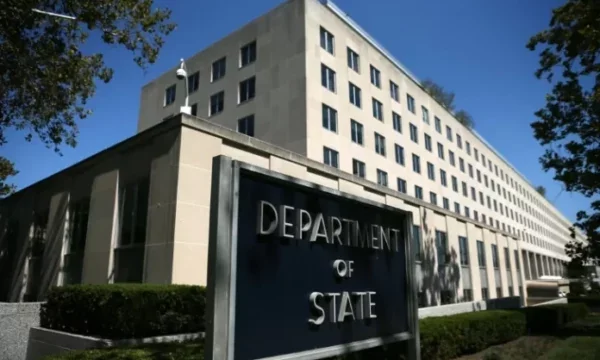
The report, published on 29 September by the US State Department, notes that Kosovo has intensified efforts to fight trafficking compared to last year, including prosecution of a larger number of people suspected of trafficking and identifying more victims.
Funding for support of the victims has also increased, as well as funding for their compensation.
However, the government has not met certain minimum standards in key areas, so Kosovo remains at Level 2, as well as in previous reporting. Key shortcomings include the low punishment of traffickers and the pronunciation of sentences under the minimum envisioned by law.
The report also points out that cases of children forced by parents to pray on the streets are often treated as neglect or ill - treatment, not trafficking, raising concerns about the victim's incorrect identification.
The government has not had the capacity to provide long-term assistance and has allocated less funds for awareness campaigns”, the report stresses.
Who is more vulnerable to trafficking?
Trafficking affects all communities in Kosovo, according to the US State Department report.
Women and girls are recruited with false promises of marriage or work as singers and dancers but are then sexually trafficked into private homes, nightclubs, or massage centers.
Victims include not only Kosovar, but women from Albania, Moldova, Montenegro, Romania, Serbia and other European countries as well.
Kosovars, too, are often forced into sexual and other jobs in Europe.
On the other hand, children from Kosovo, Albania and neighbouring countries are often exploited for forced begging.
Roma, Ashkali and Egyptian communities are particularly endangered, as are LGBTQ+ persons, migrants, asylum seekers and refugees.
The U.S. State Department report recalls that the law in Kosovo penalises trafficking for sexual purposes and work with sentences of up to 15 years in prison, but stresses that its implementation has been flawed.
Last year, authorities prosecuted 17 new cases involving 49 suspected traffickers compared to eight cases in 2023 involving 10 suspected traffickers.
Authorities continued to prosecute six more cases of 14 suspected traffickers initiated in previous years.
However, courts condemned only one sexual traffickers ʹ this huge decline compared to 14 traffickers convicted in 2023, the report notes.
He was sentenced to eight months in prison, under the minimum sentence of five years in prison.
Sentences below this minimum undermine efforts to hold traffickers responsible and do not reflect the seriousness of the crime, the report says.
But in addition to shortcomings, the document also highlights improvements in the protection of victims.
During the past year, 14 victims were identified, compared to 17 victims in 1923, and most received legal, medical, and psychological assistance, counseling, education, and support for reintegration.
The government, according to the report, has increased funding for these services by aiding 150,000 euros for the security center for endangered victims, compared to 75,000 euros separated in 2023.
Also, the funding for compensation of the victims has increased to 200,000 euros last year, compared to 150,000 euros in 2023.
For the next period, the report stresses that Kosovo must significantly reinforce anti-trafficking efforts.
Among the main recommendations are cited the investigation and prosecution of traffickers and the pronunciation of severe punishments.
The report also suggests advanced training for judges, prosecutors and police for identifying trafficking and adequate access to victims.
The capacity and financing for social centres and shelters of nongovernmental organisations is recommended to increase, as is support for professional training and the integration of victims. /Periscope