2 hours ago
Italian journalist strongly insults Albanians for tourism: Saranda, a peasant Ibiza, head in Europe ass in Tunisia
Periskopi(9 months ago)
(9 months ago)Albania in the unmerciful but true Italian pen! “Along the street, men, women, mules and farmers; Mercedes vans loaded with bodies filled as sardines walk hard on the hill. The earth speaks of clearly survival farming, fields baked by the sun, and an economy that has nothing to show, but [...]
Albania in the unmerciful but true Italian pen!
“Along the street, men, women, mules and farmers; Mercedes vans loaded with bodies filled as sardines walk hard on the hill. The earth speaks clearly of survival farming, sun-made fields, and an economy that has nothing to show, but simply passes by with difficulty”
“E however: Saranda is beautiful. Fun and alive like a peasant Ibiza! “
Albania as southern Italy:
Dirty and touching, chaotic and fascinating, incomplete but alive. South of Italy that wants to be North at all costs. But even if his head is in Europe, his ass is always in Tunisia”.
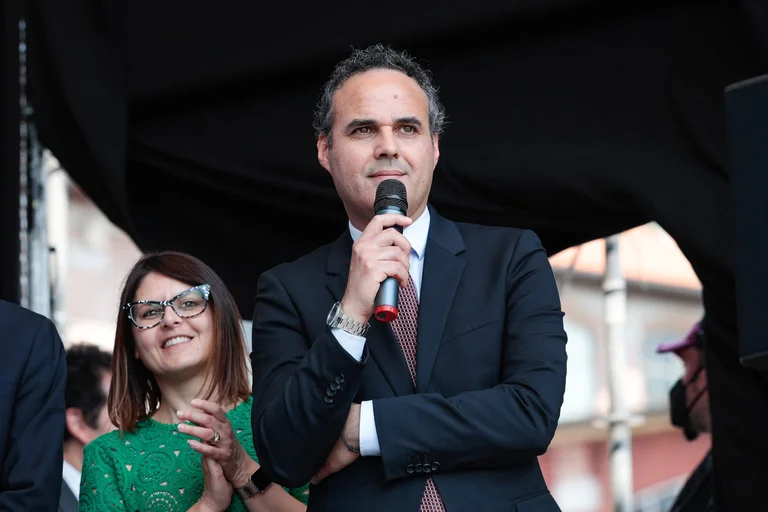
by Francisco Konducci
Francesco Condoliu, communications adviser to the Italian Ministry for Reform and director of Notzie.
Let's get this straight: Albania was not my idea. It was artificial intelligence that suggested it as a Mediterranean destination that perfectly coincided with the parameters I had given and asked him to verify it by surfing the Internet for impressions and clouds: crystal sea, family services, well-equipped hotels, accessible transport, competitive prices and places of historical and cultural interest.
The idea was promising, but reality is another story. As soon as you get off the ferry, you immediately realize that you are in another Europe. Endless lines, strict security checks, an old atmosphere of the Romanian Securitate.
Then, a few steps outside, and the first impact of a Balkan theater: a man in uniform is not clear who is to stop by his hand. He murmurs in Italian: “Insurance” It turns out not all security officers are covering this place. Nothing unusual so far. The problem is how a broken cabin, two boys with sandals, a man approaching with a bunch of bills in his hand. “Fifty-five euros” for security police, without explanation. An unwritten access tax. Welcome to Albania.
The Road and the Unfinished Place
Outside Vlora's port, the landscape is Italy's forgotten South classic: chaotic traffic, damaged engines, old Mercedes (one in four here is a German brand, often with 20-year engines) parked near unfinished houses. Trucks loaded with watermelons walk slowly. As we climb, cows that graze occupy asphalt with indifference.
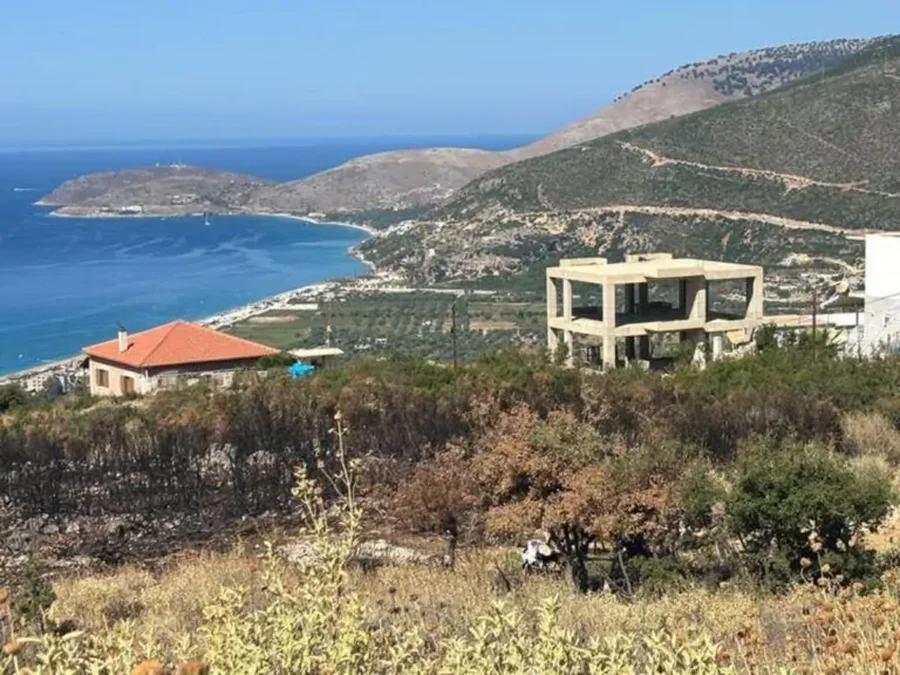
Then SH8 (Vlora-Fierer) opened as a breath: green hills, Vlora Bay from above, accidentally distributed concrete, factories and small farms.
At the end of the road, signs <x0mira” advertise ripe corn. In SH100, travel changes pace. The road climbs through the barren mountains, old, decades-old drilling, abandoned quarries - the remains of a socialism that left only scraps.
Floods of waste along the way, unsafe bridges in Pocem, disoriented villages where time seems to stop. Eyes are filled with abandoned gas stations with rusted shelters, broken irons, young slippers, staring at their mobile phones. A filthy and heartbreaking landscape simultaneously.
Saranda, a city with two faces
After a three-hour drive through nowhere, Saranda looks like a suburb that grew up very quickly. Homes and shops filled with confusion, neon signs, bright screens and French traffic. Tables speak an Italian-Balkan lexic that looks like a parody of Italian: “Mobiler,” “Gomister,” “Parucker,” “Passticer,” “Pizzeri”.
Here people drive motorcycles without helmets, even three people, such as Italy several decades ago. Albanians drive chaoticly: angry traffic policemen are needed in the middle of the streets to run an impossible course.
The car, the removed spring motorcycle, the scooter that roams between imaginary lanes: traffic is like Naples's clock at the point. But the roads remain those of a fishing village - narrow, unexpected, balconies full of flowers that see chaos.
And yet: beautiful, Saranda is beautiful. Fun and vivid like a peasant Ibiza. A small coastal gem: flour waters, grass terraces filled with tourists and young Albanians, conversations and glasses chattering under the sun and moon.
Nightlife is extraordinary: music, light, laughter, energy. French girls everywhere add poetry to the slightly dark faces of residents. In the evening, shining ships, whistling with dance music, slowly set off to celebrate at sea until late at night.
For those who seek greater comfort, three stops to visit: Bar and Limani restaurant, the most handsome in Saranda, a small concrete peninsula on water where you can enjoy ice cream on almost your feet; Taverna Laberia, full of people for barbecued meats; Ballcon restaurant, famous for the myths and the view of Central Beach.
Sunset appetizers are best enjoyed in the Leakurs Fortress: Saranda down, sea ahead, Corfu on the horizon. An almost unrealistic atmosphere. The city is noisy, eager for modernity, consistently contradictory: a Balkan village and a coastal town simultaneously, chaos and molten vitality in a single desire for development.
Clearly, until 15-20 years ago, things were different here: the end of communism, the 1997 financial crisis, and the subsequent anarchy had left a devastating mess that only tourism, erupting as a bubble of happiness, could cover, but never completely.
Near luxury hotels, there are old, unfinished houses, waste, collapse, accumulated cars and a complete lack of regulations. Suspected services, often illegal management, illegal parking, little POS terminals, even fewer checks that appear under the surface of normality.
Trafficking is also evident by many links here to clan Italy, mainly Nrangheta. In the latest part, the center is a number of bars, restaurants, and street stalls that work all night long - it is amazing that you never see homes on the ground floor, just bars and shops. A sign that everything has been built in recent years just for tourism.
Ksamili, the pearl of the Albanian Renaissance, surprised with waters similar to the Caribbean in shades of blue and green that look like a card. But services remain similar to Italy's deep south: sand thrown on the ground to create elegant false beaches without any organization.
And the prices? Not exactly at the lowest level -- far from Albania's cliche at low cost. More like Italy's 2022 inflation before the energy crisis and war in Ukraine.
Between the Sea and the Border
From Saranda to the north, by boat along the coast, you discover small, isolated beaches such as Crorez, Tavets, and umbrellas that produce music and alcohol, or Gremina, a white stone wall that sinks into a clear glassy sea. In the south, if you proceed toward Greece, the road becomes an asphalt bill, drawing mountains that suddenly descend and rise.
After a turn, the view is lost - desert mountains, lakes, Mediterranean bush. Always there, Corfu appears as a background, cunning, and motionless. From time to time, small rural suburbs appear, scattered houses never really inhabited.
Along the way, men, women, mules, and farmers; Mercedes vans loaded with bodies filled with sardines walk hard on the hill. The earth speaks of clearly survival farming, fields baked by the sun, and an economy that has nothing to show but simply passes by with difficulty.
On the border with Greece, the journey stops again. Double checks, endless vehicle rows running, Frontex threatening trucks, random checks in the trunk. Hours of anticipation that remind us of our <x0-generate Schengen” of how much effort it takes to give up our freedom of movement. And how important it is to protect him, always, without ever taking him as good.
A Myth to Be Disbanded
In short, Albania is, after all, a myth that needs to be dissolved. Beautiful, yes, but not absolutely amazing. There's nothing really unique that justifies a trip here.
The sea, beaches, and landscapes are evasive, but no more than Calabria Coast with fewer services and, of course, less quality. Everything seems stuck in Italy of the 1990s: improvised and unreasonable development ( Master Plans in Albania are not exactly a priority), a tourism industry that thrives on illegal enthusiasm and construction, a raw beauty that is not enough to perform the dance.
This land is all here: perfect seas and ecological concrete monsters unfinished only a few steps from the beach, a suspended place between the old and the cloud, implantation and modernity, nostalgia and a race for the future.
Dirty and touching, chaotic and fascinating, unfinished but alive. South of Italy that wants to be North at all costs. But even if his head is in Europe, his ass is always in Tunisia.