3 hours ago
Hargrees: Political stalemate is leaving Kosovo voiceless, Constitution needs to be respected
Periskopi(9 months ago)
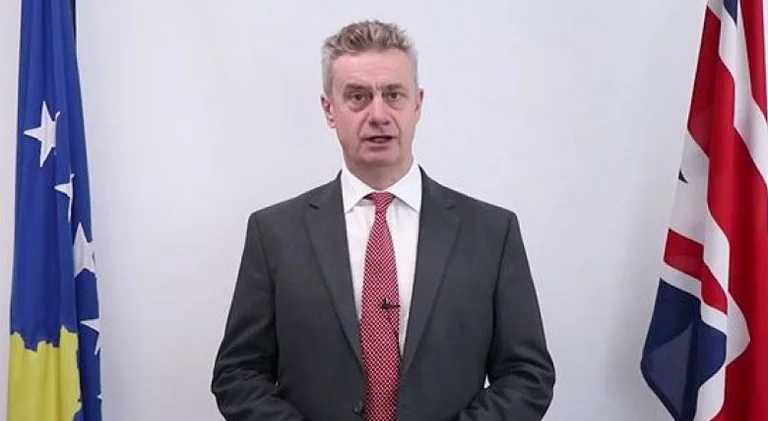
(9 months ago)British Ambassador to Kosovo Jonathan Hargreaves, in an interview for Radio Free Europe, warns that procrastinating political stalemate is costing the country to have “full and reliable” in the international arena and is blocking vital priorities from budget to reform, Periscope broadcasts. He asks all sides [...]
It urges all sides to allow the Constitutional Court to do its job, to respect its decisions unequivocally, and to enable the functioning of the Assembly, the election of the government and the president in early spring.
According to him, responsibility for the solution is common legal and political, adding that if this is not achieved, then new elections remain option, but provided the local elections are initially held well and the results are respected.
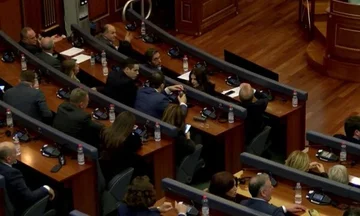
By September 30th, the Constitutional Court is expected to come up with a new ruling regarding the Kosovo Assembly Constitution process, following the Serbian List's complaint about the split of the vice-presidents from the ranks of communities.
Hargreaves also says it is “misleading and disturbing” that dialogue with Serbia is moving slowly due to the lack of institutions in Kosovo and political developments in Serbia.
Commenting on the condition set by incumbent Kosovo Prime Minister Albin Kurti, for continuing dialogue on Milan Radojici's extradition to Harreves, says it is essential that Radojciq and other perpetrators of the Banjska attack be brought to justice as soon as possible, as impunity for this “attack cannot continue.
The British diplomat also spoke of the issue of the integration of Serbian education and health institutions, saying their integration is extremely sensitive “, stressing the solution must be found within the legal framework of Kosovo, through the establishment of the Association of Serb majority municipalities.
Every day, we now await another ruling by the Constitutional Court, regarding the constitution and the issue of electing subheaders who come from the communities. What are your expectations?
Jonathan Hargrees: Thank you so much for the invitation. Before I get to this point, I want to stress that this week marks the second anniversary of the terrible attack on Banjska. I want to express my condolences to the family [the killed policeman, Africa] The twin and I also assure you that we continue to insist that the perpetrators of this attack be tracked and brought to justice.
As for the Constitutional Court, yes, we're all looking forward to the verdict next week, and I hope the Court will be able to give it in time.
Of course, I don't know what it is, and I don't think either of us knows for sure.
I think the most important is that all parties involved take it very seriously, publicly declare that they will observe whatever the Court suggests or orders and, above all, act to carry it out.
We have been in this situation with no Parliament and no full government for a very long time for Kosovo's interest. And, I think it's really urgent now. It has long been urgent for the Assembly to be formed properly and for a functioning government.
I think Kosovo is losing during this period, not having a full and reliable international voice.
As I understand, almost a billion euros of grants and loans are blocked in the Assembly. There are also many laws to pass. So, the people of Kosovo are losing out on the absence of a whole assembly and government.
Concern for Language Against the Constitutional Court
But why does the United Kingdom feel the need to emphasize the respect of the court's decisions? Is there any concern that some part will not respect it?
Jonathan Hargrees: Of course, it is an essential part of the Kosovo Constitution and an essential part of implementing rule of law, where Kosovo has made much progress during the last period. And it's something Kosovo must be very proud of. Since independence, major progress has been made in the strong implementation of rule of law.
We have been concerned, like others, about words about the Constitutional Court and the consequences it could have, if the Court could do its work properly and if its decisions were fully respected.
So I hope very much and expect all political parties and all society to let the Court work and, most importantly, apply the decisions it makes.
Are you referring to the language used by incumbent Prime Minister Albin Kurti's winning party?
Jonathan Hargrees: I think it's very important that all sides make it clear that, despite political beliefs, they are on the same line when it comes to the Constitutional Court to let it do its job and respect its decisions.
New elections potential for resolving political stalemate in Kosovo
What dangers do you see if this corrosion extends?
Jonathan HargreesI think there are too many risks. One is about time. We really need the Assembly to be functional and able to elect a new president at the beginning of spring.
Kosovo certainly needs an approved budget. He must be active on the international stage. We have been working with Kosovo for many years, not only here, but also on an international agenda.
We want to see Kosovo as part of more international organisations. We want to view him as our partner in European security. We want to see that the Government of Kosovo does things that really matter to all people living in Kosovo.
And all of this is now blocked. I don't think this is in Kosovo's interest.
But we have also heard the option of holding another election cycle. Can Kosovo afford this?
Jonathan Hargrees: If they are needed and if the parties conclude they are necessary to move the situation forward, then let them hold. First of all, I think it's very important that local elections get along well. We are working hard with the [centre] Election Commission and others to make sure that local elections are organised properly. And I hope they are. I really hope that many citizens across the country will participate. I hope the results are respected and implemented. I think this is the first step.
If there is a need for new national elections, because it is the only way Kosovo can get out of the current stalemate, then let it be held.
I am confident that all parties and institutions would organise them at least as well as last February's elections.
Where do you see the primary responsibility when it comes to solving this drive?
Jonathan Hargrees: I think it's all political parties. Of course there are legal and institutional issues, and that is the work of the Constitutional Court. But there needs to be a combination of legal and political approaches.
I don't think we will go beyond that, unless parties do what the cosmopolitical system is built for people and parties to work together, find political solutions in the country's interest, respecting and implementing the Constitution.
Therefore, I am calling on all political parties to find together any solution they can.
I don't know what the best combination is, but I think, besides following legal procedures, it takes a lot of work, a lot of political courage from the leaders of this country.
I know it's not easy and that the situation is difficult for each of them, but that's exactly the political courage to compromise and work together for the country's interest, that's what we need.
“Language concerns against Constitutional Court”
You mentioned the language being used earlier. The criticism of the Constitutional Court is precisely what prompted the United States to suspend the planned Strategic Dialogue with Kosovo. EU measures towards Kosovo, imposed two years ago, are still in effect. What is the current partnership or relations between the United Kingdom and Kosovo?
Jonathan Hargrees: I've been in this country for 18 months. I am highly privileged to be here, in this role, as British ambassador. The first thing that impressed me, at almost every meeting I've held during my time here, is the depth and warmth of the relationship between Kosovo and the United Kingdom, which, as you know, dates back to 1999, when British troops were among the first to come as part of the NATO operation. In 2008, the UK was the first country to recognise Kosovo's independence. We have long and deeply co-operated for security, and we believe that Kosovo should be and is an independent and sovereign country. Therefore, I think the relationship between the United Kingdom and Kosovo has very strong roots, and we are very proud of that and continue to be, and we will continue to do so.
We have some concerns we share with other international partners. I mentioned some of these concerns about language against the Constitutional Court. We told him publicly. I have publicly said that I am concerned about some of the actions that have been taken, especially in northern Kosovo over the past few months, which have not been done in real consultation with the affected communities, and which have fostered fear and instability in these communities.
I am concerned when I hear people questioning the foundation of this state, which, from our perspective, relies on the Ahtisaari Plan, as reflected in the Declaration of Independence and the Constitution; which forms the fundamental link between our countries, because on this very foundation, we supported our basic assistance for Kosovo to gain recognition from over 100 countries.
Do you think Kosovo is not relying enough on it?
Jonathan Hargrees: I worry when I hear people open that discussion, because I think it is very important that Kosovo continue to rely on the foundation that brought recognition to the state. In particular, protection of non - majority communities, which was at the core of the three documents I mentioned. We got some... We would like to see a more active application of those principles, the real protection of the rights of non - majority communities, a truly active language and action, which guarantees that all non-communist communities living in this country feel truly protected, feel that they have a future here, feel that they are part of this country.
I believe you sent these messages to the incumbent prime minister, Kurti, during your meetings. Do you see readiness?
Jonathan Hargrees: I think people have heard me say these things often in public and, of course, say the same things privately. I was encouraged by what the prime minister said in his video message to the Serb community about a week ago, where he spoke of his commitment to the Kosovo Serb community, in particular his commitment to co-operation with the young Serb mayors of Kosovo, whether and when they are elected, especially in four northern municipalities.
He spoke of real discussions with them about some of the decisions that may affect their lives. So what I heard was truly encouraging. What we would like to see now and over the next few months and years are works, beyond words, which really demonstrate that he and the government have it. And for Kosovo Serbs and other non-communication communities to feel that this is a country in which they have the future, they have the same rights for services and protection as anyone else.
Do you believe this should be among the priorities of the future government? And what other priorities do you think the future government should have?
Jonathan Hargrees: Of course, I think this is one of the really important things, and one thing where we, as an international community, focus very much, on why I mentioned it, was so essential to the foundation of our relationship. But, of course, now, I'm happy to say, I've visited almost every municipality in Kosovo. I have only a few left to visit. On visits to these municipalities, I talked to the mayors and residents. Of course, I hear a lot more about them. I hear people's worries about water and waste management.
We hear them during the election campaign...
Jonathan Hargrees: Exactly. I listen to people talking about the quality of education. And, I hear young people, like last week, at one of the events of the Berlin Process here, talking about what makes them stay and work and be productive in this country, instead of feeling they can have a better life elsewhere. I often talk to women's groups, which worry gender-based violence. There are many things in this country that any new government has to deal with, along with some of the fundamentals that, as I say, form the foundation of this country.
Dialogue with Serbia
What about dialogue with Serbia? The circumstances, both in Serbia and Kosovo, do not look favourable for the continuation of this process. How can this process move forward from your viewpoint?
Jonathan Hargrees: It's a secret he's not actually moving that fast. And, it's not surprising, considering the absence of a Parliament and a government with full competence here. We also understand that there are many developments in Serbia currently, which are receiving much political attention.
Therefore, it is disappointing and disturbing that dialogue is not moving quickly right now. But the EU has a great special representative, and a great team, which I know are working hard to prepare the ground for the moment when a better opportunity to move forward presents itself. UK is certainly determined to support it The EU in that process. And, meanwhile, it is ensuring that conditions in Kosovo are the best possible, to enable a good environment for this. This is something Kosovo can do, despite bilateral or trilateral talks. But the basis of the dialogue will be greatly influenced by the conditions on the ground. And this is something I think is in control of Kosovo and its government.
Should the extradition of Milan Radojic be the condition for continuing dialogue?
But there is another condition, that Prime Minister Kurti has set for continued dialogue, and that is the extradition of Milan Radojici, who claimed responsibility for the armed attack on Banjska. Do you view this legitimate requirement?
Jonathan Hargrees: I think it's very important that Milan Radoic and other perpetrators of the Banjska attack be brought to justice as soon as possible.
Where?
Jonathan Hargrees: I think that initially it is a matter for Serbian authorities, and we, in a stable and orderly manner, speak with Serbian authorities about it. I don't want to get into what happens next, because I think, first of all, it's a matter of the Serbian judicial system to deal with this. But that is truly important. We cannot continue with impunity for that terrible attack, and there must be actions against Mr. Radocik and his colleagues.
So you're saying the prime minister should stick to that condition?
Jonathan Hargrees: I wasn't referring to whether or not it should be a condition for dialogue. I think it's a process that needs to happen. Also, I think that the sooner Kosovo and Serbia get back on track, with a constructive dialogue between them, the better it will be for the people of Kosovo.
<x0)
There is also an ongoing discussion now, and you mentioned the prime minister's message to the Serb community last week about the integration of the health and education system. Serbian List Leader Zlatko Ellek said this is, in some way, the red line for them. How do you see this process? Are you involved in discussions with the Government of Kosovo on this?
Jonathan Hargrees: It's a very sensitive topic and, of course, every family will think very seriously about the quality of education and health care, where it will come from, how it will continue, how it will be financed, how their children will continue to have access to them. So it's extremely... Those two issues are extremely sensitive and, meanwhile, are big issues for people across Kosovo and matter for families throughout the country.
They [serves] are currently offered by Serbian structures. And, we have always maintained that the main way in which they should be governed and regulated, according to the legal framework of Kosovo, would be through the agreed mechanism of an association of Serb majority municipalities. And, we still believe this is the ultimate goal, to reach agreement, form and implement an association that supervises those services.
Do you agree that these services should be chosen within the Association, as envisioned in the draft state that was presented to Prime Minister Kurti?
Jonathan Hargrees: I think that association should be the final point, and any health and education work should be in accordance with the establishment of an association. I think the next really important point is, and maybe a more important point is, as I said, these are services that directly affect families and individuals. And, every policymaker, anywhere in the world, I think it would be agreed that having a real consultation, a real involvement of communities that are going to be affected by changes, in the way you communicate to them such important issues, this should be a real conversation.
As I said, I was very pleased to hear the prime minister say he would be willing to discuss such matters with the new mayors. But, also, I think there are different channels through which it is really necessary for Kosovo authorities to have real, personal and direct communication with affected communities, and to find a way that, whatever happens to those services, they remain accessible, with high quality and affordable.
And, as I said, this should happen within the framework of the EU-led dialogue because it is a long-term pledge of Kosovo. But also, and most importantly, I think, [in consultation] with communities that will be affected by them.
But after what has happened over the past two years in the north, it seems like dialogue, communication, has never been further away from local Serbs and official authorities in Pristina. As I said, the head of the Serbian List has already declared that these are the red lines. What would be the way the Government of Kosovo approached these people, maybe restore their faith, and open discussion on this issue?
Jonathan Hargrees: Of course I don't pretend it's easy, and we, in the United Kingdom, have some kind of community experience that, for a long time, haven't trusted each other. I'm referring to, of course, the situation in Northern Ireland. In time, ways have been found for these communities to create better forms of dialogue.
I think one important part is using various mechanisms for honest conversation, both through political representatives and through civil society and other authentic representatives of communities. But, perhaps even more important, is that Kosovo, as I am often told and I agree with, has a very good legal framework for protecting the rights of non-US communities. The framework exists, but what doesn't always happen is its application in clear, reachable and sustainable ways.
There are very useful institutions and mechanisms that can help, for example, the Police Inspectorate, a good organisation, but that should be even more accessible and show response to complaints addressed. The role of the ombudsman is, too, extremely important. There is also the Office for Committee Affairs, near the Office of the Prime Minister, which must deal with language issues, the Office of the Language Commissioner, and many others.
These structures exist, but, often, there are incomplete countries, lack of funds or obstacles for communities to have access to them, or know exactly how they function. Therefore, I think there are many practical steps that can be taken, beyond good words and statements for purposes, and that actually would show that Kosovo authorities want to make it easier for Kosovo Serbs to feel part of this association.
I'm gonna stop for a little bit more dialogue. It seems that dialogue with Serbia is hindering Kosovo's progress towards new recognitions and memberships in various organisations, such as the Council of Europe or even NATO. If Serbia doesn't continue to co-operate, it's a little hypothetical, but if Serbia continues not to co-operate, is there a point where the international community will say “enough with delays for Kosovo, let's help it move forward”?
Jonathan Hargrees: Serbia and Kosovo have made pledges at various points during this process of dialogue, as I might call it, over the years, and we would like to see both sides Serbia and Kosovo fully implement these pledges. That means, of course, Serbia has responsibility for the things it has pledged, but Kosovo must move ahead with the things it has committed itself. I think this is the best way for Kosovo to make more progress towards institutions where we, in fact, want to see.
We want Kosovo to be part of NATO. We want Kosovo to be part of the European Union. We want Kosovo to be part of the Council of Europe. Often, we defend Kosovo's case. But it is more difficult when there are places that see what is happening, and they see some vows that have not yet been met. It is harder for us to convince others that Kosovo should become part of clubs where they are members, if it does not fulfill the vows it has taken on itself.
What seems to be troubling many people in this country and that, as I mentioned at the beginning of this discussion, is essential to our relationship. And, according to me, the best way for people in this country to feel safe is for Kosovo to be a member of those international organisations that guarantee that security.
I would like, as I said, to see Kosovo making more progress towards NATO. I would like to see Kosovo play an even bigger role in what we sometimes call a security export. Kosovo has extraordinary capacity and capacity, which we work together, for example in Operation Interfx, where the Kosovo Security Forces have helped train Ukrainians.
Therefore, I think it is in Kosovo's interest to do things that enable us to help Kosovo become part of these international organisations. But, Kosovo, too, should be able to convince the existing members of these organisations that it could be part of them.