5 hours ago
Growing psychoactive substance abuse in recent years leads cannabis and alcohol
Periskopi(9 months ago)
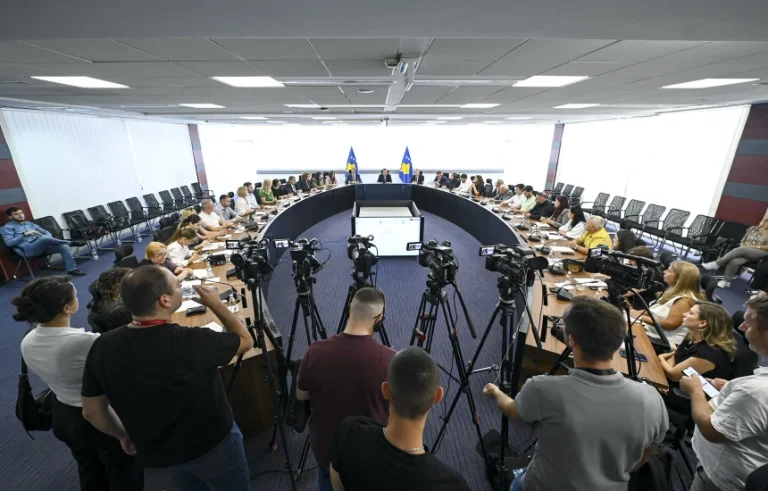
(9 months ago)Recent years' data shows a disturbing increase in cases of psychoactive substance abuse in Kosovo. While the challenge for a community without dependence is huge and requires comprehensive access. So said at the National Conference “a community without dependence”, in partnership with the Coalition of NGOs for Child Protection, Trust Circle [...]
So said at the National Conference “a community without dependence”, in partnership with the Coalition of NGOs for Child Protection, Trust Circle Foundation and the Labyrinth organisation, organised by the Office for Good Governance under the Office of the Prime Minister.
Kosovo's acting prime minister, Albin Kurti, said a community without dependence is a national mission for all, without exception.
According to him, fighting addiction requires comprehensive and co-ordinated approaches.
We have gathered today for a joint battle a battle for life and dignity and for the future of children. We're here together because together we're engaged in a free society where every child and every youth will be able to live with dignity and hope. The Kosovo government finds it clear that the fight against addiction requires comprehensive and co-ordinated approaches that begin with prevention, followed by education and awareness, provides psychosocial and health support with the aim of reducing damage for those who take drugs and guarantee dignified rehabilitation and reintegration to society”, Kurti said. KP, broadcast Periscope.
He added that the government is committed to implementing the State Strategy Against Drugs 2024%2028 and that police are being empowered in the fight against distribution of narcotics substances.
We are committed to implementing the state anti-drug strategy 2024-2028 as one of the priorities for protecting public health and citizens' safety. Through this strategy and action plan, we have established clear measures that combine the fighting of drug distribution chains with the strengthening of educational mechanisms. Especially in new school age, but also preventing and rehabilitation by keeping them focused. We are empowering the police in the fight against the distribution of narcotics substances, while investing in training centres and rehabilitation programmes for our youth”, he said.
Meanwhile, the president of the Coalition of NGOs for Children's Protection KOMF, Remzije Krasniqi, said that in recent years children and youth narcotics users have been included among the most vulnerable categories.
She stressed that this situation has been counted as the priority for action by the organisation, but also as calls for other institutions.
According to her, increased risk requires immediate intervention, including raising awareness, increasing investments and expanding support services.
Recent “Children and youth users of narcotic substances and drug users are included among the three most vulnerable categories that this has recorded as the priority for action for us as an organization and calls for action. Because of increased risk, need for intervention, including increased awareness of investment and expanding support services. Unfortunately, this category of children is often in the shadows because of the complete lack of access to social services, rehabilitation health, but also the stigma and prejudice that are extremely in the society”, Krasniqi point.
Meanwhile, Psychiatric Clinic Director at the University Clinical Centre of Kosovo Faton Kutlovci said there is a disturbing increase in psychoactive substance abuse in Kosovo.
He argued that the most affected are young and teenagers aged 15-25. He also said that children have substance abuse.
Among the most common substances used by Kutlvotz are cannabis, alcohol, soothing, stimulants, and others.
Psychiatry Director Faton Kutlvoci stressed that among the factors that contribute to the increasing number of people who abuse psychoactive substances are family members such as lack of parental care, then social care, including unemployment.
Other factors, Kuttlovci, cites economic factors, anxiety, depression, and easy access to psychoactive substances.
The data in recent years shows a disturbing increase in cases of psychoactive substance abuse in Kosovo. The most affected conditions are those of young people and teenagers aged 15 to 25, but unfortunately in the Sporadical situations we've had even children's and younger ages that have begun to abuse psychoactive substances...
Most commonly used substances are cannabis, alcohol, sedatives. In recent years, however, increased use of sillulants as well as cocaine and other heavy drugs have been observed that bring even more serious health and social consequences. The main factors affecting psychoactive substance abuse are family factors, lack of parental care, violence, and neglect. Social factors, peer pressure, unemployment, lack of health activities... Psychological factors, economic factors”, Kutlovci said.
Meanwhile, Centre Labyrinth director Safet Blakaj said it should be insisted that the general prevention programme be rationalised further.
We will insist that this programme that has now begun for general prevention to be more rationalised and that we be serious about the prime minister saying that we should not let young people go to waste for our non-compliance”, Blakay said. /Periscope/