3 hours ago
German Minister: Russia becoming increasingly threatening
Periskopi(8 months ago)
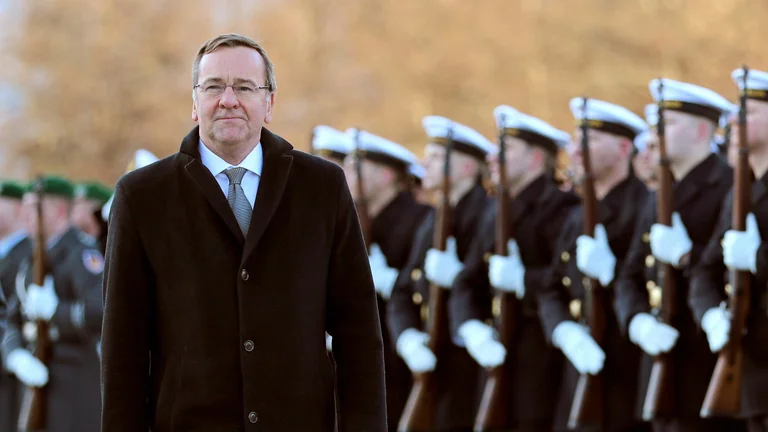
(8 months ago)Russia is becoming “increasingly threatening” for NATO, German Defence Minister Boris Pistorius said on Monday. Pistorius said this during a visit to Poland and Lithuania, at a time when tensions are high on the eastern side of the military alliance, due to air violations from Russian fears. Duke [...]
Pistorius said this during a visit to Poland and Lithuania, at a time when tensions are high on the eastern side of the military alliance, due to air violations from Russian fears.
Speaking at the Warsaw Security Forum, Pistorius said Moscow is “testing NATO allies with increasing frequency and intensity”.
Russia's President Vladimir Putin is trying to undermine European security and territorial integrity of the European nations”, Pistorius stressed.
It seeks to provoke NATO member states. He wants to expose weaknesses within our” coalition, he underlined.
But, NATO has “contributed to Russia's provocations with clarity, unity, determination and caution”, the German minister added.
We will not fall into Putin's trap of continuous escalation. We are keeping calm by remaining steadfast and determined”, he stressed.
Besides Pistorius, Dutch Defence Minister Reuben Brekemans and his Estonian counterpart, Hanno Pevcur, and European Commissioner for Defence and Space Andrews Kublius were present at the forum.
Pistorius is also expected to discuss the future of Ukraine's relations with Europe in high-level talks in the Polish capital.
The talks come weeks after the Russian fears fell over Poland.
The incident was followed by violations of NATO airspace in Romania and Estonia.
When necessary, NATO forces are ready, just as the planes of our allies in Baltic were established and accompanied by Russian planes outside Estonia's air space”, said Pistorius.
Speaking at this conference, Polish Prime Minister Donald Tusk said Russia's war in Ukraine is part of a political project to subdue other peoples.
This war is also our” war, said Tusk.
If we lose this war, the consequences will affect not only our generation, but also future generations in Poland, Europe, the United States and elsewhere in the world”, he added. / REL/