2 hours ago
French Government Ruined
Periskopi(9 months ago)
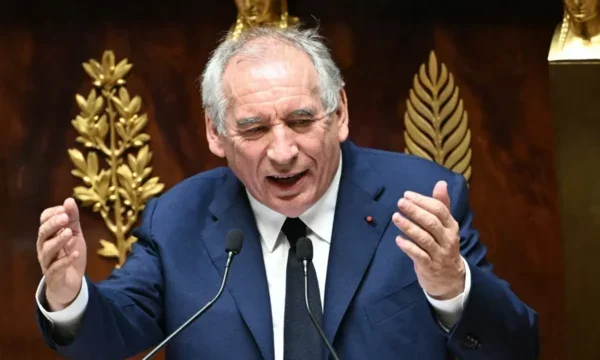
(9 months ago)France's Parliament has toppled Prime Minister Francois Bayrou's government after nine months in power, after its executive lost the vote of confidence he called on September 8th. During the vote at the National Assembly, 364 MPs voted to oust the government, meanwhile 194 opposed. “in line with Article 50 of the Constitution, prime minister must [...]
France's Parliament has toppled Prime Minister Francois Bayrou's government after nine months in power, after its executive lost the vote of confidence he called on September 8th.
During the vote at the National Assembly, 364 MPs voted to oust the government, meanwhile 194 opposed.
“In line with Article 50 of the Constitution, the prime minister must surrender his government's resignation”, Parliament Speaker Yael Brown-Pivet said.
The AFP, calling to sources, said Bayrou would surrender his resignation to President Emmanuel Macro on Tuesday morning.
Bayrou is the third prime minister France has had in 12 months.
The collapse of the Government is expected to cause even more instability for the European Union's second largest economy.
Bayrou, a centrist politician, 74, was nominated by President Emmanuel Macron less than nine months ago.
Bayrou has said he believes the cuts are necessary to curb the deficit and increased debts of the French state.
But opposition MPs vowed to use the opportunity to bring down Bayrow and his minority government made up of centrist and rightist ministers. His dismissal will force Macron to launch another hard-earned search for his replacement.
The National Assembly, which has 577 deputies, suspended summer holidays to hold the extraordinary session Bayrow, which began at 1500 on Monday.
Bayrow needed a majority vote to survive. The collapse of the government led by him puts France in a new crisis.
MEPs of the far right and left who, before the hearing, said they would vote against Bayrow government, have over 320 seats in the National Assembly, while the centrists and conservative allies have 210 soos.
Bayrow voiced disappointment Sunday, saying bitter opponents at both ends of the political spectrum have joined against him.
What does the government mean? These are political groups that, not only do I disagree about anything, but, even worse, are waging open civil war against each other”, he said in an interview for the online media.
Now, Macron will again be forced to find a successor who will work in the same fragile environment and face the same budgetary troubles that have plagued both Bayrow and his predecessors.
Even Macron himself has pledged to stay in office by the end of the mandate, but risks returning to a president without influence on the domestic plan if political paralysis continues.
Under the French political system, the prime minister is appointed by the president, accountable to the Parliament and is responsible for implementing domestic policies, particularly economic ones.
The president has great power over foreign policy and European affairs, as well as the commander-in-chief of the Armed Forces.
Discussing that large cuts are needed to regulate public finances, Bayrow had proposed a 44 billion-euro spending limit in 2026, as France's deficit last year reached 5.8 percent of gross domestic production, so much higher than the official EU target of 3 per cent.
France also faces a major debt crisis. At the end of the first quarter of 2025, France's public debt reached 3,346 trillion euros, or 114 percent of GDP.
Bayrow's plan, including the removal of two official holidays, was sharply criticised by his political rivals. / REL