3 hours ago
What can the Constitutional Court decide for the Parliament?
Periskopi(9 months ago)
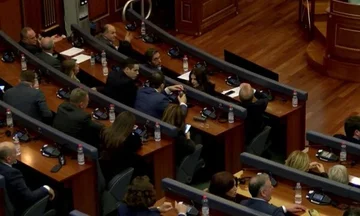
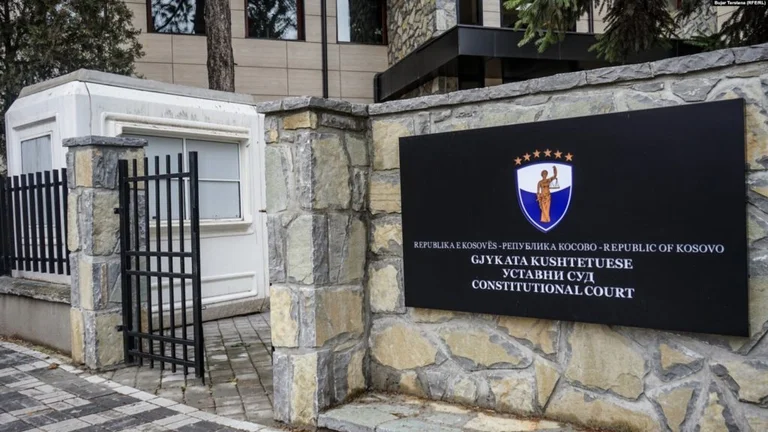
(9 months ago)Voting candidates for deputy heads of the Kosovo Assembly by minority communities was prompted by Kosovo's Constitutional Court on September 5th to impose a temporary move, preventing MPs from taking action and developing any procedure for forming the country's new government due to allegations of constitutional violations. [...]
The Serbian list complained to the Constitutional for the action of new head of the Parliament, Dimal Basha, who would later declare the constitutional legislature constitutionalised, despite Serb minority deputy leader's failure to elect Periscope.
The Constitution said the measure, which will be in effect until it issues an act of justice, was ex officio put in place, and on the basis of the request of deputies of the largest party of Serbs in Kosovo, arguing with “theeviation of risks or irreparable damages”.
How can the Constitution judge the case?
Zahir Cherkini, professor of Constitutional Law at the University of “Isa Bolatini” in Mitrovica, tells Radio Free Europe that the Constitution has always relied on the practice of the constitution.
He predicts that the Court wants “to establish that the only violation has been the division of the vice-presidential vote, as the practice thus far requires their choice in package”.
Cerkini does not expect the “for the Court to deal with political issues, as is the discussion of who should be deputy chairman of the Serb community. This is not her responsibility. The role of the Court is only to ensure respect for the Constitution and procedure”.
Similar decisions await Ehat Miftaraj, director of the Kosovo Institute for Justice.
But, the Vetevendosje (LVV) Movement, the winner of the February 9th elections, has other expectations.
“We expect the Assembly to be confirmed as a constitutional, because the Speaker of the Assembly has respected and followed all procedures envisioned with the Constitution, the Court's Jurispence and the Framework Rule”, said in a statement by the LVV Media Office to REL.
For LVV, the representative of non-Serb minorities, Emilia Rexhepi, who was elected deputy head of the Parliament, voted “regularly and has no right anyone to take this right to the multiethnic group”.
Vote for Subheaders
Unlike the candidate of other minority communities, none of the 10 representatives of the Serb community managed to be elected deputy head of the Parliament.
The only candidate to propose the Serbian List, which in the country has 9 of the 10 seats reserved for Serbs, did not secure the 61 votes needed even after three rounds of voting.
After the party enjoying Belgrade's support refused to propose for deputy chairmanship to someone other than Slavko Simi, Mayor Basha cast lots, according to the Assembly's rule of work, to issue another name.
Neither others from the Serbian List, nor Nenad Rassic from the Serbian Party for Freedom, Justice and Survival, currently the incumbent minister in Albin Kurti's government, received the necessary votes, with whom Basha unilaterally closed the constitutional session.
Miftaraj says about REL that “if taken on the basis of the Constitutional Court of 2014 and 2025 and the standard that has been built in the last 11 years in terms of the Kosovo Assembly's constitutional constitution, the Constitutional Court could impose the return of voting in packages for two vice-presidents of non-communal communities”.
According to him, should the “Court take place on the basis of the Parliament's Labour Adjust approved by the past legislature, the voting procedure of candidates holding the majority of votes of MPs from minorities” could be clarified.
So what? Cerkin believes that the Court wants “to stress that the constitutionalisation procedure should continue where it remains, taking advantage of the remaining 30-day term” of a preliminary act. /Radio Europe Free/