3 hours ago
Former British diplomat completes testimony in special
Periskopi(9 months ago)
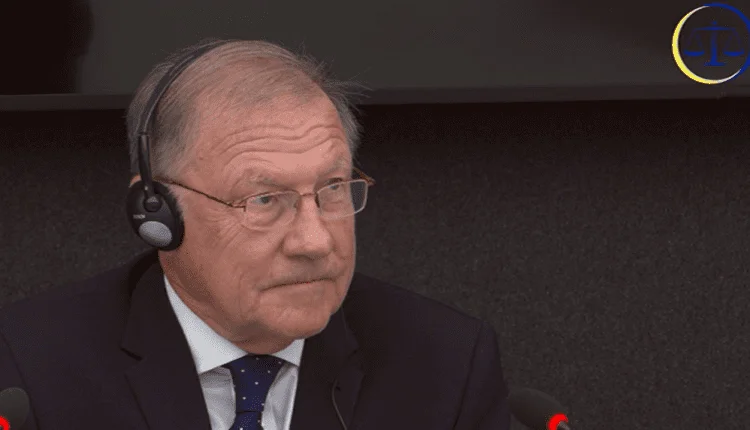
(9 months ago)In the final part of the session, former British diplomat John Stewart Duncan answered the court's questions. Former adviser to then NATO Commander Wesley Clark said that during the wartime in Kosovo they had seen no evidence testifying to the existence of the General Staff. Why have we never heard of the House [...]
Former adviser to then NATO Commander Wesley Clark said that during the wartime in Kosovo they had seen no evidence testifying to the existence of the General Staff.
Why have we never heard of the General Staff except in cases of propagandistic statements? We had the proposal for this deal and the first signatures, and there General Ceku did not use that title. I'm aware of the fact that there was a body called General Staff, which is also in the indictment, I think it was created in 1994, now the point for me is this, what function this organ had during the war and why we've never been mentioned, nor have we seen any evidence that this body” existed, he said, the KP reports, broadcast Periscope.
The British denied ever to see orders or decisions issued by the General Staff.
No, as far as I know. But what we have seen has been the role of the commanders of the area or regional, and the role of General Ceku, as well as the military structure he described to us and has told us that I am the commander of this structure. It was the next title, so”, that Duncan was answered when asked by Judge Metro if he saw any document or order of the General Staff.
The former British diplomat, who, during his testimony, stressed that the KLA had no hierarchy, said that from what they had information, power had the commanders of the zones.
So, according to the information that we had, we had understood that the power was in the commanders of the zones and General Ceku, if we were any other information, we would have been different, if this organ that calls itself the General Staff, if it had been a powerful organ that had the powers and was able to communicate with us, then we would have been directed to exactly the General Staff, but we didn't. We haven't seen this headquarters, we haven't had any proof of his existence... We were told that the people we were supposed to communicate with and co-operate with were among the others General Ceku, who told us that the people we should have on our side are the commanders in the area. This was architecture, inefficiently efficient, it doesn't matter now, but power was owned by these people, so we went to meet these people”, he added.
The session then went to the private session for a few minutes. Similarly, the witness answered the questions of Judge Barth, who told him that, from the discussions they had with Agim Ceku, it was said that the presence of commanders of the areas in discussions on disarmament was essential.
At the end of the interrogation, the judge asked Gaynor. The witness, answering his questions, said Agim Ceku was the general who had command and control in the KLA.
General Ceku is the person who had command and control, and as we discussed earlier, I understand there is a legal definition in the justice system or international courts as far as command and control, this definition is not in the same line as you understand this term. NATO. NATO understood that you have command, gives orders, while the person who carries these aspects should have command and control... somebody could have control but not command, and people who had control and command. As for the aspect of the KLA control and command, this control and command were carried by Agim Ceku, Thaci had command but not necessarily control. He could issue instructions, but he could ensure their implementation...”, he said. /Periscope