3 hours ago
Balkan criminal groups are expanding West Africa's role in cocaine trade, a report says
Periskopi(9 months ago)
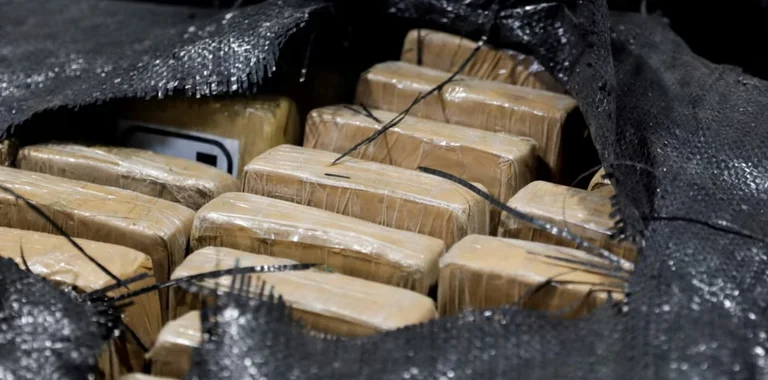
(9 months ago)Criminal groups from the Western Balkans, which are among the main cocaine traffickers in Europe, are consolidating their presence in West Africa, turning the region into an increasingly important link to the smuggling route from Latin America to the European Union, a new report is said. Growing demand for [...]
The increased demand for cocaine in Europe, along with increasing controls on direct routes from Latin America and the considerable expansion of maritime ports in West Africa, has led smugglers for several years to increase traffic through Senegal, Sierra Leones, Gambias, Guinea-Bisssaut and Cape Green.
But the impact of Albanian and Slavic-speaking networks in the region so far has little been understood.
Researchers at the Global Initiative against Transnational Organised Crime (GI-TOC), in the report released on Tuesday, said these groups have grown prominently in global importance and are already among the biggest criminal networks in the cocaine trade in Europe.
They have exploited alliances in the region with Dutch criminal groups, and especially with the Brazilian organisation Primeiro Comando da Capital (PCC), to deepen control over the supply chain.
“Aleance between groups from the Western Balkans and the PCC is probably the most important partnership currently for the introduction of cocaine into Europe”, said Sasa Djirdjevic, one of the top authors and analyst at the GI-TOC.
The report, partly backed by the British government, emphasises that more inter-ccircular co-operation is needed between law agencies, portal authorities and other actors to combat these increasingly expanded drug routes.
It also calls for broader data collection and wiser target of mediators in this trade.
“These groups are among the most sophisticated in the world. They are not peripheral players”, said Lucia Birdy-Beniz de Lugo, director of the Legal Economics Observatory in West Africa near GI-TOC.
These major global actors are linked to violence in Europe, and as more and more highly sophisticated and violent criminal networks infiltrate West Africa, this poses serious risks to stability and security”, REL reports, broadcast Periscope