2 hours ago
Former American colonel: The IA Drons Will Revolution the War in Ukraine
Periskopi(9 months ago)
(9 months ago)Frank Sobchak, retired U.S. Army Colonel and professor at U.S. Navy College, said that the use of drones has created a world warlike mess. Radio Free Europe: Let's start with your view of the Russian offensive in Ukraine, which seems to be much better than much [...]
Radio Free EuropeLet's start with your view of the Russian offensive in Ukraine, which seems to be much better than many expected. What is reality on the battlefield?
Frank SobchakI think this is part of a broader question about where the conflict is. In many ways, it resembles a static World War I war: Russia is winning small, gradual victories, sometimes just a square mile a day. If Russia continues to progress at this rate, it would take 300 years to conquer Ukraine, according to the Institute for War Study.
Radio Free EuropeBut the pace has accelerated in recent weeks. The situation has become even more serious near Pokrovsk and Kupjansk, where the Russians made tactical victories and were later ousted by Ukrainian forces. What is your assessment of the current situation?
Frank Sobchak: I would see this more from a strategic rather than tactical perspective. From a tactical point of view, what we see is two boxers in the ring exchanging blows. The strategic question is: Who cares first? Who gives up and falls? This is related to two things the defence industry and the will. As for the will, both sides remain extremely strong. There is nothing from Russia that suggests they have abandoned their maximum war goals. Ukraine's determination also remains intact. Yes, there are divisions and cracks on both sides, but nothing crucial.
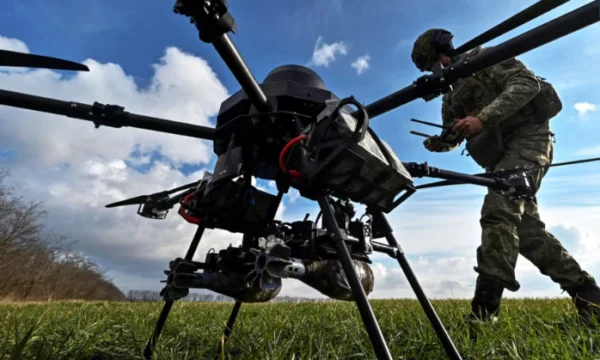
At the tactical level, we see a mess similar to World War I. Part is caused by that willpower, the two boxers who still exchange blows. Another important factor that makes the static front is the drones. In the first world war, this was caused by machine guns, artillery, and poisonous gas, and today this is mainly related to drones. Their influence is twofold. First, in intelligence, surveillance and discovery: Now each side has a much clearer view of what is happening behind the enemy's lines, which is the clearest view than in almost any other conflict in the past.
Radio Free Europe: Which makes tactical surprise harder.
Frank SobchakAbsolutely. But since surprise is now extremely difficult, every time one of them does, the rewards are even greater. Ukrainians have shown this during their offensive in Kursk when they were able to perform operational surprises, though not strategic surprises. The second factor is that the drones are done, in many ways, the air power of the poor man” Air support of the poor man. They have allowed Ukraine to achieve something like air equality. Russia has no air dominance, unlike the early predictions of many Western analysts. Drons have created equality on battlefields. Both sides can conduct effective attacks on infantry and armoured vehicles, making massive concentrations of troops and rapid advances almost impossible.
Radio Free EuropeSo no major progress is expected in the near future?
Frank Sobchak: It's a little bit likely. But after studying military history since I was 10 years old, my impression is that wars like this usually go very slowly until they suddenly accelerate. To return to the boxing metaphor: When a boxer is completely tired and unable to defend himself, then the final hit comes. Once the cracks that we see now begin to expand and break, then we can see a rapid collapse of one of the two sides provided the war lasts long enough to reach that point.
Radio Free Europe: How hard would it be if Russia took Pokrovscu? Would such a thing be strategic progress, perhaps even a final blow?
Frank SobchakI don't think so. Of course, Russia would give a tactical advantage, but not a decisive advantage. The idea that they can exploit such progress with major attacks seems very impossible unless the Ukrainian Army itself is destroyed and that does not seem to happen. The most likely result, if the Russians were to get Pokrovscu, would simply be a tactical breakthrough. Russia no longer has great maneuvering capacity. They have already spent most of their reserves dating back to the Cold War. The massive supply of weapons and machinery that we previously connected with Soviet forces is gone. They just don't have that capacity, at least for now.
Even if they somehow do, they have no training to carry out maneuverive warfare with combined weapons. It is a very complex enterprise and requires extensive training and preparation at all levels and leadership across the chain of command.
Radio Free Europe: And this kind of maneuvering war is essentially NATO doctrine, not Russia's.
Frank SobchakExactly. Russian means of war is the opposite of American. The American way is, send a bullet, not a man. Use technology, artillery, or aircraft to solve the problem. The Russian way is to send people. Keep supplying people until the machine is destroyed. That's why the wide-scale maneuvering fight is so impossible for them and why I don't see that there can be any operational progress.
Radio Free Europe: When we talk about the great impact of the fears on this war, can we say that they have taken the crown from artillery and become the king of the battlefield?
Frank Sobchak: That's a good question. Traditionally, artillery is meant in terms of mass: You can put battalions, regiments, companies and use extraordinary amounts of weapons in a single area. If you look at only the number of drones now being produced within Ukraine, there is obviously range also, although each blow of an individual threat often carries less explosive power than a 152 or 155-millimeter shell. So in pure terms of firepower, artillery may still have its top priority. But what we're really looking at is a shift. Especially on NATO's side. There was a perception that artillery was evolved from mass hail to precise fire. The fears are now filling that void.
Radio Free Europe: Another aspect often discussed is the influence of artillery on earth forces. Unlike soldiers, a threat may collapse, but he does not suffer from combat trauma. He's not having a nervous breakdown because the missiles are falling out of the sky.
Frank SobchakAbsolutely. Fears also have their own way of causing devastating psychological terror. Look at the videos where the Russians panic, run to hide, jump into bunkers and often the first fear breaks position, then another flies after soldiers. It's personal. It's a terrible feeling to be chased like this compared to being exposed to artillery fire. That being said, even people operating on the drones may suffer trauma.
Radio Free Europe: If direction and operation gradually goes into the hands of artificial intelligence that seems to be the preferred dynamic, does this shift the balance in favour of the drones?
Frank SobchakYes, of course. We're on the threshold if we haven't already achieved a revolution in war, where we're going towards taking the lead in fear of artificial intelligence (IA). So far, we have not seen full control of artificial intelligence, where man is completely out of the process. But the key word here is still here. As the war continues, as countries become more depressed in this confrontation, the options that once seemed irresponsible and irresponsible may begin to look like the best way to go.
Radio Free Europe: How much has the use of fears facilitated the acute absence of soldiers who are experiencing Ukraine?
Frank Sobchak: Drons have played a very important role. Drons have become central to the Ukrainian defence industry base. It even refers to the production of up to 1 million drones annually. Such a degree would help absolutely compensate for the lack of soldiers.
Radio Free EuropeWhat about the Russians? How well are they adapting?
Frank SobchakThe Russians have shown that they fit very well. The old Stereotype that describes Russia as a meat-style fugitive of the First or Second World War underestimates their ability to innovation, and we are seeing that now.
At the same time, their industrial base is greater. Much of what we've seen from Russia's fears capacity has been particularly attacks on Ukrainian cities, which have been more frequent lately, have been backed by Iranian fears, especially the type of Shahed.
More and more, many are produced within Russia. They have also developed their own systems, such as Rubikon, and are increasing the production of hostage fears. This could be a real problem for Ukraine, unless it adapts more and stays a step forward in the innovation race.
The strategic question is whether Russia's allies will continue to boost support. North Korea has given millions of artillery shells and tens of thousands of soldiers and reports of more soldiers coming. Will this continue? Will Iran continue to supply with the same volume, now that there are other concerns? That remains unclear. And frankly, the biggest factor remains what the United States does. To be honest, Ukraine's success depends on the United States. With half of Ukraine's military assistance coming from America if this aid stops, it would create a deep strategic problem. And, U.S. policy has been, say, unpredictable since 2014.
Radio Free Europe: Let's talk about the deal US President Donald Trump reached with NATO, so Europeans would buy weapons from the United States to give them back to Ukraine. Are there the same restrictions as before? For example, can we see Tomahawk floating missiles in such a package? If everything has to do with transactions, I'm sure NATO would find some previously hidden crates to open on condition the United States is ready to sell.
Frank Sobchak: It seems that use NATO as an agent to buy and then hand over weapons appears to be the new US policy. If this is going to have the same limitations as before to be seen, but if it's going to have to guess, I don't think it's going to change the equation significantly. Also, it remains unclear whether the Tomahawks will get involved, but I would say there is no weapons system that would change course in favor of one side. The core of the conflict concerns national will, industrial protection base and the number of soldiers. The victory for one side or the other will come only when one of these guards falls first out of fatigue.
Radio Free EuropeAnd it looks like Ukraine won't be sitting waiting either. Kiev has advanced with its production of the new Flamingo missile a system that many say is comparable and, in some respects, even better than the American opponent. How important can this be for balance on the battlefield?
Frank Sobchak: Although the new Flamingo Ukrainian missile is obviously a tactical innovation, I would put it in the same category as Tomahaw's floating missiles. No single weapons system is likely to dramatically change the balance of power in favour of one side./Periscopi/