3 hours ago
Albania's transformation and lessons Kosovo can learn
Periskopi(9 months ago)
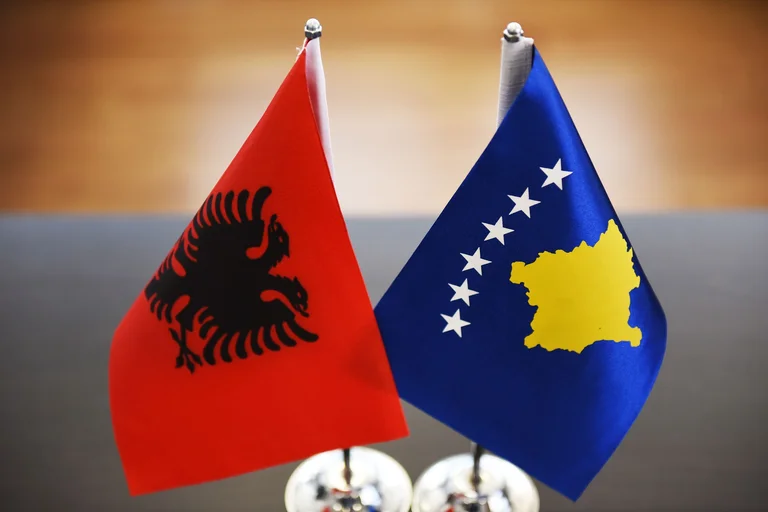
(9 months ago)When talking about Albania's success on the road to the European Union, two main pillars are mentioned: internal reforms that have transformed the justice system, and external diplomacy that has drawn the country to European decision-making centres. Five years from the European Commission's decision to start membership talks with Albania, and only one [...]
Five years from the European Commission's decision to start membership talks with Albania, and only one year since they started in practice, the country has opened 28 chapters four this month alone of 35 total.
This progress has sparked optimism in Brussels, where officials believe Albania could open the remaining chapters by the end of the year, Periscope.
“Albania has shown that positive change is possible and the EU rewards this positive change. Keep pace”.
This impetus, EU Enlargement Commissioner Marta Kos, gave it to Albanian Prime Minister Edi Rama on 16 September in Brussels.
Albania, at an increasingly stable pace, began to move since the early 1990s, when the communist dictatorship that had kept the country hermetically isolated for 45 years collapsed amid popular pressure for change.
Democracy was the great dream of Albanians back then, but reality also brought face-to-faces with deep economic and social uncertainty.
In the mid - 1990 ' s, the country experienced one of the worst crises in modern history - the collapse of pyramid schemes that led to revolt and chaos in 1997.
The next anarchy with open army warehouses and weapons in the hands of civilians questioned the very survival of the state. Over 2,000 people lost their lives, thousands more emigrated.
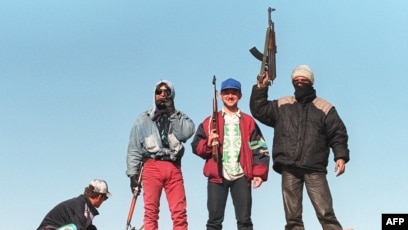
But even under these circumstances, Albania remained Western-oriented. Initially, international aid and peacekeeping missions helped stabilise.
Later, the country began building new institutions and approaching NATO and the European Union. In 2009, Albania became a member of the largest Western military alliance, while five years later, the EU granted it candidate status.
Klodiana Beskun, a legalist at the University of Tirana's Department of Political Sciences, says the slogan of protests of the years -- “ -- we want Albania as all of Europe” -- was not, simply, the call of the time, but became a guide for Albanian society throughout the course towards European integration, reflecting both in culture and art, and then in the country's foreign policy.
The European integration “was the beginning and goal of every Albanian government and, above all, the current government of Prime Minister Rama. For the sake of truth, Rama is extremely dedicated to this issue”, Besk says of Radio Free Europe's Expose Programme.
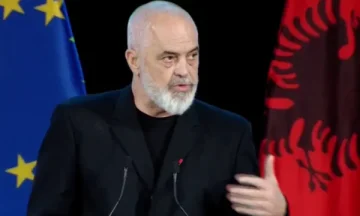
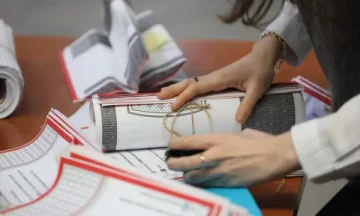
“Albania 2030 in the EU” was Rama's party slogan in the May 11th parliamentary elections, which he firmly won. Following the confirmation of the new government on 18 September in the Assembly, Rama declared that this slogan would remain the head of his new mandate -- the fourth in line.
“European Albania is the orientation compass of each page of our programme and the rhythm of any reform we will undertake”, Rama said.
Besk says reforms undertaken over the years, particularly in justice, which led to judges and prosecutors' ownership, as well as in arresting high-level corruption cases, redefined Albania's international position.
It has brought as innovation the decline of the culture of impunity to high levels. This has radically changed individuals' perception of the state, but also perception of foreign Albania”, according to her.
Richard Jozwiak, editor for Europe of Radio Free Europe, has been following EU policies for years. He says European leaders are impressed not only by deep reforms in Albania and meeting EU requirements, but also by the image Rama has built in Brussels.
According to Jozwiak, Rama always displays the mentality “we can do it”, which clearly distinguishes it from others.
“Edi Rama is very popular in Brussels. I would say, even that most people love him either because of the charisma or because of the positive. His entire public presence is in sharp contrast with many other leaders, especially from the Western Balkans, who come to Brussels and complain about it, and for each other”, Jozwiak says.
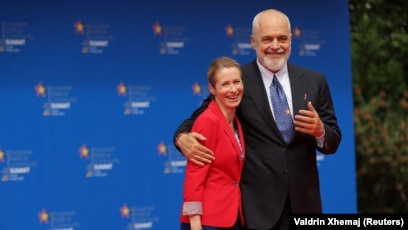
Albania stands out at the pace among nine EU candidate countries. According to Jozwiak, it is the only <x0-second student with the A+” note, followed by Montenegro; others move slower or have remained in the stalemate.
Jozwiak says even transformation at tourist destination has improved public perception, leaving behind the former image of a Albania without law or associated with the mafia.
Moreover, it has also received a reputation as host to major international events: in May it hosted the European Political Community Summit with over 50 European leaders, in February 2024 hosting a summit for Ukraine with the participation of President Voldymyr Zelensky, while in 2027, Rama has said he will host the NATO leaders' summit in Tirana.
No wonder, says Jozwiak, in Brussels they call him a lurtim “jadge Ed from Tirana”.
It brings less problems to the table and this attracts the sympathy of all, even the Dutch, who are usually critical but who now say Albania deserves it, must move ahead of”, Jozwiak says.
Even former US Secretary of State Antony Blinken turned to Rama with “Eddie” during his visit to Tirana last year, particularly praising his progress in justice reform.
However, not all is for glory. In the latest State Department report, under Blinken's direction, Albania was described as a country where “corruption exists on all branches and levels of the Government”.
According to data from Albania's Statistics Institute, more than a third of the previous population of 3.3 million has been evacuated since 1991. Average monthly salaries are equivalent to around 750 euros, and almost a third of the young people still in the country are unemployed.
Criticism also comes from Western media. In a writing last year, Der Spiegel wrote that Rama '%s' despite corruption in Albania is popular in Europe because it helps manage the refugee crisis.
A day after the May 11th elections, Neue Zürcher Zeitung wrote that “Rama has set up a power device, as many countries in the region know: He is the head of a party that controls administration, courts and many media”.
In this year's report, Reporters Without Borders estimated that Albanian media is affected by conflicts of interest. However, Albania managed to move up 80th, up from 99th in 2024.
To preserve its moment, James Ker-Lindsey, professor at London School of Economics, says Albania must continue to implement internal reforms, even when they are challenging, and to protect democratic principles, such as free elections and independent media.
Joining the EU does not just mean adapting rules for food safety or financial systems. It's just as important to have a functioning market economy and a democracy that works”, Ker-Lindssay says of Expose.
Jozwiak also believes Albania's progress towards the EU is promising, but fragile, and says its sustainability will depend on sincere reforms, political unity and careful management of bilateral relations.
According to him, the EU urgently wants an expansion, as it has not expanded since 2013 with Croatia, and needs a success.
“I think Albania and Montenegro will join this decade. At least these two countries will enter, almost regardless of what they do”, Jozwiak says.
Observers underline that other countries can learn from Albania's experience, that EU integration requires deep reforms and their implementation, constructive co-operation with European institutions and real readiness to comply with European standards.
Kosovo, as the only Western Balkan country without candidate status, may feel pressure from Albania's success to pave its way by initially restarting dialogue with Serbia.
You must show Europe that you are willing to cooperate. In the case of Kosovo, this is an extremely important message, especially now, when relations between the prime minister [in Kosovo's office, Albin] Kurti and the EU are at such a low point”, Ker-Lindsay says.
In a Europe troubled by security challenges, Western Balkan countries have the chance to show their maturity and prove they can play the big game without ruining everything on the way. Albania, according to observers, is evidence that this road is possible. /Radio Europe Free/