5 hours ago
Who were 52 prosecution witnesses who openly testified in the trial of former KLA leaders?
Periskopi(9 months ago)
(9 months ago)Among the 256 evidence accepted in judicial evidence during the presentation of the prosecution case in the case against former KLA leaders, 125 of them were heard in the courtroom. From this number of witnesses who testified in this trial, only 52 of them became known to the public. And 73 [...]
Among the 256 evidence accepted in judicial evidence during the presentation of the prosecution case in the case against former KLA leaders, 125 of them were heard in the courtroom.
From this number of witnesses who testified in this trial, only 52 of them became known to the public. However, another 73 testified with protective measures that included giving an imageless witness and a changed voice.
Although the number of open witnesses was evidently smaller than the witnesses with protective measures, international witnesses testified in this process, figures from the ranks of the Kosovo, Albanian and Serbian Liberation Army.
- Commander Remi
The first witness to appear without protective measures in the process was former Llap Operative Zone Commander Rrustem Mustafa, or Commander Remi.
Twelve protective witnesses witnessed before him until Remy's turn.
Witness Mustafa spoke of the four accused, referring to a visit of the General Staff to the Lapi Operative Zone. He had initially said he did not know Hashim Thaci's position at the time, but has recognised him as a KLA soldier important to the war.
And for Jakup Krasniqi, he had said he was a spokesman for The KLA that he had always known as such, even though you saw documents that he had written his vice title somewhere. Meanwhile, for Rexhep Selimi, he had said he was the general inspector in the KLA and a member of Staff. For him, he has said he respected him as a skilled warrior and an important man in organising the war, insisting that the KLA be organised as well. And for Kadri Wessel, he had said he didn't know his position during the war, and he never even said that, but he said he knew he was at the headquarters.
Remi had also said that the local commanders considered themselves independent of the General Staff, including themselves.
After completing his testimony, Remi had written on Facebook that it was hard to have a fellow soldier face on such unjust charges.
- Francis Ledwridge
Francis Ledwig was the second witness to testify in public in the trial of former KLA leaders. It was 14th in line.
Ledwridge testified as British intelligence officer who had served in Kosovo under the OSCE mission. He had said his role in Kosovo was the human rights investigation into missing persons and persons banned by the KLA around July 1998.
Similarly, he had claimed that he had not been aware of the KLA structure in general, nor in the structure of Malishev's Rahovec.
He had also said that Jakup Krasniqi's name had recognised that he was a spokesman and that he had heard of his presence in Malisheva and that, according to him, he had been told he is widely recognised, but added that he had personally not seen it on the news or television.
Ludwige had said he remembers having tried to meet with Krasniqi, but I don't know if the meeting was rejected or that they had failed to meet with him.
- Dragica Bozanic
Dragica Bozanic, during her testimony, said members of the Kosovo Liberation Army ( U n The CK has kidnapped her husband and son and she has never seen them since.
ZPS, in summary of her statements, which had shown that in her village of Opterush in Rahovec, during the night of July 18th, she and family members were attacked by the KLA, and that the same had surrendered and sent by car to a nearby village.
According to her, they had separated men and women and had heard voices when men were beaten by KLA members. It is further said that she was sent to her husband and given a letter to be sent to the villagers of the village of Zoqisht to surrender to the KLA.
The Witness during her testimony said her husband was a teacher and was never in the Serbian Army after having had health problems, but said other men had the obligation to carry out military service and that until recently it was also binding on Albanians.
- Agim Idriz: My ban was made for private reasons and was not a KLA issue
Agim Idrizi was the next witness to testify without protection in this case. However, this witness was 14th under way.
Regarding this witness, prosecutor James Pace had said Idrizi is an Albanian of Kosovo and was taken by several KLA members in March 1999.
Prior to the ban, the witness reportedly sold wood for several Serb police officers and that he supported U n CK but it's never locked in the KLA.
Agim Idrizi, during his testimony, has denied being a police officer of Serbian institutions or forest guards.
On the other hand, said that with the mayor of the municipality at the time, Radislav Organjovic never spoke to be locked into Serbian security forces.
If anyone can find the name of the itself that I've worked as a cop written in the document, it's the biggest I've ever been to say that Agim Idrizi or the Ranger, these are not real, you can ask questions about Kacanik there, you know exactly”, the same guy said.
Idrizi has said that his ban and arrest were made for private reasons and that it is not the issue of the Kosovo Liberation Army (UÇK), but a problem he had with some people for one land.
During this witness, the witness has often spoken excitedly and indicating his concern that his family and his life were destroyed and that without argument they wanted to harm him.
- Frederick Abrahams
Frederick Abrahams, from the international organisation “Human Rights Watch”, in quality of the 22nd witness, has said he was afraid to talk about alleged KLA crimes.
In the case of the investigation of alleged KLA offences, interviews were difficult because there was hesitation and fear of openly speaking about the matter, he had said.
This witness was part of a report written about a massacre that was allegedly committed by the KLA following the find of lifeless bodies at Radonic Lake. He said in his testimony he'd compile different sentences in the report on the case of lifeless bodies on Radonic Lake.
While he had also faced a part of the report in which several murders near Glodjan had attributed it to the commander of the area.
“Country commanders committed crimes, it's clear as in the September assassination near Glodjan, the commanders of the zones should have once ordered the killings directly, the report said.
To that end, Kadri Wessel's lawyer, Ben Emmerson, had said that 9 of the victims were alive, for the last time, under the protection of Serbs, who the witness had said knowing what we know today, these sentences I would compile differently. After that, the lawyer had announced the witness that the case is over and that the person is innocent and that he has proved to have no joint criminal organisation, nor was he related to any of the local commanders.
I admit, however, that the wording should have been done differently, Abrahams said, while lawyer Emmerson said the case goes beyond because the killings were described as committed by KLA forces.
While the witness underlined that the claims were taken from the Serbian side. The lawyer, on the other hand, had told the witness that they made a review of Serbian news.
- Donglas Young
During collections read by the Prosecutor's Office, Donglas Young was told to be a lieutenant colonel of the British Army and was deployed in the mission of diplomatic observers and part of O's verifiators. The SEU in Kosovo in 1998 and 1999.
On the other hand, he said he had left Kosovo in March 1999 and returned to serve with KFOR as deputy commander-in-chief for Malisheva and Rahovecin and had reported on centre 1. For him, it was said to have co-operated with the Kosovo Liberation Army (UÇK) for missing and kidnapped persons and to find out where these kidnapped persons were from the KLA. While, for the KLA structure, Young had said there were no concrete details about it.
- Nebojsa Radoseviq
Nebojsa Radoseviq is former reformer from Kosovo of the Serbian State News Agency, Tanjug, who testified as the Prosecutor's 28th witness in this case. He came to testify about the alleged arrest he and photoreporter Vladimir Dobricicic from the KLA had been given.
Radoseviq has admitted that in 2019, when he gave an interview with the SPS attending was also a Serbian prosecutor.
At a moment during the questions asked, lawyer Gregory Kehoe told witness Radosevic that he and Dobrici on the day of the KLA arrest have gone to get information about the Serbian Intelligence Service. Radosevic had said he did not exercise indictments on what he claims happened to him by the KLA, arguing that the “state was at war with KLA”.
Moreover, he had said that in the place where he was being held, The KLA had also mistreated two policemen. For Hashim Thaci, the witness had said he had heard of him after his release from the KLA. This witness had faced conflicting statements of his own, as well as of Dobrici.
- Predrag Dediq
Predrag Dediq was the Serbian witness who, in the trial at The Hague, came with claims that four KLA soldiers kidnapped his son and saw me.
These soldiers, he said, had gone to the witness's house and had asked them to hand over all the weapons and were ordered to leave the apartment.
In June 1999, the witness lived in Rahovec with his wife and son. In brief, after the withdrawal of Serbian military police, KLA soldiers arrived. Some of the officers went to the witness's apartment looking for weapons. The Witness was mistreated, threatened because I claimed that he did not want to give up his weapons. The next day... The NLA arrived at the witness's family and asked him to give all the weapons and keys to the apartment”, the prosecutor said during the presentation of witness statements.
On the other hand, he said the witness and his wife were ordered to leave their apartment within 15 minutes and they left.
The prosecutor said that, according to the witness's statement, his son was kidnapped on June 18, 1999, in the presence of his mother by KLA members.
On June 18, 1999, about that date, the witness's son was kidnapped by four KLA soldiers, wearing KLA uniforms and armed in his mother's presence. The witness's wife was told that the boy was taken to the police station for an interview. After receiving information about the boy's kidnapping, the witness went to the KLA police station that was near the firehouse and asked them to release the boy and witness locked him in a room for an hour and later released him after KFOR intervention”, prosecutor Mihailzuck said.
The prosecutor said the witness had declared that after that day he had never seen his son again.
Witness Predrag Dedzic has claimed that his son Boban was 37-year-old and army reserve at the time he was kidnapped.
In addition, Dedic had said that Ismet Tara, who was commander of The NLA in Rahovec knew about his whereabouts and that he had told him that. Dedic said Albanians stole the apartment and then blackmailed it to sell it to them.
- Dedaj Gjergj
Gjergj Deday was the witness who asked to testify in a closed hearing for the public, but it was not approved by the court. He had insisted that he was illegally charged with public hearings. Dedaj said he wanted to consult lawyers too, but four of those he had met in Pristina, according to him, had not wanted to clarify the court procedures.
Since as a witness faced conflicting statements, many had claimed that they were not in normal condition when they were made.
In addition, Dedaj had said political parties in Pristina had viewed him jealously KLA. Likewise, Deday said he was never a member. The KLA's because according to him, not everyone had the courage.
I wasn't because we didn't have all that courage, that honor and that privilege to be a member of the Kosovo Liberation Army”, Deday said.
Speaking of a visit to Crees, where it is later claimed that Deday and some members of political parties had been detained by the KLA, the witness had denied such a thing by adding that they went as going to the wedding at which Thaci was not seen.
For questioning him by the prosecution, Deday had said that they were trying to extract the guilty elements. KLA.
Near the SPS, he had declared that they were under arrest by the KLA, in Dedaj trial, said he probably wanted to hit Thaci as a political rival.
While, in terms of his 2014 statements, where he had said he was beaten by the KLA, Deday refused to mention the term "heavy" on the pretext that he was risking and destroying his life.
I protest severely and let me protest, save my human and family dignity. I'm a very old man, and I've had extremely unexplainable experiences from you. With what I'm reminded of, you ruined my life again and risked my physical life”, Deday said, adding that this incident had exaggerated.
After being sent to Baica, Deday says he met Thaci, where they spoke in a calm and cooperative manner. He had added that the KLA had reason to suspect them.
In addition, Deday said that by the time Bajica's school was attacked, it was Thaci who rescued them.
Asked about the media conference organised after the case in Bayca, Dedaj had said that they are ruining the questions about this part and that he would earlier accept life imprisonment.
Following with his testimony, Dedaj had said Kosovo institutions did not offer proper co-operation KLA.
Regarding his post-war statements, Dedaj said he has investigated and understood that concerning that event Hashim Thaci is innocent.
- Dragan Ivanishevic
Witness Dragan Ivanishevic was driving from Pristina on the evening of February 9, 1999, when he was kidnapped by several armed men in KLA uniform. Within an hour or so, The NLA transported the witness from one country to another with a “White Lada” The witness's kidnapping coincided with the KLA kidnapping of Velko Markovic. The Witness saw Markovic that day several times and when they were held together behind a car “Lada”, taking them from one location to another”, the prosecutor said while reading the summary for this witness.
The prosecutor said that, according to the statements, the witness had managed to escape, while Markovic had remained banned, reports the “Bet on Justice“.
During this time, Markovic told the witness, among other things, that he was a police officer, but that he would tell the kidnappers that he would work on the railway. Mr. Markovic and the witness managed to open the trunk, and the witness left, while Markovic continued to be banned from KLA”, the prosecutor said.
On the other hand, the ZPS said the witness had learned from others that Markovic was last seen on February 9th 1999 and that he had not returned home.
“Pass escaped, the witness learned from others, including from Markoviq's family that Markovic was last seen on the day the witness was kidnapped when he stopped a “car. White Lada” The Witness learned that Marcovic worked as a policeman for the railway, the same information Markwick himself had told him when they were carried together in the trunk of a “car Lada” The Witness learned that Markovic had not returned home”, the SPS told him.
Ivanishevic had said he served at the “territorial protection” unit in Vushtrri when the war began.
No, it's the first time I've heard that. It's the first time I've heard of these 1000 people -- 11x1> -- the witness answered when he was asked if he heard of killing 1,000 civilians on May 2, 1999.
- Sadik Halitijaha
Sadik Halitjaha was the witness for whom Wessel's then lawyer, Ben Emmerson, had said he was “co-competitive without an indictment” and allegedly ordered the kidnapping of three women who are family witnesses, who were later found dead.
During his testimony, Halitijaha had said that Adem Demach had an idol and that without his permission they have never given media interviews.
While talking about the chain of command, Halitijaha says they had no orders from the General Staff. According to him, from the local level to the teams have been working with regulations that have cleared the areas themselves. The staff was called virtually fig, adding that the orders were neither from Thaci nor anyone else.
For Azem Sylen, he had said he has been absent all the time and has stayed in Albania. For Sylejman Selimi, however, he said he did not carry out his duty as commander-in-chief. KLA.
Even when asked about the SHIK (Kosovo Information Service) and ZKZ (Developing-Relation), Sadik Halitijaha has said they are not the same.
For the ZKZ, the witness had said it was a service to uncover enemy movements and the goals he had against them. And for SHIK, he said we should ask.
As far as the Information Service is concerned or as you call it, I have no connection with that Minister, I have no access. It's the mass breakup of the KLA, which has been talked about after the Information Service can best tell you what you're protecting, Kadri Veselin”, said witness Halitijaha.
Among other things, Sadik Halitijaha had said there were plans to establish a court during the war, but this did not happen. And he added that he doesn't know if there was a ban on Kletcha or somewhere in his area.
For Rexhep Selimi, the witness had said he was one of those who has never left the battlefield. He said that at the end of the war he understood Selimi was the inspector general.
While, to Thaci, he had spoken of a visit to Budakova Battalion, adding that he more like a politician than a fighter.
When asked about Krasniqi, Sadik Halitijaha said that in case he made any mistakes, he would keep the prison on his own and demanded that the accused be released at home.
Speaking to the collocationists, he had said that village councils brought list names of people suspected to be part of the former Yugoslavia system.
In addition, with claims that in an audionization sent to one of his family members, Halitijaha said Emmerson had called him blackmailed and his testimony unremissive.
Halitijaha had even said that this was done with the influence of Kadri Wessel.
“Mr. Emmerson has made a diversion against me, as it seems by the influence of Kadri Wessel, that that that's how the assistant with a letter came in, said I'm blackmailing that the past gave an order somewhere that a man and two women and ancus were killed because I have no lawyer. I wanted to address the judge briefly, not the lawyer, that she was a knife behind my back, that he should be right and fair and not give a shot down the belt. Let me show you where the order is, where he saw it, where he had it, and where he had that copy of command”, Halitijaha said.
Emmerson, however, had said that he did not do so and that there may have been concessions in translation.
Emmerson said his client has asked him to make it public that he has not made and made no claim against the witness Sadik Halitijaha.
At the end of the testimony, Sadik Halitijaha had wished the accused freedom by calling them deliverers.
- Shefqet Kabashi
Shefqet Kabashi was the witness who in The Hague said he could not co-operate with the Prosecutor with the reasoning that they hurt many people. He had even chosen to witness in English on the pretext that his earlier statements had been misunderstood.
During his testimony, Kabashi has taken orders from Alush Agush, known as “Pip” to kill Rjok Berisha and two other people.
The order for the murder of Fadil Gashi and Dean Berisha, Kabashi had said he failed to implement it.
During this testimony, the prosecution has presented a summary of witness statement Shefqet Kabashi, delivered on 11 March and 14 March 2005, in the court case against Fatmir Limaj.
According to the prosecutor, the witness had declared that between April and July 1998, he had seen and learned about persons who were detained at the Jablanica complex, including Jah Busati, Idriz Balaj and Pal Krasniqi.
Kabashi said there was no prison in Jablanica for the detainees, as soldiers in the same country have stayed.
He said the persons who were stopped there could move and that the object that was like home was a kind of base for soldiers.
In Jablanica, Kabashi said he has not seen Thaci, while he has seen Selim with whom he has even talked.
Part of his testimony, Kabashi has given it to the public at the private hearing.
- Sandra Mitchell
Sandra Mitchell, former OSCE official, came to testify in this process after engaging in the Verifering Mission (MVK) within O The SEU in Kosovo during wartime. She has said that about her work and activities and the mission, a German representative and Ambassador William Walker have reported.
She had said that O The SEU received information from civilians that the KLA was stopping people.
But she had added that the persons detained by Serbian forces were larger than those detained by the KLA.
Speaking of the Recak massacre, Mitchell said the victims of the Recak massacre were not part of the KLA, but she stresses that this event led to the intensifying of tensions.
Mitchell, confirmed that Serbs tried to cover the assassinations in Recak. She said Serbs had taken the bodies and sent them to the Pristina monk, who then returned them to bury them.
She admitted there was information that Serbian police forced people or individuals designated to wear UCK uniforms and paid individuals for information.
There were many dead bodies found around 40 dead bodies, I think there was a woman and a child among them, obviously there were many dead people. Many of them had gunshots on their heads, were ordinary villagers, they were not in KLA uniforms, while many family members talked and confirmed that they were not KLA members”, Mitchell said.
Mitchell has indicated in The Hague that he was once given the opportunity to meet with eight detainees from the KLA in the area in which he was led by Rrustem Mustafa, who refers to him as “Commander Remi”.
While Ramush Haradinaj had said he once met in the Prizren area, as well as the KLA did not deny there were detention items.
Mitchell said he remembers the first time he met Hashim Thaci is with Ambassador William Walker. He has said he knew Thaci had a position in the KLA, but did not know what.
Speaking of incidents during the war, Mitchell had said two KLA soldiers had broken into his apartment and that she had found them checking his phone.
Mitchell claimed that the apartment she was standing in was owned by a Serb but that he emphasized that there were identifying marks at the door.
She has said that she has also discussed this incident with Thaci, who allegedly told her that these persons were not part of the KLA.
While, he has said there have been reports that members of the LDK were targeted by the KLA and Albanians who were friends with Serbs were considered colborationists.
A report from O was also presented at this session The SEU, where KFOR reportedly entered the Prizren Police Station and found 15 detained, one of them dead.
Mitchell said until KFOR came to Kosovo, The KLA carried out police duties that were not legal and, as a result, kidnappings are in place.
Former O Official The SEU has confirmed that, according to its reports, The KLA had kidnapped 9 Albanians in Recak.
- Dejan Jephthah
Dejan Jeftic was the witness who in the courtroom claimed to have been arrested by several armed Albanians in the Suhareka area.
“Me, or about 4 July 1998, E01673, a person with Serbian ethnicity from the village of Bulan of Suhareka, was arrested along with two of his relatives... by two Albanians armed in black uniforms. Three Serbs were sent to a house in Budakova, where their eyes were closed and their hands tied, then they were beaten with rifles and chains and thrown into a bunker after a house where” were questioned, read the summary of this witness, prosecutor Caesary.
Prosecutor Mihailzcuk said that there were two Albanians in the country where the three Serbs were sent.
He's been questioned by police in Muvalana and told they killed his father. Both other Serbs were also questioned. All three of these Serbs have been sent to a house two or three miles away and moved into the basement of a house where they were beaten. Two Albanians were detained in that basement. They have told the A01673 that they were considered traitors and that they co-operated with the Serbian police. Uh1763 and other Serb detainees were released on July 5, 1998”, he said.
These people, Jephthah, claim they are Sokol Kabashi and Shukri Gashi. He had stressed that i They thought about the escape but were informed that there were snipers in front of the house where they were detained.
- Hajrush Kurtay
Hajrush Kurtaj was the witness who had even written a book on the war of the KLA, but when asked at The Hague, he said he wrote down what he wanted and not what it was.
Kurtaj had also threatened to interrupt the testimony in case the word quite another word was mentioned. This Kurtaj gun had come after prosecutor James Pace told him that Under the judge's oath, the information he gave the SPS in an interview in February 2020 was not true, but a lie, reports “Justice Trust”.
Procuror, sometimes you mention lying words, lying I don't want to hear it. You told me about the professor before. If you continue with this communication, I'll interrupt, no matter the consequences. I don't mind the absolute consequences. The false word hecked from”, Kurtaj said.
In his book, there were pictures of Thaci, Kurtaj said he did this to make the book more read and that he did not meet with the accused during the war. He said the same about Krasniqi when he was asked if he met him.
Kurtaj also said he didn't consider it. The KLA's rival LDK.
- Claude Cahn
Claude Cahn was the 50th witness in the process, who spoke about the recorded violations of Roma human rights in Kosovo during his work at the European Centre for Roma Rights (ERRC) in July 1999.
For the situation in Kosovo during this period, Cahn had said it resembled anarchy.
“was a situation of true anarchy. It was a violent situation. For example, look at armed people in a tractor driving around the neighborhood. There were people looking for protection. He had changed the regime and had a new power and people were trying to adapt... the violence was very vulnerable. Houses were attacked at night”, the witness said.
In addition, the witness had said that he also saw civilians burning houses, and until 2000. But Cahn denied knowing that Thaci at the time called for an end to violence against any ethnic affiliation.
For Krusha the Great, the witness said they don't know if there were massacres or houses burned.
- Shawn Byrnes
Witness Shawn Byrnes during the war in Kosovo has been chief of the diplomatic observer mission on behalf of the United States of America (SHBA).
Before the solemn oath, the witness said he has not come to testify at his own initiative but has asked the American State Department and SPS for its post in Kosovo during 1998-99.
The former American diplomat told George Deday that Sabit Geci had beaten them in 1998, but that Thaci was responsible.
Byrnes had also spoken of a meeting he had with Jakup Krasniqi for the release of several captured Serb soldiers. According to Byrne, Krasniqi had ordered the release of prisoners, the decision Sami Lushtaku was pleased with.
For Kraniqi, Byrne said he lived by the principles of his trust and trusted him.
Byrnes said that during wartime he had heard of Kadri Wessel only as a name, which he believed was a mysterious person. He said he had heard that Wessel was a respected person in the ranks of the KLA, but nobody talked about his post.
Speaking of KLA structure, Byrnes had claimed that during the General Staff war The KLA, had made efforts to make reductions in operational zones. He said he had difficulty doing so because of independent military leaders in the areas. In addition, he has added that the KLA expressed more structured that since it really was and never managed to have unified structure.
Byrnes said that in 1998 he perceived U. The CK as an organisation with two leaders that had conflict in control.
Byrnes said commanders Rrustem Mustafa, Ramush Haradinaj and Bemer Rama opposed reshuffle of the KLA areas.
He said they had the power to resist because of its sources of funding and those to secure weapons.
In addition, he has said KLA officials had concerns that Serbia's associates had in their ranks. As for Dedaj and Agim Krasniqi, Byrnes has indicated they were accused of treason.
Byrnes said his assumption is that the bans were carried out with instructions from the commanders of the areas and that they had no evidence to prove that the General Staff had done so.
During his work in Kosovo, former American diplomat Shawn Byrnes said he had heard of the divisions Kosovo intellectuals made between Pristina and Drenica.
Byrnes even said one of these people was told that the KLA was a group of rebels, villagers against The LDK, citizens represented by Ibrahim Rugova.
According to him, he was told Pristina was a high centre of the country's culture, while Drenica was a remote area consisting of villagers.
One of them told me at a point and that's something I'll never forget, I've stuck it in my mind; They talked about divisions, traditional, cultural differences between Drenica and Pristina. Pristina was the centre and the government institution, and the University of Pristina was located there. In a sense, it was the center of the country's high culture. Meanwhile, in Drenica's case, Drenica was a remote area in some sense at the time that was dominated or composed by villagers”, the witness declared.
Byrnes said Serbia's policies towards Kosovo Albanians from 1998 onward have been terrible and brutal. He said he predicted there would be revenge after the NATO intervention. Byrnes said there were ongoing operations like that “Patcoi” which was signed by Slobodan Milosevic and envisioned the expulsion of Albanians.
He has that Clinton's administration was concerned they would face a second Bosnia in Kosovo.
- Ramiz Curriqi
Ramiz Qariqi testified as a member of the KLA, specifically he had exercised the position of commander of 2nd Battalion 121st.
He has said his battalion has had military police, but has denied participation in detentions, mistreatment, or arrests.
“I'm not dealing with what I'm dealing with in front. I was on the front line and I was part of these” things, he said.
Speaking of the reporting line, Qariqi has said he has reported Fatmir Limaj rather than Rexhep Selimi.
In addition, government has said it did not know who was a member of the General Staff.
Even with Thaci, Government has said it has only met three times during the war, but has not known its position.
The governor said he is a witness in this court case and that he does not feel like a suspect so he has not even asked for a lawyer.
Government said there have been cases that Fatmir Limaj said many orders and instructions came from the General Staff. According to him, Limaj did so to make their instructions appear important and to show that he had authority.
He said the battalion-regard hierarchy has been in order, but has doubted Fatmir Limaj's words when he mentioned the orders of the General Staff.
told him that during wartime, Shukri Buya had told soldiers to withdraw from Bline and other countries as if the General Staff of the Kosovo Liberation Army had ordered.
He said that after the meeting they had with some people from the General Staff, they realized that this order, Shukri Buja had become her head.
During the questions, Hashim Thaci's lawyer, Luka Misethic, told witness Ramiz Currici that he is a war crimes suspect.
“Witness, do you understand you're a suspected person here?”, asked the witness that for a few minutes the court hearing was at the private session to discuss charges that fell on the witness.
The witness that I am suspected”, the witness said. While Misetic asked to be informed by the witness if the SPS had specifically told him he was not a suspect.
While, Misetic said it is in the interest of a suspected person to invent things in order to avoid any accusation that might fall on him.
While, the witness said there is material evidence that the military police have been on their own and have not been under his command.
What the witness was telling him, according to Luke Misethic, was being shown the impression that he did nothing wrong and that everything was the responsibility of those who were superior in position.
Afterwards, Misethic reminded the witness that in the case of Fatmir Limaj, the court had named him an unreliable or untrustworthy witness.
- Nuredin Abazi
Nuredin Abazi was the witness who, according to the Prosecutor, had questioned Latife and Colollin as banned in Budakova.
James Pace, SPS representative to The Hague, has said that the witness Abazi on four occasions where he had witnessed to the authorities he had said he had asked Sadik Halitiya for the release of the Rock and Latife Colol. According to Pace, the witness is now changing his statement. For these two women, Abazi said they were killed by Serb forces after their troops were found in an area in which they patrolled and the KLA had access. According to him, these women did not know Sadik Halitijaha.
Speaking of The NLA, Nuredin Abazi, has said the key has been voluntary. He has also flatly denied that there was a military court in the KLA.
To indictee Thaci, Abazi has said they know he was political leader but has never met him during the war. Like other members of the Sabbath.
- Dietrich Klaus-Jensch
Dietrich Klaus-Jensch is the 63rd witness in this process, who had directed the operation to enter the former MUP building in Prizren for the release of prisoners and disarming KLA members with 1999.
He has said in The Hague that during the intervention Have seen a dead person, some taken hostage. He added that he has considered the situation such as a criminal act.
Dietrich Klaus-Jensch said that during the time he was on a mission within KFOR in Kosovo, they have captured persons wearing German flag uniforms and performing theft. In addition, he said there were persons from Albania who came to commit theft.
- Johann Fritsch
Johann Fritsch was the next witness after. Dietrich Klaus-Jensch. Like the German officer, Fritsch served in Kosovo and faced the event that occurred at the former MUP building in Prizren.
For the dead man, the witness said he was probably dead before they got there.
In addition, he said the victim's body had bruises in the body, but that the doctor found he had cardiac arrest. Death according to the doctor who heard of Fritsch was not due to injuries.
- Jan Kickert
Jan Kickert has testified as former Austrian diplomats in Serbia who met with the four KLA leaders during the war.
For Thaci, the Austrian diplomat has said he has named him more a political figure than a military figure.
Speaking of the KLA structure, Kickert had said they knew nothing but considered it scattered.
Kickert said he was at the time under the impression that the regions were autonomously operating groups rather than by a hierarchical command.
The witness claimed the KLA exaggerated its structure, co-ordination to be taken more seriously by internationals.
Jan Kickert, has denied hearing of the formation of a Military Court in the KLA and that her boss is a person named Sokol Dobruna.
The witness also denied that he knew Thaci's work had been to oversee the operation of this Military Court. He has added that the LDK had no friendly access to the KLA and saw it as a threat to their political monopoly.
He has claimed to be aware of Thaci's position and his policies for other ethnicities to live in Kosovo. He also stated that Thaci had tried to go meet directly with Serb civilians to convince them to stay in Kosovo.
Austrian diplomats have said that via the routes of intelligence they understood Milosevic's “Patcoi” plan for the expulsion of Albanians from Kosovo.
- Nuhi Bytyci
Nuhi Bytyci witnessed in the process as a journalist covering KLA events during the war.
He also wrote a book that he said does not want the prosecution and the court to use to accuse freedom fighters.
Former Pristina Radio Television reporter has said the KLA has not had strict hierarchy. Even though Thaci was present, he even found shooting difficult in some areas.
The Witnesses had also been shown several international articles about an incident in the Great White Hall. He said such a document was not presented earlier by prosecutor Matt Halling.
He said it's an unacceptable provocation to him so that the prosecutor puts him in madness before the court.
Bytyci has repeatedly criticised the prosecution, saying they are working fair and selectively.
According to the witness, Thaci and Krasniqi have participated in discussions on the deilitarisation of the KLA. And for Wessel he said he knows exactly. The latter said he helped the wounded in war zones.
Bytyci has said Rugova had said about The KLA did not know who are fighting and that they are Serbia's extended hand. In addition, he has said that political leadership in Pristina was presented as not happening anything in war zones and that he lacked willingness to support it. KLA
The witness during his testimony at The Hague said he considers the Special Court an attempt to undermine the state of Kosovo for reasons that rescuers are already there, according to him.
- Zoran Stankoviq
Zoran Stankovic came to The Hague on claims that in June 1999 he was beaten by UcK at Gjilan's dorms, in which he was detained along with other family members.
During the testimony, Stankovic said he thought he'd be killed for being beaten with boards and chains.
Besides, he said he had memory problems, but it's reminded of what happened to him. As for his brother and cousin and uncle, he said they were mobilised in the Serbian Army. However, he said he did not know who was responsible for his detention.
- Kurte Foja
Kurtesh Foja as ex-soldier The KLA, it had said, has no knowledge of any communiqué issued by the KLA, in which the conglomerates are mentioned.
During his testimony at The Hague, former Prime Minister Kadri Wessel said that he had the first contact when he was appointed leader of the Discovery Discovery in April 1999.
Fopra said that in this quality, the first contact with Wessel had been at the end of April and that until then he did not know that he has returned to Kosovo. While with Rexhep Selimi he has said he met only twice during the war and that he did not know his duties. Fopra is referring to Selim as “
In addition to Selimi and Wessel, Foda has said she has met with Krasniqi, Thaci.
During the testimony, Foja has sought a lawyer on the pretext that he has been misused but his request has been rejected.
In addition, he has added later that it is absurd to think that Jakup Krasniqi had ordered the arrest of Blerim Kuci.
- Bislem Office
Bislim Officepi testified on the matter as chief of the KLA General Staff. He said that by the time Wessel was outside Kosovo, in the tasks of the ZKZ sector, he had assigned Mensur Kasum from which he had received information only about the movement of Serbs.
The office has said that when it issued the ordinance in the quality of Chief of General Staff over disciplinary and criminal measures for interrupting negative phenomena, Kadri Wessel was not in Kosovo.
The office office had declared before the SPS that Wessel's had never told any individual that he should be arrested.
In addition, he said the issue of the prisoners was in the competence of the area commanders and not the operational directorate of the General Staff.
According to him, Inspector General did not exist in 1998 until it was restructured. The KLA. He said the General Staff has managed to complete all capacities needed for operation. In addition, he said zone commanders often took uncoordinated action with the General Staff.
The office has said Military Police in the brigade area has been under orders from their commanders, not Limaj.
For SHIK, he said he was a structure part of the General Staff.
But for statements the Office has given to Krasniqi, his defense has told him he has made false statements “to protect his own skin”, as according to him he is a suspected witness.
Mr. Office, our position is that you changed your testimony in some areas. Now say Jakup Krasniqi has been monitoring the legal sector, a suggestion that Sokol Dobruna has reported to Jakup Krasniqi, the Information Directorate has reported to Jakup Krasniqi, and as I said earlier that Jakup Kranisqi has behind his competence to order arrests. I'm telling you that you have deliberately exaggerated the role and competencies of Jakup Krasniqi”, Krasniqi's defence said.
Meanwhile, the Office denied that it has exaggerated Krasniqi's role during his testimony during these 12 days.
- Steven Russell
Steven Russell is the former U.S. Army who has appeared in the courtroom along with three U.S. State Department representatives.
This witness was asked why most incidents were attributed to UCK during 1999 when it was part of US KFOR.
In this regard, witness Russell said he saw murders and attacks that occurred and that, according to him, were at a level of organization that ordinary people could not do.
Then one of the judges had asked the witness whether he heard of claims that in the summer of 99 people from Albania and other countries who have come to Kosovo and committed crimes dressed as KLA soldiers have entered,
“We had reports from both sides that there could be criminal elements, so some were called Albanians, some were called centiaries if they were Serb. Everyone spoke, showed that they were not their people, their village, or their country. So we've heard in conversations that were in line with what you're saying”, the witness said.
- Skender Gitia
Skender Jutilia was the next witness to this trial who would be questioned for his book, which he said was explained by lawyers and prosecutors who conveyed the wrong message.
He has also said he had no chance of meeting any of the members of the General Staff. In addition, he had said that the people of Kosovo brag about the KLA.
- Imer Imer
Imer Imer was the 83rd witness in a row in this process, which the Prosecution said he and his brother were kidnapped by the KLA with the argument that he was a supporter of the LDK.
Imer had testified that he was not opposed U n CK's but that the actions of certain individuals have forced him to attend The Hague.
According to Imer, in the building where he was banned he heard a girl who had come to treat the wounded, saying that we came to treat the brothers or to be violated in luga”.
I've heard a lot of noise, upset. We're here to see a doctor or to rape us, Imer said.
Imer Imer has confessed to an occasion when a detainee and injured man had been brought to the village of Cahan, Albania. He also said that the main person who had performed the beating was Rizah Alija, also known as the Commander Hoxha. He claimed that Alija and the charges Sabit Geci made to the witnesses were informed by someone.
Imer had said that the post-war killings led him to be open with justice and to look into the accused's eyes. He singled out Thaci, saying he asked the media for these cases to be revealed.
- Let's go.
Rrustem Tetaj, a witness to The Hague, said that during the war he did not know what position Hashim Thaci had and that every time he went to Pasqaan he had tensions and problems. The whole topic of these meetings was according to him around FARK and Rugova.
He denied the real existence of a KLA General Staff, naming “positive”, while stressing that commanders placed themselves in their subzones.
Tetaj also cited tensions between Ramush Haradinaj and Tahir Zemaj over the door of the Dukagjin Operative Zone commander, where he had heard Thaci say Zemaj: I'll make it “.
For Jakup Krasniqi and Kadri Veselini, Tetaj said I can only speculate because he has never seen them.
Tetaj said he had heard of kidnappings and shipments to Jablanice, but stressed that he had seen nothing himself.
- Halim Berisha
Halim Berisha was scheduled to testify with protective measures, but with his request, they were removed.
Berisha, who denied that he had used his testimony in his request for asylum in France and declared that there was nothing against the accused, he didn't even know them. He said he had accompanied a victim of murder to a complex in Zlath, where he had even seen Salih Mustaf, while he later learned that the victim had died.
- Demush Krasniqi
Demush Krasniqi during his testimony at The Hague said he has received orders to welcome the accused. Krasniqi denied that he has been participating in the arrest of Cen Descu and Jakup Kastrati. He even said he had not seen Hashim Thaci that day. He even said there is no information about Jakup Krasniqi's presence either.
Demush Krasniqi said during his testimony to The Hague that Hashim Thaci's role for the Albanian population is great and that the accused's name is placed on children in Kosovo. While for his role during the war, Krasniqi said he was informed after that.
- Ahmet Canthmanaj
Nitemanaj, former KLA member and Military Police at the “unit The” river testified to bans carried out in the Malisheva Zone, including persons accused of collocationists, some of whom were found dead. He indicated he was aware of Fetah Rudi's arrest by the KLA because of political activity in the LDK.
According to him, Fetah Rudi told the man who was sent to a military court and then released.
The Witness spoke of a lack of hierarchy at the beginning of the war and said that reports were limited to military police.
Gjundmanaj expressed concern about his and other witnesses' treatment at The Hague, demanding that this be taken into account by the court.
- Jeliq Stamena
Stamena Jeliq, the 94th witness in this trial, has the husband, Marko Jeliq, missing since August 9th 1999, when she reportedly was kidnapped by persons who had been introduced as members of the KLA.
In the hall, Jelic stated several times part of the words recorded in previous statements (signed by her at the Serbian MUP) are not hers and that they are “improvised” by authorities. She stressed that she has not mentioned the names of some who are credited with being involved in the kidnapping of her husband.
In the defence questions, Jelic said he heard Ismet Tara was responsible for the disappearance of Serbs in Rahovec, while denying that she or her family had given information to the Serbian Orthodox Church. She confirmed that some of the people who took her husband were neighbours from Rahoveci, while one had said he was from Albania.
- Fadil Geci
Fadil Geci was the witness who came to The Hague to testify concerning the 59 communiqué allegedly released from high levels of the Sabbath.
Geci said this communiqué was false and malicious, naming it the largest “heric” that brought serious consequences to his family -- the death of two friends and the wounding of two brothers. He blamed Hashim Thaci as its author, saying the communique was used to hit the Geci family, as Serbia had attempted with the Jashar family.
According to Geci, Selimi had publicly indicated that Hashim Thaci had written the communiqué. So he said that he forgave Selim for the charge he had called his brother a traitor. However, Geci rejected Selimi's statements in a 1999 interview, where he had said Abedin Raja killed Gec, calling it a lie.
According to Geci, Shukri Boua had told him that she had opposed the publication of the 59th communiqué but that she had not been heard and that she had suffered consequences for protecting the Geci brothers.
Geci said his family still suffers from this slander and that it is necessary for the opinion to know that the communique was false.
Geci related an episode during the war when Thaci kissed his hand, describing this as a dangerous gesture and an indication of his character. According to Geci, during the war there were two camps -- one for a state led by Ibrahim Rugova and LDK and one for a Marxist-Leninist-Leninist-rooted power, represented by the LPK and some of the accused.
In addition, moving to another event, Geci has said that Mehdi Bardha has held Hashim Thaci responsible for the event in Heaven.
- Nuredin Ibishi
During testimony at The Hague, Nuredin Ibishi said some forest guards in the Llap Operative Zone were suspected of co-operating with Serbian authorities.
According to him, the information about the corporations came from the citizens of the area and they could be kept banned but they were not interviewed. He said that the final decision to release or maintain them was the commanders of the zones. He added that there were no justice organs or courts.
Ibishi indicated that at his request, a soldier was sent for three days to keep the rules for violations during training. The decision was made by Deputy Commander Kadri Kastrati, but Ibishi's request was. According to Ibishi, the soldier held his sentence at an improvised bar inside the barracks.
Ibishi stressed that he never declared Jakup Krasniqi to be commander of The NLA's with the reasoning there was no commander.
Krasniqi was not present as commander during the meetings, and Ibishi knew that the Chief of Staff was Bislim the Office.
Ibishi claimed he never met Kadri Veseli during the war, and after the war he learned that he was the leader of the ZKZ. Similarly, he said he did not even know Selim's role.
For a detention center in Llapashtica, Ibishi said he visited and saw sweets that were said to be for stopping.
Ibishi at The Hague had also been asked about Enver Sekiraqen, who is already fugitives from justice in Kosovo.
According to the prosecution's pre-trial file, Sekiraqa is claimed to be the victim of a crime -- that is, a ban. For him, Ibishi said he recognized him as a troubled boy.
- Fatmir Sopi
The witness, Fatmir Sopin, as a former KLA member, was called to talk about the reporting lines on ZO of Llap.
During giving his testimony at The Hague, witness Fatmir Sopi has now called the currently living hero by the Special, former Kosovo president Hashim Thaci. For the UcK, however, he said it was a volunteer army that had no access to rules and discipline. He has also denied alleged divisions between the KLA and the LDK.
- Haji Mazreku
Witness Haxhi Mazrek stated that after the attack on the Jashar family, he created the KLA's own unit, based on President Rugova's word to guard the threshold. He said he had chosen to be commander and held no account for it. Mazrek stressed that his aim was to save civilians, not create victims, and that the difference between him and other KLA members was this.
- Shukri Buya
Shukri Buja in The Hague appeared as a witness while having the suspect's status and after four days of testimony, the prosecution dismissed the investigation into him.
But during his questioning of the prosecution, he refused to answer any questions with the reasoning that he is incriminating until the chief judge told him that in case he refuses he will be fined. He was also offered guarantees that he will not be prosecuted for what he says in The Hague.
For the four accused, Boya had said they were part of the General Staff together with his brother. He said he didn't know until late he had headquarters. In addition, he said that the structure, force and size of the KLA has grown, as no army according to him accepts the losses and that the KLA needs propaganda.
He has denied that he is aware that in the KLA there were investigative organs or courts. In addition, he has denied taking orders from Wessel while he was chief of the ZKZ. While, Krasniqi said she has been a spokesman and has had to do with operational tasks.
Despite the deal, Buja said there were soldiers who disagreed with their deilitarisation. However, he has denied being mistreated during the war.
- Neziri Chochia
Nezir Chocaj has clarified that there was no SHIK during the war, but only intelligence-compliance structures (ZKZ). He said that in December 1998 Commander Drini (Ekrem Rexha) had asked him to engage in the intelligence sector at the Posttric Operative Zone, originally in logistics but later in information collection, without any written appointment.
- Halil Qadraku
During his testimony at The Hague, Qadraku said Krasniqi was spokesman for UCK's and he found this through the media. He has said he has met Thaci but has not known his role within the KLA. In The Hague, he called it huge, thanking him for the work he has done.
For Veselin, he has said he had the boss in the ZKZ sector until 1 April 1999, but denied taking orders from Wessel. He said Wessel recognized him in November 1998. However, he has denied being chosen by Wessel in this sector.
Qadraku has said he has never seen in any writing Hashim Thaci and Kadri Wessel referred to as <x0). According to him, it proves that now the accused have not had military and operational activity during the war.
For Rexhep Selmin, he said they have only met twice by entering Albania. For the accused, he said he thinks he was the inspector general of KLA.
The suspect's status was included in Qadraku, but was informed that they were later dismissed after the testimony was completed.
- Sokol Basota
During testimony in The Hague, Bashata was given the same guarantees as that of Qadrak. After completing his testimony, the investigation about him likewise ceased.
In The Hague, Basota said Azem Syla was the KLA command. He said he didn't know there was a case the General Staff decided to punish perceived people as co-bortionists. He added that communiques have been issued as a warning and that authority for collaborators has fallen over the areas.
He said Wessel was the leader of SHIK during KLA restructuring, but added that he does not know whether he has gathered information or carried out concrete tasks on the ground. In addition, he said that he does not know if there were any Wessels. According to him, Thaci has officially joined the General Staff U n CK's in late 1998.
Speaking of an attack on Rahovec, Basota says it was made by local units without the General Staff order.
Among other things, he said zone commanders have only been elected to the area, and Staff has only confirmed the names. While for the KLA communities in 1999, Basota said he does not believe they were written by the accused.
- William Goodwin
William Goodwin, spoke about the DNA reports of some victims in this court process.
Goodwin said he was not directly involved in DNA analysis, neither in the original process nor in drafting reports. According to him, the conclusions he presented are the International Commission on Missing Persons (ICMP), while he has only revised the findings and had no contact with the people who drafted the reports.
- Sokol Dobruna
Sokol Dobrun's testimony has been interrupted at The Hague, as he had great difficulty remembering questions. He didn't remember the details from the last meeting with the Prosecutor, and he also refused to respond at the private session.
The chairman of the court, Charles Smith III, announced that the parties have agreed that the previous written statements of Dobruna will be accepted as a whole as evidence because of his memory difficulties.
- Hansjoerg Strommeier
Former advisor of UNMIK, Hansjoerg Stromeyer, has said that during the time it served in Kosovo, they accepted reports of crimes committed by the KLA.
He said there were incidents and Serbs fled Kosovo, but added Thaci called for a multiethnic Kosovo. He also said that even in other cases, Thaci has played a useful role in detensing situations, especially for short term. However, according to his impression, he said head of The KLA was Thaci and was linked to all political issues.
Stromeier denied seeing Thaci give orders to someone, while Wessel said he did not remember meeting him and did not know who he was. Even for Rexhep Selimi, he did not know his role during 1999.
- John Clarke
John Clark was a legal pathologist and witnessed in The Hague as an expert. For the victims for whom several photos were presented, he said that some died of lead and some of the strong tools. The Witness said that he did not perform any autopsies and that he was not present when they were performed. He even denied that there was some role in surveillance when autopsys were made.
In addition, on one occasion he said that there is something unusual about autopsy reports, adding that some traces of gunshot injuries are irrational. He said it is possible that these findings are accurate, though they may seem unusual, but he added that the opposite could happen for them to be wrong.
Lawyer Krasniqi, Shymala Alagedra, has said that one of the pathologists who has performed the autopsy that witness John Clarke has been asked of the interpretation, witnessed the defense in the trial of Slobodan Milosevic for the Recak massacre. In one case, Clarke agreed that crime and location were deliberately created to draw conclusions in the Serbian pathologist's report.
- Helmut Schreckenbauer
Schreckenbauer was a witness at The Hague who had prepared the postmortem report for the person who was found dead in the former MUP building in Prizren with 1999. During his testimony at The Hague, the witness indicated what he saw in the victim, and in addition, he said the report on the event at this building did not bring conclusions that the perpetrators of the case were Albanians.
- Marek Gasior
Forensic expert Marek Gasior at The Hague spoke of his three reports concerning three victims, which for two of them he said had cut by edge to the throat. He said that in the place where these victims were found, there is information that a coca had been found.
He said that the wounds and injuries he suffered would not survive even if medical help was offered.
- Naser Krasniqi
Naser Krasniqi was the witness that was scheduled to testify with protective measures, but at his request they were removed.
Krasniqi has confirmed to The Hague that the KLA has existed in the Military Court and that there were detention centres in Klecka, where one arrested at Sokol Dobrun's order had been sent.
Krasniqi claimed there was a ban on Kletchka and above the detention chamber, Sokol Dobruna had a room interviewing the detainees.
The witness claimed that KLA has had funding collection regulations, including tariffs paying vehicles with Serbian license plates, ranging from 300 to 900 marks. Furthermore, he testified to documents drafted during the war related to the exiles' financial contributions to The NLA, ranging from 1,000 to 2,000 marks or Swiss francs. According to him, if these obligations were not repaid abroad, they should be fulfilled in Kosovo, even receiving passports to pay.
For Kadri Veselini, Krasniqi said that during the war he was leader of the ZKS and behind her of SHIK. He denied that information belonging to the ZKZ was forwarded to Wessel. He said he has not seen the accused in question be involved in any of the decisions for the release or ban of the detained persons in Klecca and also saw him send someone there.
For Rexhep Selimi, Naser Krasniqi said he appreciates his contribution to freedom and released the detainees in the Kromir case. To say he had the role of inspector general.
- Sylejman Selimi
Like some of the witnesses, Selim is given assurances that he will not be prosecuted for his testimony. He had the status of the suspect who, after his testimony, was reportedly dismissed.
Selimi said that he was commander of ZO Drenica has respected orders and organisations coming from the KLA General Staff. But he said he did not know how this facility was organised. He said that by the spring of 1998 there were levels of command between the General Staff and the NLA areas, and that by the time he was a zone commander, this structure has been almost existent.
During the testimony, he has shown why he has opposed Sokol Bashata's appointment and Jakup Krasniqi as deputy KLA commanders. For Bashata, the witness said he has never assisted him in any operation or any operational plan, while for Krasniqi, he said there are Mandus that is not suitable for military aspects. He said he didn't know Azem Syla was commander-in-chief.
And for the military court, he said he heard he was led by Sokol Dobruna, who he never met. Speaking of Thaci, he said he can't remember ever taking orders. According to him, ShIK was created during 1999 and did not exist before this year.
- News Tara
Ismet Tara was the witness who flatly refused to answer the prosecution's questions. He began his testimony by claiming irregularities in court. He refused to speak without being presented with a document he had reportedly seen at his prepared hearing with the Prosecutor in which his statements had been changed.
I don't trust this court and I don't say anything. If the document isn't presented to me, he announced this court wanted to punish us as a people and a KLA. Even if I get killed, I don't speak until the document appears in question”, Tara kept saying it.
After the prosecution gave up interrogation, Tara agreed to answer only her defense.
The document that Tara was looking for spoke of many crimes he allegedly committed to the KLA. According to him, such a thing is by no means true.
Speaking of UCK he said it was not fair and until September 1998 there was no hierarchical structure. He said that in the army everyone has been responsible for their actions.
Tara denied saying that the KLA has killed conglomerates and prisoners.
- Naim Maloku
Maloku, who was the last witness to testify in public, was asked in The Hague about a book he said could have some minor exaggerations about KLA.
He said part of the KLA General Staff took place in November of 1998, and his superior was Salih Wessel. While for Jakup Krasniqi, he said he was behind the spokesman's role and for only two months was deputy commander. According to him, ten has been general inspector The KLA and its nickname was Rexhep Selim's, after the war.
Maloku said that December 1998 counts as a period of forming General Staff and that Thaci was appointed director of the political directorate this month. Nor was the role of the inspector general before that date.
Maloku said it is difficult to understand the functioning of an army that has been established by the captive people like the KLA. He said the KLA was a volunteer army.
Meanwhile, on April 15th 2025, the prosecution has announced that it has completed presenting evidence in the case. Among the witnesses who witnessed at the public hearing who were summoned by the Prosecutor in this case were Albanians, Serbs and internationals. Save Me September 15, 2025 The hearing of defence witnesses is scheduled to begin.
While, the defence had applied according to the 130th Rule, which envisions a request to drop any charges or charges altogether in the indictment. The decision on this request was received on July 16, 2025. According to the chairman of the panel, Charles Smith III, what he had sought protection was his failure to rely on war crimes claims involving incidents that occurred before May 1998 and after June 20, 1999.
The trial “Trug notes that incidents and events that have occurred at the time opposed by defence are not accusations within the understanding of the 130” rule, the chairman of the court, Charles Smith III, said.
As a result, this motion had been dropped with the reasoning that the court's authority is to bring down material that constitutes accusations involving time causes. While, the same day, the protection of the victims had presented its evidence, calling two expert witnesses to testify simultaneously. In addition to testifying on July 16, 2025, the testimony of these two witnesses continued on July 17, 2025, ending the testimony of the victims' defense witnesses. Witnesses of the victims' defense were Karin Duhne-Prince and Dr. Catherine Nicole Black.
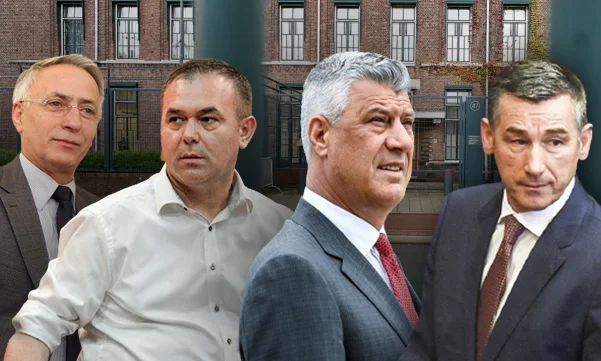
The Specialised Prosecutor's Office, on September 30th 2022, has handed over the confirmed amended indictment against Hashim Thaci, Kadri Veselini, Jakup Krasniqi and Rexhep Selimi, which consists of ten points on charges, where the latter are charged with war crimes and crimes against humanity.
On April 29th 2022, the Specialised Prosecutor's Office had handed over a amended indictment to Hashim Thaci, Kadri Wessel, Rexhepi and Jakup Krasniqi, where four indictees have committed war crimes even in Gjilan, Budakov and Semtish.
On November 9th 2020, in their first appearances, Hashim Thaci's Jakup Krasniqi has been declared innocent of the charges placed on them. Wessel has also been declared in his presentation on November 10th, as has Rexhep Selimi on November 11th.
The incident against Hashim Thaci, Kadri Veselin, Rexhep Selimi and Jakup Krasniqi is confirmed on October 26, 2020. /A Vow for Justice