6 hours ago
<x0)
Periskopi(9 months ago)
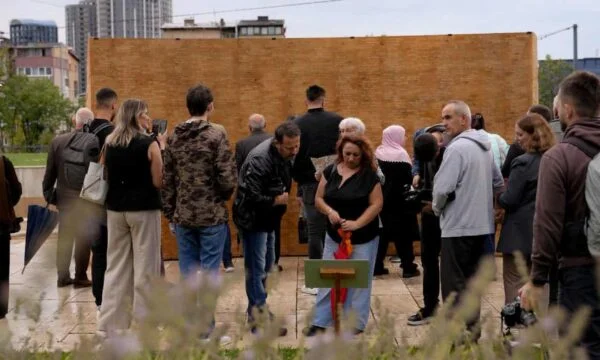
(9 months ago)On International Day of Missing Persons, in platforms on underground parking lots (near Square George Bush), Pristina, Kosovo.” was inaugurated the memorial “Life Tree”, dedicated to over 1,600 people who still figure missing as a result of the war in Kosovo. The memorial, conceived in the form of a branchless trunk, represents broken violent lives and [...]
On International Day of Missing Persons, in platforms on underground parking lots (near Square George Bush), Pristina, Kosovo.” was inaugurated the memorial “Life Tree”, dedicated to over 1,600 people who still figure missing as a result of the war in Kosovo.
The memorial, conceived in the form of a branchless trunk, depicts the violently broken lives and emptiness left behind by the absence of the missing. Inside it are engraved names. Some of the names are written with the hand of family members themselves, creating a permanent link between memory and lack.
Kosovo Humanitarian Law Fund Director Bekim Blakaj spoke of the organisation's long-term commitment to document the fate of the missing and keep their memory alive.
This memorial is not just a work of art,” he said, “but a permanent space for our society not to forget.” Blakaj thanked the family for their trust and separation of pain, as well as all partners who helped realise the project. He described the “Tree of Life” as a place of reflection, but also a place where justice and responsibility are required. This memorial was widely hailed as a valuable contribution to the culture of memory in Kosovo. It is not only a tribute to the missing but also a public appeal that the past is never overemphasized and that injustice will never be repeated again.
Pristina municipality Chairman Progress Rama said this art work does not heal the pain but gives voice. He named “The Tree of Life” as a milestone in collective memory, calling us not to allow memory to remain only in the hearts of family members but to become part of our common conscience.
The “Enames carved here are more than letters on wood; they are public memory than any name, each life, has a name and identity,” said Rama, stressing that their absence is an uncut wound, but that through this memorial is called upon not to forget and seek justice.
Idead by Dea Djindjic and Armand de Benoist de Genissart, the memorial is more than art, it is a collective testimony, a country where personal history becomes part of our common history.
This memorial was implemented by the Fund for Humanitarian Law Kosovo, in partnership with Switzerland's Burimore Centre for Missing Persons and with support from the European Union Office in Kosovo and the Swiss Federal Department of Foreign Affairs.