6 hours ago
From VVU's finding the Constitutional Act again, Qorroll: Entered the Landplace
Periskopi(10 months ago)
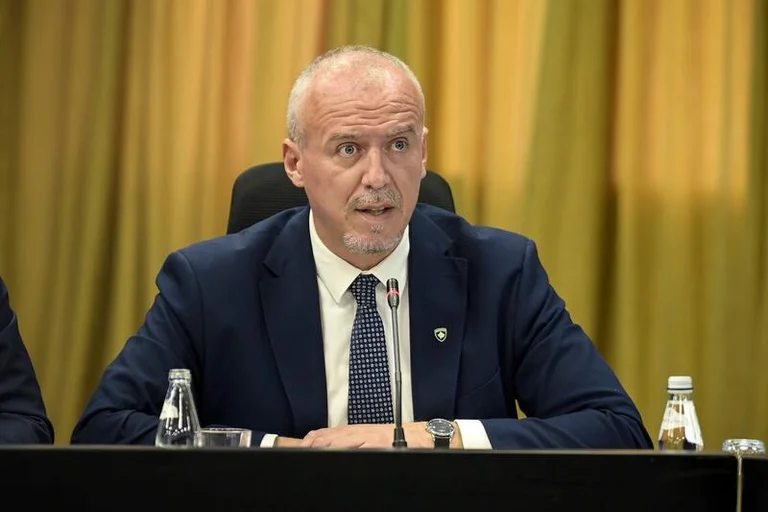
(10 months ago)Acting Deputy Justice Minister Vogan Qorroll has reacted after the Constitutional Court's ruling, Periscope reports. Through a Facebook post, he has said that it is the first time the Constitution has made a big decision without referring to any European or global constitution, according to him, this fact is unusual. “for the first time in [...]
Through a Facebook post, he said it was the first time the Constitution has made a big decision without referring to any European or global constitutions.
According to him, this fact is unusual.
For the first time in its history, the Constitutional Court has made a decision to be precise. KO, institutions' demands) did not refer to any European or world constitution, nor to another model judicial act of her sister-in-law, nor to the European Constitutional Forum where she belongs. This is an unusual, but significant fact: no precedent, no comparable case, no similar experience from the democratic world”, he has said.
He has further said that so far, the Court has always used international comparisons to build the legitimacy of its decisions. According to him, these references have not been perhaps decorated, but a shield against arbitrariity, indicating that Kosovo moves in step with the European tradition of constitutionalism.
It has added that lack of comparison in this case shows that the given solution has no support in the democratic world. According to Qroll, the <x0vediction seems isolated, extremely fragile and open to suspicions that it was built on weak internal logic, not on universal standards”.
This precedent puts the Court in a dangerous position: instead of strengthening its belief in the Constitution, it violates it, creating the idea that constitutional norms can be invented without support in the text, nor in a comparable tradition. The right of three times for a candidate for Speaker Parliament does not exist in the text of the Constitution. This restriction has been created by the Constitutional Court without express constitutional and unprecedented international grounds. When the court invents such a numeric rule it has not carried out its primary task: which is the interpretation of the Constitution, and this clearly constitutes overcoming its constitutional mandate”, he has said.
The same is true of the 30-day restriction.
He has said the Constitution speaks of a 30-day term for calling the constitutional session, not for its completion or for canceling the sessions held.
“By turning this deadline into an absolute border, and by dismissing invalid parliamentary periods, the Court has entered the territory of the Parliament as a sovereign organ. This is a dangerous precedent, because it makes the Court lawmaker instead of the translator of Constitution”, he added.