8 hours ago
US sets new tariffs for dozens of countries in the world, Kosovo doesn't figure on list for Serbia 35%
Periskopi(10 months ago)
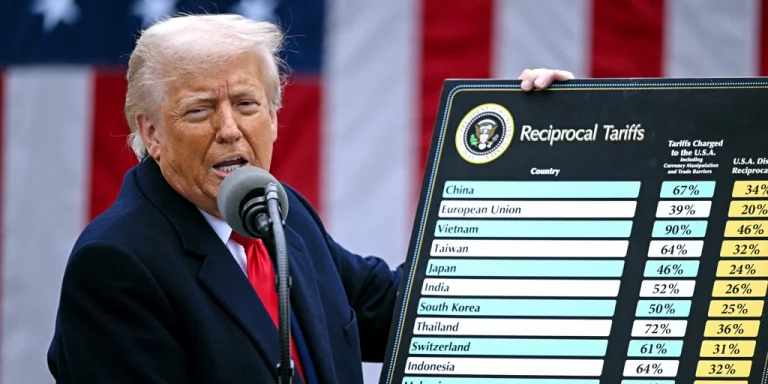
(10 months ago)Hours before the deadline for reaching trade agreements, the White House announced new taxes on dozens of countries that will take effect on August 7th. The US president signed an executive order establishing new measures for countries with which the US has trade agreements, strengthening existing agreements [...]
The US president signed an executive order establishing new measures for countries with which the US has trade agreements, strengthening existing agreements with partners like the European Union and severely hitting Canada with a significant increase in tariffs.
Despite concerns in Europe and a lack of unanimity, the agreement reached between the US president and European Commission President Ursula von der Leyen in Scotland remains in effect. On the list of affected countries, the European Union preserves a 15% fee, as agreed at the bilateral meeting. Also, the Japan tariff has been confirmed at 15% and for the United Kingdom at 10%.
Meanwhile, Canada has been punished with an increase from 25% to 35%, “in response to Otawa's continued inaction and revenge”.
Switzerland has also been hit with a fee higher than the one announced on April 2nd, reaching 39%. In response, Ontario Prime Minister Doug Ford has asked Canadian Prime Minister Mark Carney, “not to surrender”.
The tariffs for India remain at 25%, while for South Korea at 15%. According to the list published by the White House, goods imported from each country will be subject to a fee of 10%, excluding 92 countries listed in an annex that submit to higher rates.
The hardest fee applies to products from Syria, which will be taxed at 41%. While Brazil, in addition to the existing 10% tariff, now faces an additional 40% fee for several goods, as a punitive measure against President Lula, “in response to former President Jair Bolsonaro's” trial.
In addition to these measures, Trump's executive order also sets a 40% fee for any goods that US Customs and Border Protection defines as being transported “with the aim of avoiding higher tariffs, mainly when goods produced in China are re-traded and repacked to other countries.
President Trump announced his fee plan for the first time in April, causing turmoil in world markets, but suspended it to give countries time to negotiate new trade deals, including the United Kingdom and the EU. /Periscope/