6 hours ago
Saturday: Kosovo cannot waste any more time, VV to leave the streets if solutions are made, country is resorted to tricks
Periskopi(10 months ago)
(10 months ago)More than six months after the central elections -- less than two months away from local elections -- Kosovo is continuing to be “deepened” in its crisis, with no institutions being created. Over these months citizens of the country saw nothing but blockades [...]
More than six months after the central elections -- less than two months away from local elections -- Kosovo is continuing to be “deepened” in its crisis, with no institutions being created.
Over the past few months, citizens of the country, putting aside some alleged attempts at institution creation, saw nothing but blockades and crisis after crisis. A political drowsiness swept through the country for several months, where calls for hearings, voting and non-communication were all political scenarios for most of the time. However, the last 30 days were not.
First President Vjosa Osmani announced the continuation of the US MCC programme, then the government in office lifted the tariffs for American goods, and about these days a meeting was held between US Secretary Rubio and Serbian Minister Djuric. Each of these recent developments created discussions and raised questions.
There is another issue that has been quite important during this time. Which, mostly echoed, gave the internationals. And that was Serb List participation in the October 12th elections. For the latter, starting with the US Embassy and continuing with the others, it was called on not to prevent this party from participating in local elections. They were even told that such a thing undermines democracy in the country, writes Express Journal, broadcast Periscope.
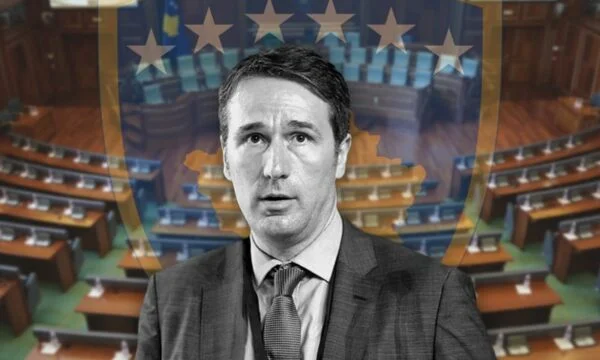
Regarding these issues, Adrian Stein, an expert on foreign policy and security in Washington, received some comments.
Saturday, the MCC issue saw it as a good news “at a time when such news about Kosovo has been very rare”. The good news he also saw the removal of the fee for American goods, but for investment of the latter, he said the stable political situation is needed.
He also commented on the Serbian List issue, saying such a clash between Kosovo and its partners would have consequences. According to him, if VV s) can solve the belt created it should pave the way for others because the country can never be suspended indefinitely with slogans and tricks”.
Kosovo is receiving good signals from the Trump Administration despite concerns that there may be some unpredictable development. In this context, the news that needs to be isolated is the continuation of the MCC project for Kosovo. How do you appreciate that?
A. Saturday: It is a very significant and especially welcome signal since it is good news at a time when such news about Kosovo is very rare. Continued Millennium Challenge Corporation (MCC) programme worth a total of 202 million U The DS by the Trump Administration confirms once again that US engagement in Kosovo goes beyond politics. It is an investment in the people of Kosovo. A long-term commitment that basically provides for strengthening democracy in the country and economic development, the well-being and security of the people of Kosovo through the creation of economic opportunities and sustainable development, especially in the vital energy sector.
Also, the transfer from the US a few days ago of 50 M1117-type armoured security vehicles, and their taking over from Kosovo authorities is another clear indication of the non-stop US commitment to strengthening and modernising the defence capacities of the Kosovo Security Force.
Kosovo removed the fee to American goods, several visits from institutions there in Pristina have taken place, Trump wrote letters to Kosovo President in good words for ties between the two countries, expressing thanks that Kosovo agreed to receive refugees temporarily from the US. However, Prime Minister Kurti remains a few sides in these reports. How do you comment?
A. Saturday: Removing the 10% fee on American products is both politically and diplomaticly welcome news. I would like to say even economically, but actually the actual volume of trade between Kosovo and the United States is at one of the lowest levels among the Western Balkan countries. I hope this changes in the near future, as Kosovo has very good potential to attract American investments.
But the precondition for this to change is creating a calm situation in terms of security and politically stable in the country. Unfortunately, the current political and institutional crisis is a barrier that is costing Kosovo dearly both economically and in reputation on the international plan. It is also an obstacle to unblocking the process of normalising relations with Serbia. This should change without delay, as each lost day is a luxury Kosovo cannot afford. To unblock the political and institutional stalemate of the incumbent prime minister and his party, which won the most votes in the February 2025 elections, have the main responsibility. If they cannot or do not want to resolve it, they should open the way for others to try to find solutions. The country can be suspended indefinitely with slogans and tricks.
In recent days Western diplomats have undertaken a “section” against blocking the Serbian List from participating in the October local elections? There are direct warnings to the government in office. This would definitely be a new Kosovo-Western clash, for sure, with consequences?
A. Saturday: Of course, such a confrontation would have consequences that would make a situation very problematic. The full participation of any community in the election process and further in local governance is the only way to ensure that the voice of all Kosovo citizens, regardless of ethnicity, has the same weight. Voter rights and political representation are not preferential privileges or concessions, but inevitable constitutional rights that make up the foundation of democracy and good governance. Therefore, minority communities' participation in the upcoming local elections should be eased by all means and their commitment to government must be given special attention by the state to ensure that their needs are addressed directly through elected representatives.
Secretary Marco Rubio hosted Serbian top diplomat Djuric, agreeing with him to start strategic dialogue. What do you think that means? Is Kosovo in danger of a US rapprochement with Serbia?
A. Saturday: The declaration respects strategic dialogue between the US and Serbia is an important development for both bilateral and Western Balkan reports. Secretary Rubio and Foreign Minister Djurovic discussed among other things the importance of stressing the situation in the region, especially between Serbia and Kosovo. This strategic dialogue, among other things, is designed to address issues related to Kosovo, as part of the US commitment to preventing tensions in the region.
As such, this strategic dialogue does not imply a rapprochement of Serbia with the US to the damage to Kosovo's interests. Rather, attracting Serbia closer to the US through strategic dialogue increases opportunities for intensifying the process of normalising relations between Kosovo and Serbia, as well as for stability and economic development in the Western Balkans that benefits all countries in the region.
But we are clear, even Kosovo's diplomacy must intensify the volume and quality of engagement with the Trump administration, not for competition with Serbia, but to advance the state's fundamental interests strategicly, constantly, and more worthy of higher levels. This is especially important at this moment when much in international policy dynamics is changing at tremendous speed.
Even six months after the elections, Kosovo is still without new institutions. The Constitution issued its judgment on the situation, clarifying the way forward. But we're not seeing any strong interference from Western countries. Are you seeing solutions on the horizon of this crisis in Kosovo?
A. Saturday: I hope there's going to be some clarity as soon as possible, but I'm not very optimistic because this situation is neither unexpected nor accidental. In itself, the non-compliance of the Parliament is not the problem, but the symptom of a fundamental vision crisis and leadership in Kosovo's current policy. The question is who does this situation serve, and who holds the responsibility that the country has remained in the mud, without assembly and government, and paralyzed both in domestic and outside politics and in economics and prosperity? Understand, I'm not speaking metaphorally. Of the three powers that constitute the system of governance in Kosovo, the legislature and the executive have been paralyzed and the only functional power -- the judiciary -- is being attacked by politics. This is the absurd situation where the state is sabotoning itself. I ask again, who wins from this and who is responsible?
Whatever the case, the obligation to find a solution is to the Kosovo political class, and rather than the party that has won the majority of votes. This responsibility cannot be delegated to politicians or diplomats of Western countries. MPs have been elected and paid to find solutions, not to undo problems. The Constitutional Court through the act pronounced on August 8th has spoken quite clearly, clarifying procedures and ordering MPs elected by the vote of the people to choose the leaders of the Assembly within the 30th term. Applying this command is legal responsibility. However, we know that only the election of the Parliament's leaders does not solve the crisis that has plagued the country. A deeper political compromise must be found, perhaps with the help of mediators. But one thing is clear, this self-inflicted crisis cannot continue any longer as the consequences for the country are threatened to be serious and they can't be billed to anyone else. /Periscope/