5 hours ago
Russia: Court's decision on Dodik endangers Bosnian existence
Periskopi(10 months ago)
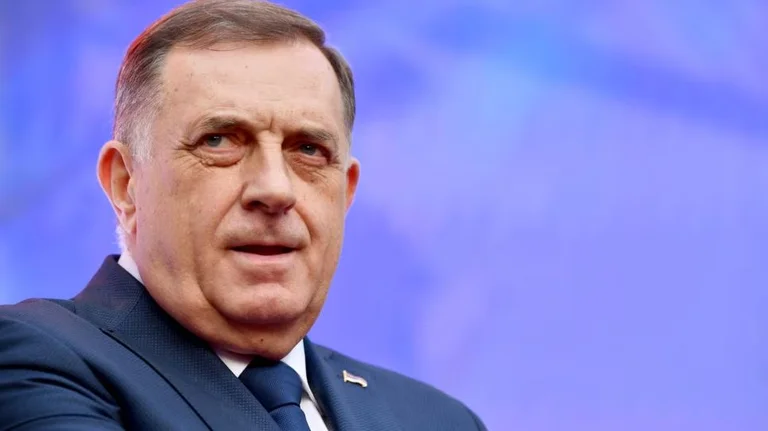
(10 months ago)Russia has said Thursday that the Central Election Commission's decision in Bosnia and Herzegovina to lift the mandate of Milorad Dodik as president of Republika Srpska's entity has endangered Bosnia's existence as a united country. Bosnia's election commission has decided Wednesday to fire Milorad Dodik from office [...]
Bosnia's election commission has decided Wednesday to dismiss Milorad Dodik from office after an appeals court last week supported a decision that imprisoned him for a year and prevented him from dealing with politics for six years, Reuters reports.
Dodik is a pro-Russian nationalist with close ties to Russian President Vladimir Putin, who has long backed the breakaway Bosnian Serb-dominated region and often moved to block Bosnia's integration into the European Union and NATO.
In response to the commission's decision, the Russian embassy has said that the politicised “development was taken under pressure from Western countries that used lawmakers to destroy their opponents”.
“Bosnia and Herzegovina cannot afford to make a historic error”, the embassy said in a statement.
Has her reputation as European gunpowder been forgotten?
Because not only is Bosnia and Herzegovina's country at risk in the European democratic family... Indeed, Bosnia and Herzegovina's existence as a united country” is at risk, the embassy has said further.
At the UN Security Council in 2021, Russia and China blocked the launch of Christian Schmidt, a former German minister, as international High Representative in Bosnia with a mandate to prevent multiethnic Bosnia from slipping back into civil war.
Bosnian Serb nationalists have never recognised Schmidt as a legal envoy, nor have they respected his decisions.
Dodik has rejected his court sentence in February. On Wednesday, he has announced a referendum on whether he should remain in office and accused Schmidt and Muslims (Bosnians) of plotting to bring him down.
Russia has called on Bosnian authorities to ignore the “external dictatorial” and work to reduce tensions.
“If the situation gets out of control, they will take responsibility”, the embassy said. “The moment of truth for Bosnia and Herzegovina has come because after that a non-responsive point” may come.
Bosnia has been in its worst political crisis since the 1992-95 war, which killed about 100,000 people. The 1995 Dayton Peace Treaty split Bosnia into Serbian autonomous and Bosnian-Croat federal entities with a weak central government. /Periscope/