6 hours ago
Reporters from the diaspora total 651m euros within six months
Periskopi(10 months ago)
(10 months ago)Over 651m euros has sent diaspora to Kosovo in the January-June period of this year. This is worth over 21m euros more, compared to the same period last year. Economy officials estimate that increasing remittances in our country is due to inflation, therefore high prices, which [...]
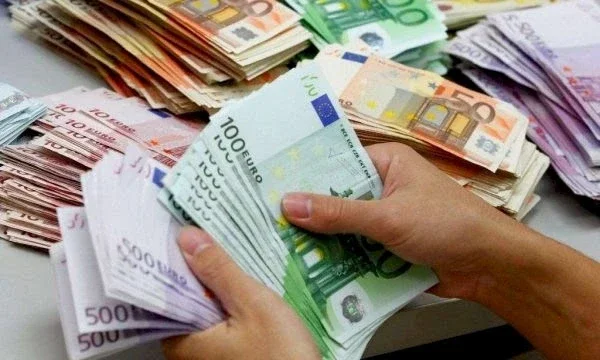
Over 651m euros has sent diaspora to Kosovo in the January-June period of this year. This is worth over 21m euros more, compared to the same period last year.
Economy recognisers estimate that increased remittances in our country are due to inflation, therefore high prices, affecting the worsening economic situation of families in Kosovo,
They say raising the value of remittances is a poor indicator of the country's economy.
The recogniser of economic developments in the country, Safet Gerjaliu estimates diaspora remittances are vital to economic and social stability in Kosovo. He stresses that the main problem is that this money is spent mainly on consumption, goods and services, not productive investments.
According to him, increasing remittances in this year's six-month, compared to 2024, should be seen not only as a positive sign, but as a result of some factors such as increasing inflation in Kosovo and Europe, as well as increasing the need for social assistance.
These conditions, according to Gerjaliu, have prompted diaspora to send more money to preserve social stability and help their families in Kosovo.
The diaspora's “Role through remittances is essential for economic and social stability in Kosovo. The worst woe is that these remittances that enter Kosovo are prejudged for importing products or exporting ready to buy goods and services... in 2025, we have an increase compared to 2024, but all of this needs to be analysed in a whole other dimension. We are seeing that inflation in Kosovo, but also in other countries of growing Europe, the need for social assistance is growing, and definitely all of this contributes to this increase in remittances from the diaspora to preserve social but economic stability in Kosovo, supporting family and relatives”, Gerjaliu says.
The former head of the Kosovo Economic Ode, Safet Gerjaliu, has said that price hikes and increased demand for social assistance are the main factors that have increased diaspora support for families in Kosovo.
“We have a price surge and the need for assistance or social assistance is very great. Therefore, it should not surprise us that, along with investments in diaspora real estate, we also have increased social assistance in Kosovo, because what you bought two years ago with 100 euros today, you don't buy at 200 euros”, Gerjaliu added.
According to Kosovo Central Bank data (BQK), during the January-June period of this year, the amount of remittances from the diaspora has reached 651.7m euros, while the data for the month is still preliminary.
Compared to the same period last year, when remittances had reached 630.1m euros, an increase of 21.6m euros was registered this year.
For this year's January-June period, the amount of remittances is 651.7m euros (June data is preliminary). Compared to the same period last year, an increase of 21.6m euros has been noted. The shipments for the January-June 2024 period are 630.1 million”, say from the CEC in their written response.
In this regard, economics connoisseur Arton Mujajiri estimates that increased remittances is not a sign of economic improvement, but rather, shows the worsening situation in Kosovo.
According to him, all economic indicators from 2021 to the present day of inflation, trade deficit, and rising price prices of essential products prove that the economic situation is heavy.
Mujarrier says remittances are expected to increase next year, not as a result of development, but as a result of the need for survival.
The remission of remittances does not mean economic growth for the country, but worsening the economic situation within Kosovo. The more remittances increase, the more there are indications that Kosovo with its indicators is on the worst possible path in the economic aspect. Whenever remittances are higher, our economy is weaker ... Economic trends in Kosovo are on the decline and both remittances and the coming year the money may be higher. The exiles send remittances to their family so that they can have the best life, they can postpone the month. This is a not-very positive indicator for the economy... all parameters from 2021 to today, whether inflation be of trade deficit, increasing the prices of essential products, all these parameters have shown that the economic situation in our country is heavy, and as a result, exiles push them to send more money to Kosovo”, says Mujarzier.
On the other hand, economic expert Florin Aliu said remittances continue to be an important pillar of Kosovo's economy, keeping up the aggregate demand and ensuring the welfare of many families.
According to him, the main question is what happens if remittances drop, as a decline would affect the country's economic development.
“Remitance remains an important part of Kosovo's economy. Even during these three years, there is no decline in remittances. Rather, they are seen to remain on those same levels. But the important question is, what if these remittances fall? That would mean falling Kosovo's development rate because they constitute an important part of Kosovo's economic growth. As a result, they are an important part of both the aggregate demand in Kosovo but also the maintenance of households. We should also think about what if these remittances drop, what the consequences of Kosovo's economy will be. We always act with expectations that next year remittances will be at the same level or have a significant increase of”, Aliu points out.
The value of remittances in the first six months of 2023 was approximately $633m. Meanwhile, in the same period in 2022, the diaspora had sent over 555m euros to Kosovo. / KSP/ Periscope.