5 hours ago
Prattipati: The Trump administration requires strong allies, we cannot rely on a country without institutions
Periskopi(10 months ago)
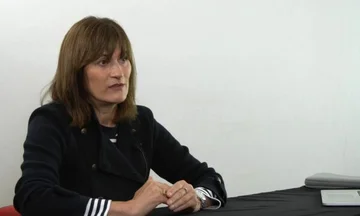
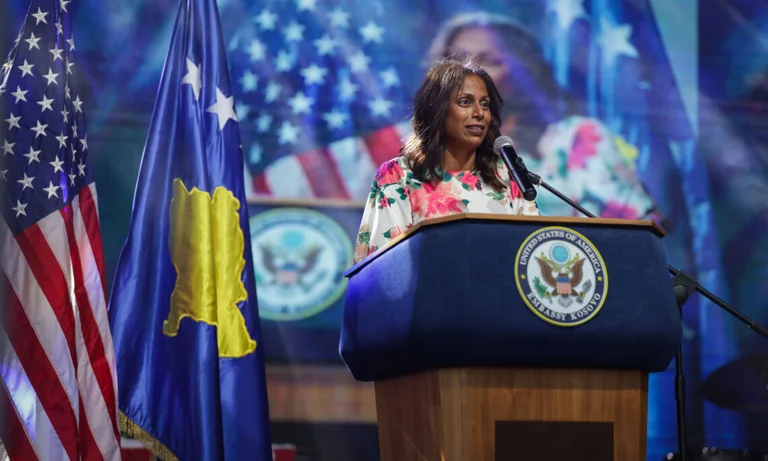
(10 months ago)Loaded with work at the US Embassy in Pristina, Annu Prattipati says Kosovo is losing opportunity as a result of political stalemate in the country. In an interview for Gazeta Express, she said the Trump Administration “requires strong allies” with which common priorities can be advanced and that opportunities to strengthen [...]
In an interview for Journal Express She said the Trump Administration “requires strong allies” with which common priorities can be advanced and that opportunities to strengthen the economic relationship between the two countries “can go unhandled if this belt continues”.
The American diplomat said that a country with no key institutions and “an uncertain path towards their creation” is a partner on which the US cannot rely “permanently”.
Prattipati said that the “Kosovo leaders have been chosen to resolve the challenges facing their country” and that the political stalemate should solve the same ones. The “The United States can provide support, but cannot make elections for Kosovo's leaders or people.
That partnership with the US “flourishes”, the American diplomat says that “Kosovo should provide the conditions”, while also showing what can be expected of the Trump Administration.
Kosovo is going through an unusual situation. It's more than 170 days from the 9 February election date, and we still don't have the constitutional assembly, nor the government. You have observed this situation, you have met political parties. What is your conclusion? This situation is not enough only to qualify as irresponsible, is it?
Annu Prattipati: Forming a post-election government is a basic democratic function, and this continuing political stalemate is resulting in the loss of opportunities for Kosovo. The Trump administration requires strong allies with whom we can advance our priorities; a country without basic institutions, and with an uncertain path towards creating them is a partner we cannot always rely on completely. American companies seek stable governments and reliable partners when they consider where to invest, and Kosovo's inability to form institutions can make companies do business elsewhere. The opportunities to strengthen our economic relationship can go unnoticed if this strain continues. This, after all, is a decision for Kosovo's elected representatives, but we encourage them to work together to fulfill the mandate Kosovo people have given them.
Why did there not be interference or efforts to mediate by the international community to convince parties to make institutions? There have been such help in the past.
Annu Prattipati: We're not in the construction phase. As Deputy Secretary of State Landau said in the 30th anniversary of the Dayton Agreement: “The United States can be partners ready with considerable political capital. We can work hard; but we'll only work with those devoted to a practical reality for their countries”. Kosovo leaders have been chosen to resolve the challenges facing their country. That means they have to work together to find a compromise. It's the responsibility of these political leaders to solve this trap. The United States may offer support, but cannot make elections for Kosovo's leaders or people.
The Constitutional Court gave a 30-day deadline recommending parties to find the way to form institutions that were not respected. Now the Court ruled that MPs stop their actions and decisions. Do you think these judges can offer an accurate solution that many fail to make in the first instance?
Annu Prattipati: It is not the role of the United States to interpret the decisions of the Constitutional Court or the way they should be implemented. Political leadership must work together to form institutions in accordance with the Constitution and Constitutional Court decisions. The people of Kosovo expect their leaders to fulfill their commitment to work in the country's best interests.
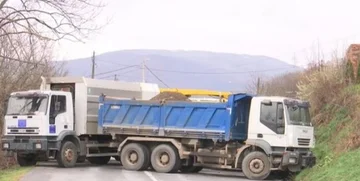
Kosovo will hold local elections soon. The four majority Serb municipalities in the north are led by Albanian mayors after those Serbs abandoned institutions in 2023. Do you expect Serb participation in this election, of the Republika Srpska List, respectively?
Annu Prattipati: I want to refer you to what Vice President J.D. Vance said in a speech at Munich Security Conference in February. He said: “You cannot win a democratic mandate by censorshiping your opponents”. Later in the same speech he said: “I believe you rule people out, exclude their concerns, or, worse yet, shut down the media, shut down the elections, or expel people from the political process does not protect anything. In fact, this is the safest way to destroy democracy”. Kosovo Serb political parties represent citizens of this country. They are part of Kosovo's political landscape and should not be blocked by political participation. All parties must support the right of people to elect their representatives. That means preventing any attempt to block Kosovo Serb political parties from participating in the elections. Using an administrative or procedural trick to prevent parties or individuals who are otherwise qualified to compete would tarnish the outcome.
As embassys, you have often reacted to the Kosovo government's actions by naming them uncoordinated actions. We've had the effort of this government to open the main bridge over Iber. When this plan succeeded, two new bridges were made. There have been other reactions by diplomats accredited in Kosovo. What is your attitude?
Annu Prattipati: Let me say this: The United States wants to strengthen ties, especially economically, with countries in the region. To do this and to increase our shared prosperity, we and the people of Kosovo need peace and stability. Actions that increase tensions in the region prevent the United States from working productively with Kosovo. The incumbent government of Prime Minister Kurti is responsible for the security and prosperity of all Kosovo citizens. We are particularly concerned about closing Serbian parallel institutions without co-ordination with affected communities and of statements on unilateral actions to shift education and health to the Kosovo system. We do not doubt that these institutions should ultimately be integrated into the Kosovo system. However, how this is done is extremely important. Any plan to change the status of parallel institutions should be fully co-ordinated and discussed in advance with elected leaders and members of the Kosovo Serb community and to co-ordinate through channels established such as the EU facilitated dialogue, with a definite timetable and plan. There is no other way to do this responsiblely.
What are the Kosovo- The US actually? Mr. Kurti is not that he has been Kosovo's most cooperative leader with America, which for generations politicians are considered the main ally country.
Annu Prattipati: The United States is committed to a strong and productive relationship with Kosovo and wants to co-operate on issues that advance regional stability, security and prosperity. Kosovo should ensure conditions instead of that partnership prosper. Actions affecting Kosovo's citizens not only endanger Kosovo's bilateral relations but also go directly against the main priorities of the United States in the region, particularly strengthening economic co-operation. Regional stability and security are key to economic prosperity. During the July 12th-14th visit to Kosovo, Bureau senior official Brendan Hanrahan reinforced this message and encouraged the government to create a suitable environment for further American investments.
There is much uncertainty in Kosovo that about the approach the Trump Administration will have in Kosovo in the coming months. What can you tell us?
Annu Prattipati: Trump Administration has been clear: The US government prioritizes security, stability and fair economic relations. If the Kosovo government shares these priorities and commits itself to promoting stability and peace, the possibilities for co-operation are almost unlimited. There is great potential in the US-Kosovo relationship, especially for boosting economic co-operation. This is good for the United States as well as for Kosovo. We see opportunities in a wide range of sectors, including energy, defence, infrastructure, information and communication technology, and cyber security. On the other hand, if the United States sees that the Kosovo government takes actions that undermine these priorities, there will be restrictions on our ability to pursue such co-operation. /Periscopi/