6 hours ago
Politics gets stuck, odds go
Periskopi(10 months ago)
(10 months ago)For the first of Kosovo's state, Vjosa Osmani, the institutional vacuum in the country is not just a procedural crisis, but a serious obstacle to strategic projects initiated by reforms for European integration, to defence and economic agreements with international allies. For the United States, too, the blockade results in “lost opportunities for [...]
For the United States, too, the blockade results in “lost opportunities for Kosovo”.
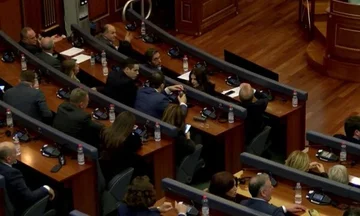
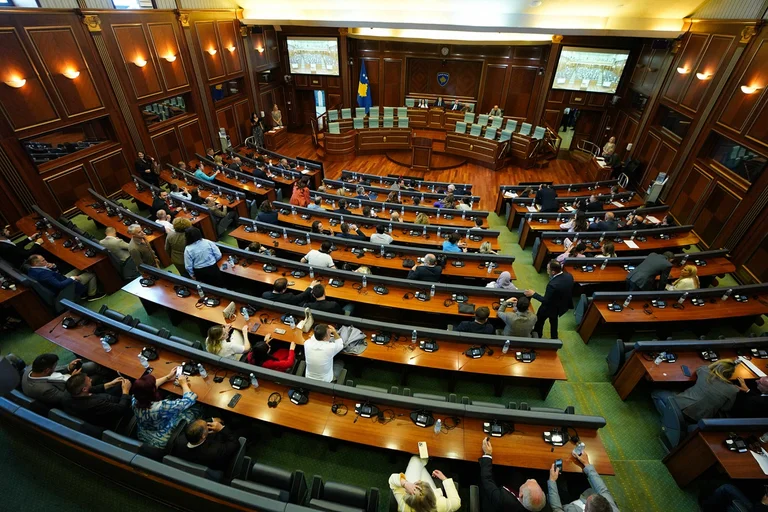
The Kosovo Assembly failed to be constitutionalised even on August 20th, despite the Constitutional Court's act of prejudice, which ordered its formation within 30 days.
That deadline will run until 18 September, and from what incumbent Prime Minister Albin Kurti has declared, expectations are for him to be respected.
However, none of the candidates for the prime parliament, proposed by his party, Vetevendosje Movement, received enough votes at the August 20th session.
The Constitutive session, which has started since April 15th but without epilogue because of differences between parties, will continue again on August 22nd.
Osmani said the Parliament's conclusion is “state emergency”.
Why State Emergency?
Its media adviser, Bekim Kupina, tells Radio Free Europe that the institutional vacuum endangers <x0-doctors that connect with the reform agenda for European development and integration, as well as those aimed at improving energy infrastructure and economic development”.
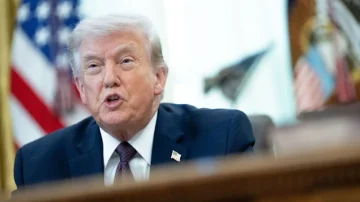
According to him, the constitution of the Parliament and the functional Government are also necessary for the realisation of the agreements including strategic ones in the field of defence and economy, which Osman has discussed with US President Donald Trump's administration.
“These agreements and commitments are unique opportunities for strengthening the country's security and economic growth, which require consolidated institutions to implement”, Kupina says.
Last month in the US, Osmani met with US Deputy Secretary of State Christopher Landau, and other senior officials, with whom he said he has talked about the importance of creating a new economic partnership in the energy, defence and intelligence sectors.
Responding to Radio Europe Free Radio's question about how you see the procrastination of institution formation in Kosovo, even half a year after parliamentary elections, a spokesman for the American Embassy in Pristina said that Kosovo's “Constitutional Court has issued its decision” and <x2ridership must work together to form institutions in line with the Constitution and decisions of the Constitutional Court”.
Kosovo's “People expect their leaders to fulfil their pledge to work in the country's best interest”, the spokesman said.
This ongoing political blockade is resulting in lost opportunities for Kosovo. It is time for leadership to make progress and stability priorities for the benefit of all citizens”, he added. REL-was addressed with the same question to the European Union Office in Kosovo, which said the “rapid formation of the Parliament and Government is essential for Kosovo to move forward with important reforms in all sectors, which will improve the quality of living and the standard of living of Kosovo citizens”.
The embassies of the QUINT countries also responded to Italy's, which demonstrated the hope that “all political actors will work responsibly to ensure the constitutionalisation of the long-time Assembly”.
Towards “institutional hierarchy”?
Lulzim Peci, from the Kosovar Institute for Research and Development of Politics (KIPRED) in Pristina, warns that if the Assembly is not constitutionalised within the 30-day deadline set by the Constitutional Court, Kosovo will be introduced “in an unknown terrain, which cannot be seen at the end of”.
This site has the name institutional angel. Let's not forget that in a while, we may not have enough judges at the Constitutional Court and then we remain in total anarchy”, Peci tells Radio Free Europe.
With the Constitution, the Constitutional Court must have nine members, but currently there are only seven.
In September, Judge Bajram Latifi's mandate ends, and unless a new judge is appointed by then, which requires the approval of the Parliament, the Court remains without the quorum for decision-making.
Peci warns that such a situation would bring serious consequences to the State.
“can lead us to a collapsed state. The consequences of this would be extraordinary, as in the democratic process, for our relations with our (international) partners, for the economy... The institutional anarchy is the blackest scenario that can cut Kosovo”, says Peci.
According to his assessment, Kosovo today reflects the image of a non-serious country, where politicians' narrow interests dominate state interest.
Such an approach, as Peci points out, poses a serious obstacle to building partnerships with Western countries, which seek responsible and capable partners to make decisions.
He adds that the current situation has become a comfortable situation for political parties, which, as he says, avoid taking over governmental responsibilities and major decisions awaiting the country.
Among those decisions, he cites implementation of the Ohrid Agreement for normalising relations with Serbia (2023) and the Washington Agreement for economic normalisation with Serbia (2020).
Entrance to European Integrations
Augustin Palockaj, a journalist who has been closely following European Union policies for years, estimates that both the EU and the international community as a whole are dealing with the institutional crisis in Kosovo through two approaches.
The first is a passive approach: The EU is standing in expectation, allowing Kosovo politicians to face themselves with the political stalemate they have produced through narrow calculations and lack of will for compromise.
The second approach has a more warning character: through consistent statements, the EU recalls the direct and long-term consequences that bring lack of institutional stability.
According to Palocaj, the consequences are initially associated with European funds.
The European Commission cannot transfer Kosovo the first payment of over 80m euros from the Western Balkans Growth Plan.
This amount is seen as pre-finance, but to proceed, a functional government is required to propose the credit and means agreement, as well as a assembly to ratify it. Without these institutions, the money remains blocked.
Another consequence, according to Paloc, relates to the process of membership in the Council of Europe.
Without the constitutional assembly and new government, Kosovo cannot meet the specific conditions, so the issue cannot be decided either in the agenda.
“under these circumstances, when we cannot enter the Council of Europe, when we cannot receive payment from the European Commission, when punitive measures [due to tensions in the north] are still in force, cannot be expected to advance in the process of obtaining membership candidate status in the European Union”, Palocaj tells Radio Free Europe.
Of the six Western Balkan countries, Kosovo is the only one who does not have that status.
Palockaj does not expect the EU to directly intervene in resolving the institutional crisis in Kosovo, so responsibility appears to remain fully over the country's own political class.
The cup did not answer whether the president, as a factor of unity, is considering some form of intervention. /Periscope