4 hours ago
“Politco” for Eddie Rama: Environment, Albania saw cash by 2030
Periskopi(10 months ago)
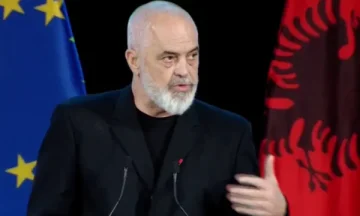
(10 months ago)Brussels-based prestigious media, Politico.eu, has dedicated an extensive article to Prime Minister Edi Rama and his efforts to transform the Albanian economy into a free physical society by 2030. In her analysis, journalist Alice Taylor, who has lived for years in Albania, describes the reality where money in [...]
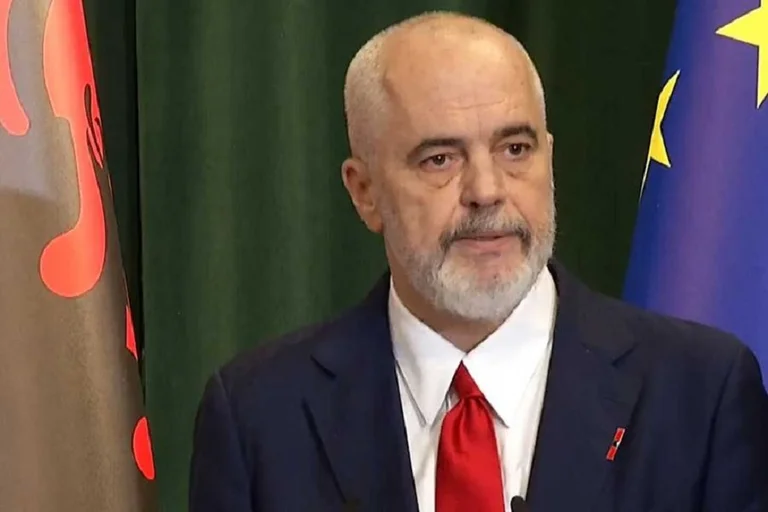
Brussels-based prestigious media, Politico.eu, has dedicated an extensive article to Prime Minister Edi Rama and his efforts to transform the Albanian economy into a free physical society by 2030. In her analysis, journalist Alice Taylor, who has been living in Albania for years, describes the reality where cash remains king, while citizens often avoid banking because of a lack of trust inherited since the post-communism period and pyramid schemes of the years ♫90s.
Albania's prime minister promotes dream of first free society
In a place where “Money in cash is king”, Prime Minister Edi Rama's ambition to eliminate its use by 2030 would completely overthrow society.
For years, Albanians have preferred to keep their money under mattresses, near their AK-47s, as they say in the national joke rather than keep it in banks. But if Rama wants to, Albania will become the first cash-free economy in the world.
Much of the reason for this is that at the moment many transactions occur under the bar. Eliminating Cash “is an absolute priority for countries with high informality and destabilising amounts of illegal money in financial system”, said Salaam Gepa, professor of economic science at the University of Tirana.
The problem is that the banking system and society may not be ready to take this step.
Most Albanians prefer to manage their savings outside the banking system, hiding bills in invisible places and insisting on cash payments whenever possible.
Even in the tourist guides for Albania, the expression “Money is king” often appears as advice for visitors. Although most chain stores or larger restaurants accept cards, cafes, beauty salons, boutiques, telecommunication companies and food stores do not.
At a clothing store in downtown Tirana, when POLITCO tried to pay with a digital card, the cashier looked confused and asked, “cash”
There was a similar story in the cab and on the bus, when the conductor repeated aloud, “40 le legt”.
The leftist government wants to free Albania from what the country's 2024 European Commission report described as a “Large informal economy” that hinders business and competition (not to mention lower tax revenues).
The estimates place the grey economy ʹ the share of the economy that is not included in official statistics between 29 per cent and 50 per cent of the gross domestic product.
Spiro Bumblei, secretary-general of the Association of Albanian Banks, told POLITICO that the government and institutions will draft a plan to pave the way for a cash-free crossing, with further steps including a limit for physical currency purchases, integration with the EU's SEPA payment system by October and launching immediate SEPA payments immediately after that.
Post-communist trauma
Ideas to move toward a less and less cash society are being followed by many developed countries, such as Sweden, Estonia, and Ireland. Albania is another issue, however, and public scepticism is understandable.
After the fall of communism in the early 1990s, banks and financial institutions, along with “investment company,” began to appear promising incredible interest rates of up to 19 percent above deposits.
Some firms were quickly expanded to more than 25, and at the height of that mind, one in six Albanians had invested money, in many cases, their entire life savings, in pyramid schemes. Early investors received abundant rewards, but they became smaller and rare as the system collapsed under its weight.
In January 1997, the first firms began to collapse, prompting Albanians to try to withdraw funds massively, creating a bad cycle of further collapse. In March, the country was in chaos, and rebellion had begun. Soldiers and policemen abandoned their posts, and crowds of angry and poor Albanians accused the government of failing to prevent fraud and even to benefit from them.
About 2 thousand people were killed in clashes between citizens and authorities, and by armed gangs with more than a million weapons stolen from state deposits. In total, about 1.2 billion dollars were lost, equivalent to half of Bruto's domestic production at the time.
This period caused waves of migration, delayed the country for many years in its development, and destroyed citizens' trust in banking and state institutions.
Costly Banks
Over the past three decades, banks have failed to rebuild confidence.
Part of the problem, says Professor Gepa, is that banks offer little benefits and are expensive to use. This displaces people to open accounts and use bank cards and digital transfers.
Most “have maintained discriminated interest rates,” he says. “High for loans and too low for savings.” He adds: International salaries also have high rates, discouraging transfers from immigrants. ”
Digital payments within Albanian banks have high transaction rates (suited for sending 500 euros was up to 50 euros for this POLITICO journalist), while fees for other forms of transactions are just as expensive.
The exchange rate of banks between the money and the euro is also known for low competitiveness.
Even in business, many companies complain about payments of up to 3.5 percent for card processing transactions.
The company from the banking association says some businesses even charge customers with extra fees for card payments.
This helps businesses avoid taxes, since cash payments are often not registered in the register.
Bank of Albania Governor Gent Sejko refused to comment.
While the ambition to go towards a cash-free society by 2030 is bold, success still depends on the presentation of a low-cost digital payment infrastructure and easy to access, potentially including a digital currency of the central bank or a national platform for immediate payment.
Although the Bank of Albania has studied such coins and Stablecoin, a kind of cryptomon and, as possible, there is still no official plan. Without a clear plan for these mechanisms, Rama's plan risks remaining mere aspirin. /Periscopi/