5 hours ago
Open Marketing Strikes Public Enterprises
Periskopi(10 months ago)
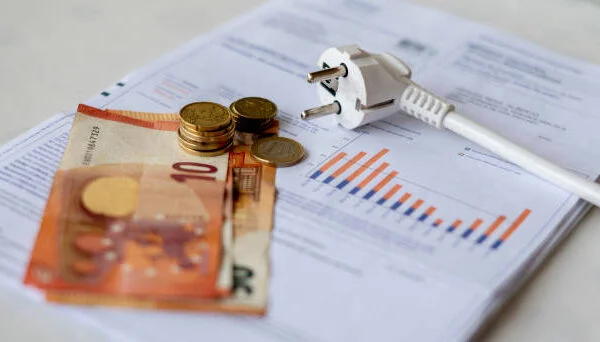
(10 months ago)For 110 thousand euros, electricity bills have increased to the Regional Water Company South Hidrogjion, June of this year compared to that of last year. In the first five months of 2025, the company that supplies water to residents of Prizren, Suhareka, Malisheva and Dragas had average increase in the bill [...]
In the first five months of 2025, the company that supplies water to the residents of Prizren, Suhareka, Malisheva and Dragas had average electricity bill growth for 7%, but for June, growth went to 132%.
June was the first month that “Southergium” was not purchased power from KESCO as the Universal Supplier, but energy received from KEK as Last possible Supplier, like all companies with over 50 workers or over 10m euros in annual circulation.
By May, electricity averaged around 20% of the total cost of operation. This percentage is expected to change after accepting new bills... is expected to significantly influence the economic welfare of the company”, reports the company “South Health Agency”, reports Time.net, broadcast Periscope.
The company has said they have not yet accepted the bills for July.
Even in the Kosovo Post, they have said that increasing energy bills would challenge the company.
“Energy accounts for about 9% of operating costs for the company (not including staff spending and devaluation/amortisation costs). If there will be an increase in the costs of this category, normally that any rise will be challenging”, a response to the Post says.
And in the railway management company, they have said that while the Han rail line of Elez-Lesak has not yet been rehabilitated, they cannot measure the long-term consequences of rising energy prices.
“ ) INFRACOS) operates on minimum demand in terms of electricity expenditures”, the company's response reported.
And, according to Blendi Hasaj, executive director at the GAP Institute, the total cost of operating the company's water supply is the electricity rate. According to him, this weighs financial well - being, and a large portion of it, end the year with negative financial balance.
The most problematic “will be for some companies that are only operating at losses and for which the cost of electricity turns out to be a relatively high component. I'm just talking here about regional water companies, or water pipelines, which, in effect, if there is no tariff change in their services, the only solution will be for the government to intervene and subsidise them”, Hasha said.
In March of this year, the Energy Regulatory Office announced its release to the open energy market for major businesses. This decision, in addition to about 1,000 private companies, included all central public companies, but also the regional waters.
While private sector companies protested, those public -- a large part of which have serious financial difficulties -- expect the assistance of the shareholder-government through subsidies, and as opportunities, they also have expensive services.
Finally, the Commercial Court has cancelled the market exit announcement.
The Commercials' decision to annul the Energy Regulatory Office's announcement and one point of the market liberalisation decision, according to lawyers, is valid for all businesses and implies that they are not obliged to appear in the open energy market. The ZERE decision has been submitted for treatment to the Commercial Court by the company “Proex”, under claims it is illegal.
Following the Comercial decision, lawyer Ardian Bajraktari has said Z. HR cannot produce effects.
The “specified that this announcement of the Energy Regulatory Office is cancelled, respectively, and that implies that this announcement is suspended and therefore the same cannot produce effect on either the relevant side or on other subjects, for the fact that the assurance of the fact that it is in total, implies that this announcement is suspended as long as the decision will be made powerful in the concrete” case, Bajractari stressed.
The Court ruling says the announcement that Z. The RRE has published on March 12th for liberalising the energy market is illegal, because it is binding for the parties and has effects on all businesses going to the free market, and does not meet the criteria of an administrative act.
Commercial has also considered the 4th point of the decision made by ZERE on April 5th for market liberalisation, under the argument that it has not clearly defined some points of switching businesses to the free energy market.
The ZERS have not answered questions addressed by KOHA on Thursday regarding the Commercial Court's decision. /Periscope/