5 hours ago
Does Kosovo risk international intervention due to the institutional crisis?
Periskopi(10 months ago)
(10 months ago)Kosovo is facing one of the deepest political crises from its declaration of independence without a constitutional framework, without full executive competence. The situation has escalated with new developments in the Constitutional Court. Adrian Stein, foreign policy expert and security from the International Antiterrorism Centre in Washington, [...]
Kosovo is facing one of the deepest political crises from its declaration of independence without a constitutional framework, without full executive competence. The situation has escalated with new developments in the Constitutional Court.
Adrian Stein, foreign policy expert and security from the International Centre against Terrorism in Washington, believes institutional paralysis is affecting both citizenship and the constitutional order of Kosovo.
The bluntly stated “, popular will and major state interests are jeopardising the sacrifice of immature egos and short political ambitions. The people of Kosovo, neither deserved nor should accept this punishment”, Steun said in some written response to Radio Free Europe.
He has made these comments after Kosovo President Vjosa Osmani's decision to withdraw her request from the Constitutional Court regarding the constitution's constitutionalisation.
The president has argued the decision, saying that the appointment of Serbian Judge Radomir Laban as reporting on the subject is a disturbing and dangerous decision.
After Osman's statement that Lalban poses a danger to national security, the public has begun to circulate the idea that the prosecution can intervene after these claims, or Laban can be dismissed, which would question the tribunal's functionality, and thus increase even more uncertainty about the next steps towards resolving the crisis.
The Constitutional Court has said it deals with requirements handed down by the parties authorised with impartiality, commitment and professionalism, and has recalled that Judge Laban was appointed in 2018, after being subjected to “all constitutional and legal procedures” for his proposal by Parliament and the decree by the then president.
Is Kosovo's multiethnic character being destroyed?
Gezim Visoka, professor of Peace and Conflict Studies at the University of Dublin in Ireland, has told Radio Free Europe that although the case of the judge at the Constitutional Court “seems creditable, as far as his past is concerned about questionable non-contactic characters in that role, if the overall view and circumstances in the north, the idea is creating that the division of power by ethnic character in Kosovo is not functioning.
“The issue of withdrawing the application from the Constitution is deepening away this narration that Kosovo's multiethnic character is ruining”.
Multiethnicity in Kosovo is one of the aspects the international factor protects at any price and calls on the Albanian majority to integrate minorities at all levels, as it is due to the Constitution. Similar demands came on August 6th as did European envoy for Kosovo-Serbia dialogue Peter Sorensen.
However, incumbent Kosovo Prime Minister Albin Kurti has told the media that day that every move is in the function of Serb integration.
“Albanian leaders in the four municipalities in the north have Serbian deputy leaders and have Serbian directors. I asked that there be greater gratitude for the state of Kosovo because there is no incident between Albanian and Serbian workers in the north”.
The consequences of the situation?
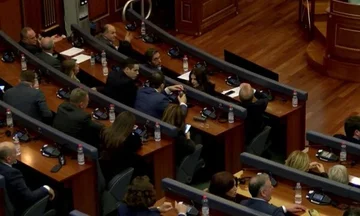
Kosovo continues to have no agreed coalition following the February 9th parliamentary elections, and parties do not signal that they are ready for compromise. In the absence of an active Assembly, many international laws and agreements on millions' worth have remained at stake.
Visoka mentions two other major dangers from the situation.
The first is that there may be new conditions and restrictions on Kosovo, which were previously not real.
According to him, although Kosovo does not recognise the order of Resolution 1244, in the United Nations view, that resolution is functional, so there may be efforts of other mechanisms to get more involved in Kosovo's internal affairs.
“I am not hinting that there will be losses of Kosovo's citizenship, or restoration of Kosovo under international administration, but I do not rule out the possibility of having diplomatic pressure or actions that can further deepen the crisis, not only among the parties, but between Kosovo as a state and the international community”.
According to Steun, the responsibility for finding the solution is the political class in Kosovo and it cannot be delegated.
I sincerely hope that politics in Kosovo will know how to overcome, both excessive divisions and hostility among themselves, and the dependence of solutions on envelopes on the outside. This is the true test of state maturity and of the consolidation of sovereignty”, State said.
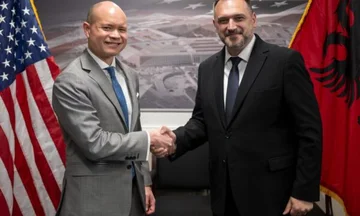
In charge of work at the American Embassy in Pristina, Annu Prattipati has said after meetings with Kosovo political leaders that they have won votes to resolve the challenges facing the state, so they must work together to fulfil the mandate given by the people.
The second aspect, according to Professor Visoka, is that this chaos conveys to Serbia, to lobby against Kosovo's citizenship, which it does not recognise.
Even Stein believes that this situation benefits non-ethnic states from portraying Kosovo as a failed state.
The people have a saying that says: Better eyes than reputation. Here I'm afraid they're both coming out, and the image of the country is also being affected by major interests. Why? Because the belief of strategic partners of a Kosovo capable of being self-skilled, and a reliable, strong, and stable partner is becoming significantly dim.
How would the crisis be resolved?
Stein believes the responsibilities of political paralysis are proportional to the results of February 9th.
“Vos are responsible, towards the main responsibility for finding compromise, is the party that has come first. The fact that voters gave no party a mandate to govern alone leads to the logical conclusion that they voted for change -- that is, for a coalition government, which is essentially the compromise government”.
The Vetevendosje Movement has mostly won votes on February 9th, followed by the Democratic Party of Kosovo, the Democratic League of Kosovo and the coalition between the Alliance for the Future of Kosovo and the Social Democrat Initiative.
Visoka believes that if a party made concessions now, it would gain greater sympathy in public.
“would receive political support for what I would call noble to overcome this” crisis.
It orders that after the return of the situation to normality, the long-term level of how to make constitutional, legal and regulatory changes should not be repeated on such a political stalemate. / REL/ Periscope.