5 hours ago
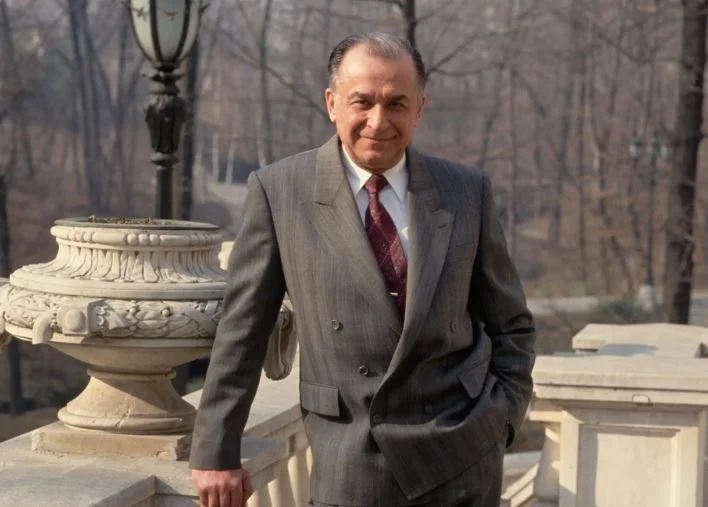
Ion Iliescu, Romania's first post-communist president
Periskopi(10 months ago)
(10 months ago)Ion Iliescu, Romania's first post-communist president, who supervised the country's transition to democracy after the overthrow of dictator Nicolae Ceausescu in 1989, but whose reputation was later tarnished by his authoritarian tendencies and by charges of brutality for his role in the revolution, died Tuesday in Bucharest. [...]
Ion Iliescu, Romania's first post-communist president, who supervised the country's transition to democracy after the overthrow of dictator Nicolae Ceausescu in 1989, but whose reputation was later tarnished by his authoritarian tendencies and by charges of brutality for his role in the revolution, died Tuesday in Bucharest. He was 95 years old.
His death, at a hospital, was announced by the Romanian government. He was reportedly hospitalised in June and underwent lung cancer surgery.
Known as “Sir Smile” by many Romanians because of his permanent smile, Mr. Iliescu, who was well-known, served three mandates as president and was the main figure in the country's first 15 years after the fall of communism.
He played a leading role in the 1989 revolution that brought down Mr. Ceausescu, whom he hated extensively, even though some critics accused him of adhering to the authoritarianism of the old regime he claimed to hate.
In 2018, Romanian prosecutors charged Mr. Iliescu for crimes against humanity, accusing him of failing to prevent the deaths of civilians during the bloody revolution more than 1,100 died, mainly after Mr. Ceausescu ) and the spread of dezinforms through media that planted panic, writes The New York Times.
Iliescu denied the charges at the time, calling the move “a farce”. The issue was later blocked, though last year there was a new effort to launch a new investigation.
Appreciated for the country's leadership through its tremendous movement towards the West, Mr. Iliescu cleared Romania's ties with Russia and linked it to the West, leading its entry into the North Atlantic Treaty Organisation in 2004 and supporting the country's membership in the European Union three years later.
However, its period in power was also marked by widespread and existential corruption. And today, at least one part of his heritage is a Romania that remains among the poorest and most corrupt countries in the EU.
Some critics called it Mr. Iliescu an indecisive democrat. During his presidency, two mandates between 1990 and 1996, and then a third from 2000 to 2004 he could not force himself to shut down the plants dying or shrink an over-inflated bureaucracy from the former old communists./Periscopi/