4 hours ago
Iceland, Montenegro or Albania which state belongs first in the EU?
Periskopi(10 months ago)
(10 months ago)In forecasts of what will be the next state to membership in the European Union, the bet thinks those who name Montenegro win it, considering that it has been negotiating for years and has advanced more than all other candidate countries. Others are positioned by [...]
In forecasts of what will be the next state to membership in the European Union, the bet thinks those who name Montenegro win it, considering that it has been negotiating for years and has advanced more than all other candidate countries.
Others are positioned by Albania, which is moving rapidly towards Brussels.
Others think it will be an ambitious and reform-oriented state.
However, Iceland may be the correct answer.
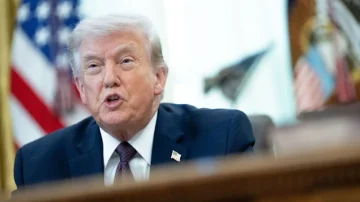
The American President's administration's goals, Donald Trump, to annex Greenland's Danish territory, and the idea of a trade struggle between security guarantors, the United States, and the biggest trade partner, the EU, have caused concern on this island north of the Atlantic.
Iceland's current government, which came to power last year, has indicated that a referendum before 2027 will be held for the resumption of talks with Brussels for EU membership.
Polls suggest most would support the resumption of talks.
And this is not the first time Iceland is in this position.
This country was hit hard by the global financial crisis in 2008, when three major banks were bankrupt.
EU membership especially in the Eurozone was seen as a way of avoiding the crisis, and negotiations with the European bloc were launched in 2010.
The talks were suspended three years later by a newly elected right-wing government. At that world, even Eurozone countries have been in serious condition from the financial crisis, so membership in this group, and the adoption of common currency, was not seen as a rescue step.
During those three years of membership talks, Reikjavik has opened most of 33 chapters and closed 11.
By comparison, Montenegro has managed to close seven chapters more than a decade of negotiations at the top of countries targeting the EU.
“
When EU officials believe Iceland could complete the membership process in a few years, which is still valid, they do not speak without basis.
The fact that it is part of the European Economic Zone helps this state, which means that, along with Norway and Liechtenstein, they only follow the rules of the European bloc's internal market.
European Commission President Ursula von der Leyeen has visited this country last week and has quickly clarified that eventual membership in the future is <x0-> sovereign decision people make here”.
“is not the subject that I should comment on”, it is expressed.
However, it has added that <x0)land is familiarised and integrated into the EU market, the two sides have the same values, we get to know each other very well, and we have the same opinion ] all this is a value added to”.
Speaking on condition of anonymity, a European diplomat familiar with these developments has been even more direct.
It would be good for a Western European state to join the EU, especially after Brexit”, he said.
This would indicate that the club is still attractive”.
The integration process would easily develop, taking into account that Iceland is richer than the EU average, and with a population of 300,000 people, it would be the smallest state in the EU if it joined.
Although Brussels is officially staying away from the debate on membership of this state in the EU, it is actually doing everything to get it closer.
During her visit, von der Leyen has pledged revision and potentially advance of the current trade agreement.
She has signed another deal to protect the critical infrastructure that is essential for Iceland, such as underwater cables, and started negotiations on a new security and defence agreement that would boost co-operation with cyber threats and hybrid ones.
This partnership, expected to be finalised by the end of the year, has special significance for Iceland, which is aware of the need for security co-operation, especially the fact that Russia and China are becoming more and more active in the Arctic region.
Even the United States has recently shaken this state, following debates over Greenland, strengthening its idea of EU membership even further, despite the fact that this country had left the European Community's predecessor in 1985.
Although Washington has not made similar claims on Iceland, on this island the dose of nervousness has increased, as the US is its security guarantee on behalf of NATO, through a bilateral agreement signed in 1951.
Therefore Iceland is the only NATO member who does not have its own army and has no immediate plans to create one.
In 2006, the United States has announced that it will continue to protect the island, but its forces will not have permanent presence there. That policy is still in effect, while an old American base in Kevlivik continues to be the centre of NATO exercises.
Commercial Tensions
In all these developments, transatlantic trade tension only increases tension in Iceland.
Reikjavik wants Brussels to consult on B trade talks E-US, but European officials have indicated they cannot promise in this direction without the full membership of Iceland.
And just trade is the topic that can foster conflict in eventual negotiations for membership, especially when it comes to agriculture and fisherman ?
That is why these two industries are excluded from current trade deals.
There are concerns that EU policy in agriculture could seriously harm Iceland's farmers by flooding the island with cheap products from other member states.
Fishing is even more sensitive.
Reikjavik proudly claims that fishing reserves management is superior compared to that of Brussels.
So Iceland is reluctant to give up exclusive fishing rights over 300 kilometers in the economic zone with Danish, Dutch, Irish, Spanish, and French fleets.
Then there is whale hunting for commercial purposes, which is still allowed in Icelandic waters, despite EU pressure for a global mortorium.
All of this is believed to influence the fact that most political parties in Iceland's Parliament oppose EU membership.
Although polls show that the population likes the idea of restarting talks with Brussels, residents seem not too sure whether they want to join the European bloc.
In Brussels, officials maintain hope, although they see roadblocks in the streets because Iceland is a small, but very independent country, and it has difficulty voluntarily relinquishing its sovereignty.