6 hours ago
Hasani: Kurti accepted Serbian autonomy
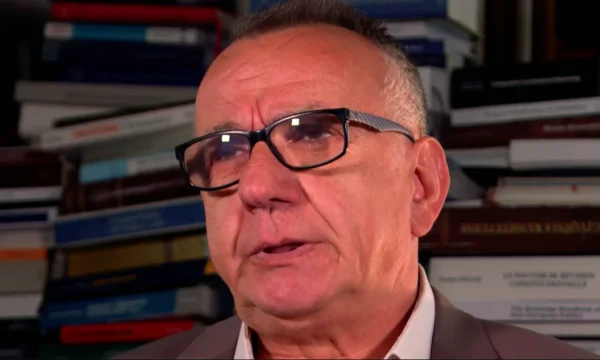
Periskopi(10 months ago)
(10 months ago)Former Constitutional Court Chairman Enver Hasani has said the main reason Albin Kurti does not want the institution's constitutionalisation is directly linked to the Brussels and Ohrid Annex Agreement. Hasani has said Kurti has acknowledged the establishment of Serbian-territorial political autonomy. He has said that for the Parliament blockade he wants to share the blame with [...]
Former Constitutional Court Chairman Enver Hasani has said the main reason Albin Kurti does not want the institution's constitutionalisation is directly linked to the Brussels and Ohrid Annex Agreement.
Hasani has said Kurti has acknowledged the establishment of Serbian-territorial political autonomy.
He has said that for the Parliament blockade he wants to share the blame with the opposition.
By contrast, Hasani has said the issue of establishing Serbian autonomy is the main reason why Westerners why Kosovo allies and friends do not interfere at all in the process of forming institutions.
His answer to Nacional below:
The main reason why Mr. Kurti doesn't want the institution's constitutionalization, or more precisely, wants to do it by sharing the blame with the opposition ʹ is directly linked to the Ohrid Agreement of Brussels and the Annex. As you know, Mr. Kurti has accepted the creation of Serbian political-territorial autonomy, which, in the judicial sense, in these 2023 agreements approved by him, is called self-enamination. This is a professional term used in Western culture as a common denominator for all sorts of autonomy.
In addition to these agreements, he has accepted the draft European Union Charter, which is expected to be passed to the Constitutional Court shortly after the new government was formed.
The Brussels and Ohrid accords, along with the draft European State, constitute the essence of the material constitution, which Mr. Kurti has built itself, and that he knows. By the time he accepted them, he was unaware of their size, but then he understood it. These pledges, at the expense of Kosovo, will have to implement without exception the future government, whoever is in power.
Therefore, Mr. Kurti, with behavior that sabotages the formation of new central institutions, is trying to share responsibility with the opposition so that the blame does not remain solely upon it. But this resistance has limits and will one day break because there is no other way. Then Kosovo will no longer discuss whether autonomy will be implemented, but only for the speed of its implementation.
Example is the case of the Council of Europe: we missed the chance, although we implemented the decision to return the lands of the Decani Monastery, but we were too late. The same will happen with Brussels and the Ohrid Annex agreements on Serbian autonomy in Kosovo. Any resistance, any exclusion of Serbs from institutions and any discrimination against them only accelerate and legitimize the establishment of autonomy.
The issue of the founding of Serbian autonomy, according to pledges Mr. Kurti made in Brussels and Ohrid in 2023, is the main reason why Westerners allies and Kosovo friends do not interfere with the process of forming institutions, as they once did. They are interested only in sending the European Union draft status to the Constitutional Court and then in implementing Serbian autonomy. For them, it does not matter who is in power, because they know that whoever comes to the government will be forced to implement this international pledge of Kosovo. That's where Albin Kurti is going./Periscopi/