6 hours ago
Hasani: Avni Deharit had to take the right to lead the session.
Periskopi(10 months ago)
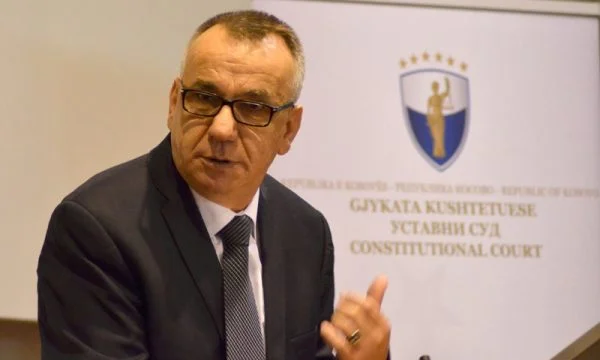
(10 months ago)Former head of the Constitutional Court, Enver Hasani, says today's judgment -- in its entirety -- is clear, consistent with that of June 26th and with the device declared several days ago. Hasan in an interview for Kosovo Press stated that after such convincing reasoning of the Constitutional Court and widely disputed ʹ is [...]
Former head of the Constitutional Court, Enver Hasani, says today's judgment -- in its entirety -- is clear, consistent with that of June 26th and with the device declared several days ago. Hasan in an interview for Kosova Press stated that after such convincing reasoning of the Constitutional Court and widely argued it had to be taken the right of MP, Avni Dehari to conduct the constitutional session.
The Constitutional Court in the full trial for political stalemate has estimated that the head of the Parliament's Constituent Assembly, Avni Dehari, from 27 June to 26 July this year, has exceeded formal and solemn competencies with the session agenda.
Hasan believes today's Constitutional Act of Political Concern paves the way for the formation of new institutions.
Kosovaress: How do you see the Constitutional Court's act of political stalemate? What are innovations?
Hasani: Today's ruling, in its entirety, is extremely clear, consistent with that of June 26th and with the device announced several days ago. I can say that it brings innovation in some ways: first, along with the first is a whole, which is the continuation of the first act of judgment. Second, it preserves the definition of the largest parliamentary group, as defined by Article 67.1 of the Constitution and the 2014 act. Finally, for the first time, it notes that Kosovo's Constitution can be violated by other acts, besides those specifically defined by the Constitution, such as the president of the Republic, but without imposing sanctions for such violations. It remains to be seen whether in the future the Court will be forced to impose constitutional sanctions for failing to comply with its decisions or for violating its constitution, standards and spirit.
Kosovaress: According to the full bias, legal consequences are not presented if they fail to comply. What are the problems that this can cause?
Hasani: There has been no need to establish judicial consequences unless the constitutionalisation is made after the 30-day deadline is expired, because the Court with this judgment that explains and implements the act of June 26th 2025 CHA has made it clear that the Kosovo Assembly must be constitutionalised and that the 30-day term does not run until it does not come to the constitution and until the unconstitutional situation continues. The passage of the 30-day term without the constitution of Kosovo's Parliament follows the continuation of the unconstitutional situation and the obligation of the Constitutional Court to again be promoted in terms of whether the party's (or coalition) right to the first in the election, or the largest parliamentary group to be out of the election, for candidate proposal for Parliament's chairman is passed on to others. It was agreed, if the request is applied by the Article 113 of the Kosovo Constitution. Judged by the reasoning that was made public today, the right to candidate proposal by Article 67.1 of the Constitution cannot imply the right to impasse. As a result, if the Court is again forced to decide on the case of non-compliance of the Parliament, this right will be passed to all deputies of the Kosovo Parliament because they are all held responsible for their non-compliance. The other solution is not, given the fact that in elections it cannot go into any circumstances until Kosovo's Parliament is established.
Kosovaress: Having estimated that the head of the Constituent Session Avni Dehari has committed constitutional violations, did the Constitution take on the same session leadership rights?
Hasani: Yeah. After such convincing and widely disputed reasoning, I think it should've been fair Mr. Avni Dehari to conduct the constitutional session. Anyway, I think Mr. Dehari should reflect on his age and withdraw himself from the further direction of the session, since the bias makes clear that only responsibility for the current blockade and the anarchy caused in the Parliament. To this day he may not have known this historical fact; now that he is clear, I judge that he must muster up courage and moral strength to leave the leadership position as a sign of remorse for his deeply unconstitutional actions.
Kosovaress: Today's judgment, how much does it pave the way for the establishment of institutions?
Hasani: Yeah. Reasoning the act clearly reflects the operational part. The latter, the operational part or the device, leaves no implications for the winning party's (or coalition) obligations as the largest parliamentary group in the sense of Article 67.1 of the Constitution and the 2014 act of prejudice to lead the process of constitutionalisation, according to the default scenario on April 8, 2025. Moreover, with this act of judgment, the Court has also pointed to the obligation for institutional play and political agreement as essential conditions for institution creation and respect for constitutional order. From now on, failure to implement or implement will be even clearer for all, because the Court has rounded up some clear constitutional parameters, in which individual and party responsibility for the Kosovo Assembly Constitution is anchored.
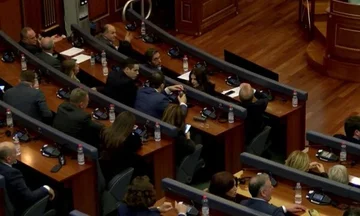
MPs ignored an earlier Constitutional Act of 26 June, which had called for the institution of the ninth legislature within 30 days. But the court had not indicated the consequences of failing to comply with this act.
Kosovo has been in political crisis after failing to form new institutions since holding parliamentary elections on February 9th.
The process has stalled in voting for mayor of the assembly, the position for which Vetevendosje Movement has nominated Albulen Haxhiun, but has not received the 61 votes needed./Periscopi/