6 hours ago
Germany and its problem with “Secure”
Periskopi(10 months ago)
(10 months ago)The European Court of Human Rights ruling may have implications for German migration policy. This is especially true of plans to expand the list of safe places. The third secure “ ” in the German and European asylum law refer to countries where, according to the German government's assessment or the European Commission, [...]
The European Court of Human Rights ruling may have implications for German migration policy. This is especially true of plans to expand the list of safe places.
The third secure “VENS in the German and European asylum law refer to countries where, according to the German government's assessment or the European Commission, people can be certain of state persecution. Opinions differ if such assessments are always correct. Not surprisingly, legal disputes often arise, especially in times of increasingly restrictive policies.
In early August, the European Union Court's decision in Luxembourg -- the highest judicial insistence on the European Union -- drew attention with a decision. Under this decision, EU member states can independently determine which third countries consider secure.
However, they must publish all the resources on which such an assessment is made, which has not been the case so far. Moreover, the entire population of the respective country must be secure, not political persecution or ethnic, religious or gender discrimination.
Differences Between Countries
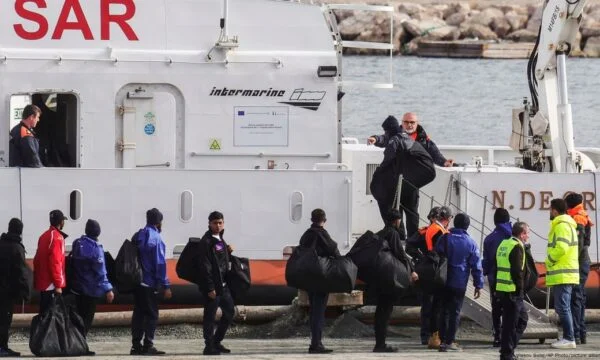
The objective of the current procedures was a lawsuit filed by two men from Bangladesh, whose demands for asylum were rejected by Italian authorities. Their country of origin is considered safe by the government in Rome. Interested Bangladeshi citizens were transported to a camp in Albania. Italy concluded an agreement with this country, which is not an EU member, for conducting asylum procedures outside its borders.
Even in Germany, there is a list of so - called third safe countries, often called “safe orgy countries”. It means the same thing.
People from these countries have very little chance of their asylum demand being resolved positively after an individual control. At the moment, this applies to eight European countries, including the Western Balkan countries along with Moldova and Georgia and two African countries, Ghana and Senegal.
Third countries secure potential: Algeria, India, Morocco, Tunisia
In the German government's Christian Democrat-Social Democrat coalition agreement, the list agreed to expand. Specific places are also mentioned: Algeria, India, Morocco and Tunisia.
We constantly control the proper assessment of other countries of origin. In particular, countries whose citizens have a level of asylum recognition of at least five years under five percent are considered safe. ”
It remains open whether these plans will still be easy to realise following the decision of the EU court, as sounds in the coalition agreement.
“However, the German government wants to reform the procedure. The third secure countries in the future can be determined by decree - without the approval of Bundestag and Bundestrat.
EU idea for common turning centres
The coalition has already submitted a relevant bill, which is expected to be voted after parliament's summer holidays. The first debate took place in July. In this case, Interior Minister Alexander Dobrindt seized the opportunity to criticise the supposed insufficient number of deportations of denied asylum seekers: our “now goal is to end the blockade of effective control of illegal migration. ”
He particularly criticised the rule under which people who will be deported have the right to legal counsel before deportation, which is now scheduled to be removed. The minister expects this to speed up deportations to countries already on the list of third secure countries.
Within the European Union, joint centres for the return of denied asylum seekers are under consideration. The topic was discussed by the interior ministers of member states at a meeting in Copenhagen in July.
Dobridt supports the idea: Since it is difficult for individual countries to link agreements with third countries, co-operation among some EU countries can be a reasonable opportunity. There are concrete plans in some places.
“I do not rule out that something similar could be considered for Germany”, the German minister said. Dobridt wants to send a clear message with reform: “Those who come from a safe country should not even leave. Those who can neither stand nor come. ”
Opposition expects a change of course
Part of the political opposition in Germany hopes that the government will change its course when it comes to asylum policy after the decision of the EU court.
The decision of the EU court on the safe countries of origin is a major success for respecting human rights and individual asylum rights in Europe”, believes Green MEP Filiz Polat. The plan to declare secure sites by decree without control of Bundestag and Bundesrat is unacceptable to him.
Clara Bünger of the Left Party calls on the coalition to fully review the list of safe countries of origin. “Georgia and Moldova must be removed immediately from this list. ”
The refugee policy spokeswoman quoted, among other things, the Berlin Administrative Court's decision in March 2025, which questioned whether Georgia's classification as a secure orgy country was in line with EU law. The reason given is serious human rights violations in occupied territories of Abkhazia and South Ossetia.
As for Moldova, the Czech Republic considers this country partly safe because the Transnistria region, which falls under Moldova, is controlled by pro-Russian separatists.
Representative Bünger believes the decision of the EU court is also important for the idea, which is unacceptable for its party, to expand regulations on third countries: the decision is a clear rejection of the German government's plans to also declare countries like Tunisia and safe Algeria. ”
Homosexual relations are punishable in these parts of North Africa, and so is Algeria. This violates one of the main criteria of the EU court: in countries declared third safe countries, the security of the entire population must be guaranteed. / DW/Periscopi/