4 hours ago
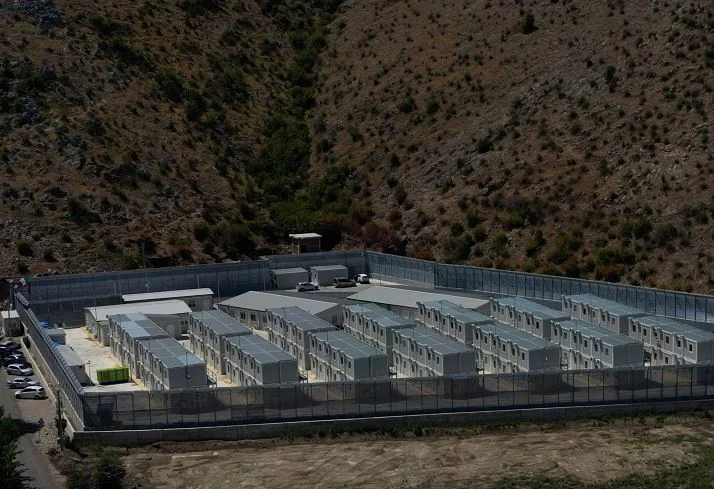
EU tribunal rules against Italy for scheme of Albanian immigrant camps
Periskopi(10 months ago)
(10 months ago)Europe's top court on Friday questioned the legitimacy of the list of safe subx0 nations Italy uses to send immigrants to Albania and accelerate their asylum demands, in a new blow to a key provision of government migration policy. The office of conservative Prime Minister Giorgia [...]
The office of conservative Prime Minister Giorgia Melon, in a statement, called the court's decision surprising “” and said it “subs the policies to fight massive illegal immigration and to protect national borders”.
Dario Belluccio, a lawyer who represented one of Bangladesh's asylum seekers in the specific case presented to the European Court of Justice, said the immigrant camps scheme from Albania was effectively destroyed.
It will not be possible to proceed with what the Italian government predicted before this decision... Technically, it seems that the government's approach has been completely dismantled”, he told Reuters, broadcast Clankosova.tv.
Mellon had presented the shift of asylum seekers to camps built in Albania as a cornerstone of its harsh approach to immigration, and other European countries had seen the idea as a possible model.
However, the scheme faced legal opposition almost immediately after it was launched last year, with Italian courts ordering the return to Italy of captured and taken to Albania, citing problems with the European Union law.
In a long-awaited decision, the Luxembourg-based European Court of Justice said Italy is authorised to speed up asylum refusals for citizens coming from countries to a list of safe “” a principle in the heart of Albania's scheme broadcasts Klankosova.tv, Periscope.
She also said Italy is free to decide which countries are the safe “ ”, but warned also that such a definition must meet strict legal standards and allow applicants and courts to enter and challenge supporting evidence.
In her statement, the European Court of Justice said that a Rome court had been addressed to EU judges, citing the inability to access such information and thus preventing it from “challenged and revised the legality of such a security assumption”.
The European Court of Justice also said that a country may not be classified as the safe “” unless it offers adequate protection for its entire population, effectively agreeing with Italian judges who had raised the issue last year.