6 hours ago
Enver Hasani: Rasup São can be nominated for deputy speaker on behalf of the Serb community, what we saw is unconstitutional
Periskopi(10 months ago)
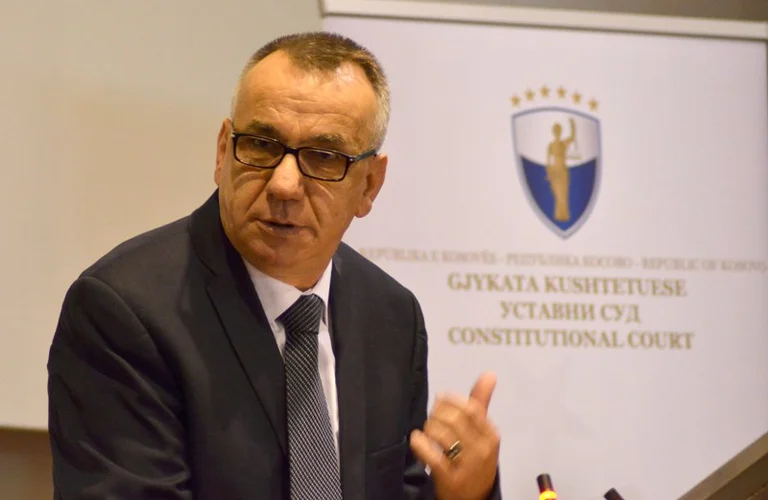
(10 months ago)The former head of the Constitutional Court, Enver Hasani, has suggested that what happened today in the Kosovo Assembly concerning the election of vice-presidents from the non- majority community has been entirely contrary to the Kosovo Constitution. He has estimated that the majority community cannot be asked for constitutional rights of non-US communities. [...]
He has estimated that the majority community cannot be asked for constitutional rights of non-US communities.
In this interview for Nacional, Hasani has said MP Nenad Rassic has no right and cannot be nominated for deputy head of the Kosovo Parliament on behalf of the Serb community.
According to him, that proposal can only be made by the Serb parliamentary group in the Kosovo Assembly.
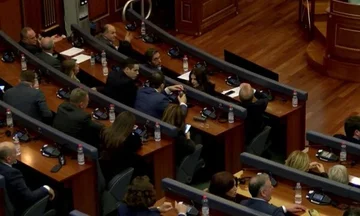
Question: Mr. Hasan, today in the Assembly, came up the white “”. The chairman of the Parliament was elected, but the case was blocked by the vice president. How did the MP's attempt at the constitution today?
Hasani: I think the PDK's behaviour was correct and in line with its public promise that it would vote on a candidate who was not part of government executive Kurti. For citizens, this is good news. From the political aspect, however, such a step of The PDK, without a political agreement, proves problematic, because there is no guarantee that will be achieved until the Kosovo Parliament's constitutionalisation and the unlocking of the deadlock, as is evident from the present-day behaviour of the chairman of the uncontained Assembly.
The count of the PDK and citizens that with the vote of the Speaker of the Parliament to be automatically passed on to the executive formation has proved wrong.
Question: The process stalled on the election of deputy heads of the Assembly from the communities, when the procedure for electing two vice-presidents of the Parliament representing non-most communities was split. Was this action okay?
Hasani: What we saw today is completely contrary to the Constitution of Kosovo, both with the letter and its spirit. Constitutional provisions are clear, as have been clear to Kosovo's Parliament Speaker, and give absolute priority to the proposal of most MPs from non-Albanian communities to elect the candidate for deputy speaker of the Parliament. They do not represent political ideology, but the rights and interests of their community as they are protected by Chapter I II of the Constitution of Kosovo and its provisions on non-discrimination on any grounds.
These provisions are divided into three parts: their first part refers to the president of the Kosovo Assembly. It represents all of it and its competencies are clearly defined in the Constitution; the second part is linked to the deputy leaders from the Albanian community; and, finally, the third part concerns sub-chairmen from non-Albanian communities. These very last provisions clearly establish that voting for the deputy heads of the non-Albanian communities must take place in the package, as has always happened in parliamentary practice to date, without exception.
The casting of lots is only when non-US communities themselves don't reach agreement among themselves for their representative. This procedure applies only to non-Albanian and non-Serb communities. The rule of lots cannot be made by the chairman of the alliance with self - initiative and arbitraryly, as happened today.
Mr. Rassic has no right to be proposed either under the Constitution of Kosovo or according to the Parliament Rule. The vote must be made by the majority of the Serb community, which the Constitution and the Rules of the Parliament clearly define. The regulation is the only sub-law act that is fully rated with the Constitution of Kosovo, and serves as the measure parameter for assessing the constitutionality of the acts of the Kosovo Assembly, if they end up in the Constitutional Court.
As far as spirit is concerned, I want to remind them that constitutional democracy in Kosovo is consistent, driven by the Ahtisaari Pack. Kosovo's independence has been declared on this basis. This form of democracy implies, in short, that the majority community cannot survive or discriminate against non-Albanian communities that are in the minority. This is true of all branches of power -- the legislature, the executive and judiciary -- including the Constitutional Court.
In all these institutions there must be adequate representation of non-US communities. The community cannot be asked and established majority for the constitutional rights of non-US communities. Anyone who doesn't understand this principle is in deep regard.
Question: Was the candidate's proposal for deputy head of the Serb community from other parties constitutional action?
Hasani: Never. I explained it earlier: Mr. Nenad Rassic, who is my old friend, is not right and cannot be nominated for deputy head of the Kosovo Assembly on behalf of the Serb community. That proposal can only be made by the Serb parliamentary group in the Kosovo Parliamentary Assembly, following a majority vote on the inside and regular procedure, always in writing.
Question: This proposal was made by referring to the recent judgments of the Constitutional and the lots procedure. What is your appreciation for these actions?
Hasani: The Kosovo Parliament's chairman, a country that is still uncontained, has no right to interpret the Constitutional Court's judgments for the purposes of their implementation. He's only got this right in relation to the Parliament Rule, and only after his transition. As it is known, the Assembly is considered binding only when elected by the vice president. So, from the judicial-dedicated aspect, the situation does not differ at all from the pre-election situation of Mr. Dimal Basha as head of the Parliament.
Question: From these actions it seems that the party has no power to form the Parliament. Why do you think you're doing this creeping on Albin Kurt's party?
Hasani: The main reason why Mr. Kurti doesn't want the institution's constitutionalization, or more precisely, wants to do it by sharing the blame with the opposition ʹ is directly linked to the Ohrid Agreement of Brussels and the Annex. As you know, Mr. Kurti has accepted the creation of Serbian political-territorial autonomy, which, in the judicial sense, in these 2023 agreements approved by him, is called self-enamination. This is a professional term used in Western culture as a common denominator for all sorts of autonomy.
In addition to these agreements, he has accepted the draft European Union Charter, which is expected to be passed to the Constitutional Court shortly after the new government was formed.
The Brussels and Ohrid accords, along with the draft European State, constitute the essence of the material constitution, which Mr. Kurti has built itself, and that he knows. By the time he accepted them, he was unaware of their size, but then he understood it. These pledges, at the expense of Kosovo, will have to implement without exception the future government, whoever is in power.
Therefore, Mr. Kurti, with behavior that sabotages the formation of new central institutions, is trying to share responsibility with the opposition so that the blame does not remain solely upon it. But this resistance has limits and will one day break because there is no other way. Then Kosovo will no longer discuss whether autonomy will be implemented, but only for the speed of its implementation.
Example is the case of the Council of Europe: we missed the chance, although we implemented the decision to return the lands of the Decani Monastery, but we were too late. The same will happen with Brussels and the Ohrid Annex agreements on Serbian autonomy in Kosovo. Any resistance, any exclusion of Serbs from institutions and any discrimination against them only accelerate and legitimize the establishment of autonomy.
The issue of the founding of Serbian autonomy, according to pledges Mr. Kurti made in Brussels and Ohrid in 2023, is the main reason why Westerners allies and Kosovo friends do not interfere with the process of forming institutions, as they once did. They are interested only in sending the European Union draft status to the Constitutional Court and then in implementing Serbian autonomy. For them, it does not matter who is in power, because they know that whoever comes to the government will be forced to implement this international pledge of Kosovo. That's where Albin Kurti is going.