6 hours ago
What is said in the defence motion on the matter of the length of the conflict period in Kosovo at the prosecution points against former KLA leaders?
Periskopi(10 months ago)
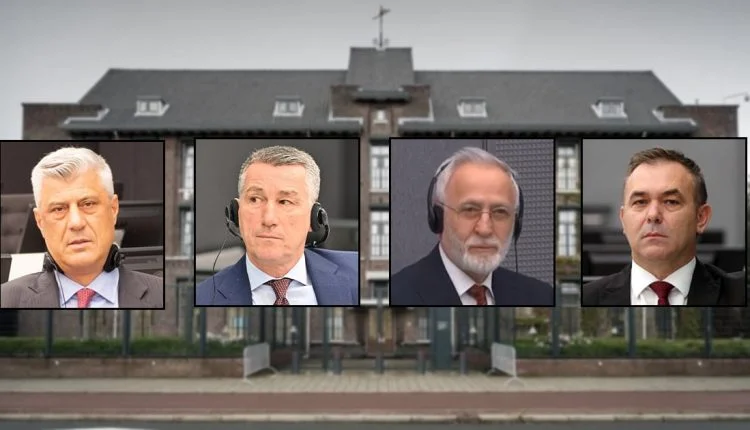
(10 months ago)In Kosovo Specialised Chambers ( The DPS) in The Hague has become public the defence motion of Hashim Thaci, Kadri Veselin, Rexhep Selimi and Jakup Krasniqi, who called for the dropping of charges in the indictment under the 130th Rule. In particular, through this motion, the defense had demanded from the court that he consider defence arguments to [...]
In particular, through this motion, the defence had asked the court to consider defence arguments to cut the period for armed conflict in Kosovo (including in the indictment) and thereby drop charges or pieces of war crimes charges that are out of this period, the Justice Vow reports. Periscope.
According to the defence, at the time the Federal Republic of Yugoslavia (RFJ) had agreed to disrupt the hostilities on June 9th 1999 and left Kosovo until June 20th that year, the process which is internationally supervised.
Under defence, war acts between the RFJ and the KLA never resumed, and there is no evidence of any violence after 20 June 1999 committed by or against Serbian forces.
That conflict ended on June 20, 1999, according to defence, has also defined W NMIC in Orders 2000/66 and 2006/50, which remain in effect in Kosovo unless they are abolished.
In addition, the defence argues that June 20th 1999 has been confirmed as the date of the end of the war by the Kosovo Parliament. They have also argued that even courts in Kosovo are based on this period of time during war crimes prosecutions.
And they called it “changing history” the prosecution's claim that the conflict has continued until mid-September 1999.
The defence even says even the evidence proved so far in this case does not support the agreement that the conflict has lasted until September.
The defence says that after more than 739 hours of witness testimony and presenting over 8 thousand evidence, the prosecution has failed to prove that an armed conflict existed in Kosovo before the end of May 1998 or after 20 June 1999.
They also say that rule 130 is not limited to the opposition of the charges but also to their parts.
As a result, the defense listed several events that they claimed were not the events of an armed conflict but that served its beginning.
What does the defense motion say about the Jashar family attack?
In its motion, the protection of the KLA four says that on 5 March to 7 March 1998 an operation conducted by Serbian forces targeted the village of Prekaz.
On the morning of March 5th, forces that were deployed in the Münción and complex factory shot down the homes of the Lushtaku family.
According to evidence, the defence says that shootings, shootings, shootings in the streets were described by witnesses, infantry in camouflage uniforms, mortars, machine guns, hand grenades and tanks were used.
One eyewitness had even seen some 60 vehicles surrounding his home, as well as residents had said that they had not been informed by the police force about the operation in Prekaz.
While the Lushtaku family members, according to protection, had fled, the focus of the Serbian operation moved to the complex that belonged to Shaban Jashar and his family.
The defence stresses that according to evidence from Serbian authorities, the target of the operation was the Jashart complex, with the reasoning that there were barricaded as they were called terrorists. In her motion, the defence said that among the 59 victims of this operation were women and ten children.
Some sources suggest that the entire Jashar family at home was killed during the attack, except for an eleven-year-old girl”, the motion said.
According to the defence, evidence suggests that the operation conducted by Serbian forces was deliberate and planned to eliminate suspects and their family by using large arsenals and artillery bombings.
Although the Jashar family was ill-equipped within the complex, which reacted with weapons, according to defence, this fact had been called a clash with the terrorist gang of Adem Jashar”.
However, the defence says there is no indication that an attack of similar size has occurred after the attack on Prekaz.
Operation on Haradinaj complex
In its motion, defence also mentions the March 24, 1998 operation in Glodjan and Dubrava, reports “Justice Vow“.
According to the defence, evidence shows the clashes erupted after Serbian police conducted control over two men, but it remains unclear whether the violence was caused by the attempt to flee and shoot police, or police themselves shot these men.
The defence points out that according to a statement issued by Serbia's Ministry of Internal Affairs, the patrol was allegedly attacked by armed terrorists, resulting in the death of a patrolman and the injuries of three others.
Serbia's “Police opened fire on Haradinaj's house, inciting inside fire. After residents left Haradinaj's house, Serbian police forces entered and found, according to claims, grenade launchers, hand throwers, pistols and large quantities of ammunition. Evidence shows that on the afternoon of March 24th, about fifteen police officers searched the House of Faza and Rexhep Haradinaj, which was later targeted with artillery fire”, the motion said.
According to witnesses, the defence says they had seen three helicopters heading towards Glogdjan shooting from the top, while police were surrounding the village.
“In total, three people were killed, another 20 were injured and 14 individuals were arrested by Serb forces. Victims included Gazmend Mehmetajn, Agron Mehmetajn and Him Haradinaj, who died as a result of fire from helicopters”, said in the defence motion.
Under the defence, the evidence is also due to Ramush Haradinaj's retrial over the attack on their complex, in which Haradinaj was wounded and sent to Lahi Brahimaj's home in Jablanica.
In this retrial, the defence says it became known that in the attacks on the Ahmeti family, Jashari and the Haradinaj family were motivated by many to join the KLA. It says that this jury is also aware of these facts in this case.
Always according to the defence, another clash between the KLA and Serbian forces following the attack on Prekaz was characterised with the most minimal number of victims and were more limited at the time of armed clashes and used weapons.
According to the defence, there is no evidence to show that by 24 March 1998, there has been an armed conflict on Kosovo territory.
Defense: Indicators that until April 26, 1998 there has been an armed conflict in Kosovo
The motion defence has even cited a KLA ambush on April 26th 1998 against a Serbian military convoy on the main Pristina-Peje road.
This attack was described as the first to begin The NLA happened between the villages of Gjerce and Balica. According to the defense, there is little information on how surgery was conducted and weapons. However, it was said that unlike the KLA, Serbian forces suffered human and material losses. But, reportedly, a report by Serbian forces says there were no victims.
As a result, according to the defence, the court has little or no evidence on the first attack carried out by the KLA and that evidence presented by the prosecution contains no indication of the type of weapons used.
So, defence says there is no evidence before the court to show that there has been an armed conflict on Kosovo territory until April 26, 1998.
Serbian attack in Gjerce, defence says neither until May 9th 1998, the indicator that has existed conflict in Kosovo
In its motion, defence says that, according to evidence, on May 8, 1998, Serbian forces had launched an attack against Georgeca, in which heavy weapons artillery was used, which prompted the KLA response.
It says that fighting began several hours until Serb forces began to withdraw. While withdrawing, according to protection, Serbian forces also opened fire on the houses of the village of Negroc, causing the armed crash to take place in Lapusnik on the following day.
The defence says that in Lapusnik, during the offensive houses along the main road were damaged by bullets and burned. But this clash, according to defence, led to the collapse of the Serb forces' front line and their withdrawal. Despite this defeat, defence says Serbian forces continued to be fired occasionally at night.
“As far as victims are concerned, evidence suggests that Serbian forces suffered losses during the withdrawal, including police officers killed and injured, sequentised ammunition, as well as the destruction of a Pinzauer vehicle. On the part of the KLA, reports indicate a victim and two or three wounded soldiers”, said in the defence motion.
As for comparisons in arms, defence says Serbian forces had heavy artillery and an incoming range of vehicles and tanks, while the KLA resisted with light weapons.
According to the motion, the prosecution has managed to determine the number of victims on each side, and has no information to establish claims that Serbian forces had major losses. In addition, defence says it has information on military resource inequality between the parties.
In addition, defence says neither until May 9th 1998 has evidence showing there has been an armed conflict on Kosovo territory.
In and around Ratkoc, defense: Indicators with armed conflict until May 12, 1998
The defense mentions another May 12, 1998, event on the outskirts of Ratkoc, specifically on the road to Brnjak and Braton villages, but many elements from this defence parachute are edited.
The defense, however, says that even at this event, there was a disparity of tools and the number of personnel available to both sides. As a result, there is reportedly no evidence of armed conflict until May 12, 1998.
“Traders dealing with the limited number of victims; limited size, if there are, of direct clashes between Serbian forces and the KLA; as well as the localised and Sporadic nature of confrontations, even if taken to the highest degree, do not testify that the intensity of the hostilities has passed the applicable threshold for an armed conflict until May 12th, 1998x1>, the defence motion said.
However, speaking of additional events, defence says there have been incidents during the spring of 1998 and that are important for gradual intensifying of hostilities until the summer of 1998. But there is a specific lack of evidence of such events.
For these reasons, the evidence of these incidents, even combined with the events described above, does not testify that the hostilities have passed the corresponding threshold of extended armed violence”, is further said in the defence statement.
One of the cases is mentioned on April 22, 1998, when the KLA had conducted an attack on a Serbian Military Police battalion, which it had responded to. The defence even says that a Military Police operation is also cited in Serbian evidence, so as they call them terrorists in Kostunica. The clash was said to begin after some Albanians had attempted to cross the border in Kosovo and there were no victims from Serbian authorities.
The defence had mentioned another case on April 24, 1998, where, according to Serbian evidence, The KLA had opened fire on Serb forces in Gjakova. According to these evidence, The KLA had thrown missiles at a Russian helicopter carrying materials to Serb entities. A missile had fallen near the water supply factory.
Also, the defence, referring to Serbian evidence, shows that the KLA launched an infantry attack towards the village of Zedrell the following day against a Serbian Military Police battalion, but that there were no casualties.
Then, referring to the same evidence, the defence cites an operation conducted on May 5, 1998, in the village of Ponosec, where there were no victims. Another case reportedly occurred on May 14, 1998, along the Pejakova Street, which was without consequences.
Furthermore, the evidence on these incidents often silences the exact kind of weapons used, the number and kind of military personnel involved, as well as the extent of the destruction caused. While the court received judicial knowledge of the tried facts related to these incidents, none of those facts provides the necessary details to prove that the intensity of fighting had reached the necessary threshold for an armed conflict”, it is further said.
The defence says the existence of an armed conflict requires at least a considerable number of indicator factors, including the seriousness of attacks, the rise and spread of clashes in the territory, as well as the use of heavy weapons.
As the argument, the defence predicts that, according to evidence, hostilities between the two sides entered a new phase by the end of 1998 with direct and prolonged clashes between Serb forces and the KLA.
The defence says that in addition to fighting, the number of victims and displaced civilians, as well as personnel deployed by both sides, increased during this period.
As a result, the defence cites an attack on Lapusnik's Grip on May 29, 1998, launched by Serbian forces after the KLA had taken control of that area on 9 May 1998.
The defence points out that, according to evidence, this operation had started with armoured vehicles and tanks and five grenade launchers.
As a result of this operation, Serbian forces reportedly burned down many houses in nearby villages, which the KLA responded by snipers, causing Serb forces to return to their base in Komoran.
There were people killed and wounded, including policemen, KLA soldiers and a civilian.
According to the defence, in this event, Serbian forces had been dislocating considerable arsenals of weapons, while evidence shows the KLA was acting under major restrictions.
The next case, the defence motion also mentions the May 31st 1998 one, when Serbian forces launched an attack on the village of Poklek New near Drenas.
In this operation, Serbian forces had gathered the men and women of the village, which a witness had said had seen a policeman shoot five civilians from behind.
During this attack, Serbian forces sent 300 officers with artillery and armoured vehicles under defence, and 28 houses were burned and many more were looted, according to evidence.
The defence also says that in June 1998, according to evidence, The KLA moved to the coal mine in the Great White and snatched up several Serbian miners by stopping production. Following the capture of the mine by the KLA, it was said that Serbian forces launched attacks and deployed special police units backed by heavy weapons artillery that was in disparity with what the KLA owned.
According to Serbian reports, defence says an eight-year-old Albanian boy was killed and a man was wounded. But according to protection, over 8 thousand were forced to flee their homes and take refuge in the woods.
In its motion, defence says Bislim Officepi claimed the KLA suffered many losses after the attacks.
According to defence, the court noted that after the end of May 1998, the intensity of the clash in Kosovo increased significantly. It is said that during this time, The KLA controlled up to 50% of the territory, cut off supply for Serbian forces through control of major roads, and conducted frequent attacks on police stations in Suhareka and Runik.
The motion reportedly led to the deportation of about 400,000 people, while Serbian forces conducted operations to restore communications lines to Decani and Gjakova.
The defence also says KLA participation before the end of May 1998 was largely limited to random attacks. As a result, the defence claims 1998 summer marked a new phase of conflict, with direct and frequent clashes, including taking Rahovec on July 20th, as well as fighting and daily outbursts intensifying armed violence.
Referring to courts in Kosovo, defence says based on these indicators, the end of May 1998 serves as the starting point of armed conflict.
Defense: Evidence can support a war crimes sentence for any act allegedly committed after June 20th
According to the defence, most of the evidence in the prosecution's pretrial file, which said that the conflict lasted until September 1999, were not introduced or accepted during the process.
“Actually, there is no evidence that can support a certain conclusion that the accused may be responsible for war crimes for any alleged crime that has begun after June 20, 1999”, the defence said.
Similarly, the defence says it is clear both legal and fact issues that the conflict in Kosovo had ended on June 20th 1999, similar to the UN Security Council, which approved Resolution 1244 on June 10th 1999, terming the delocation of an international civil and security presence in Kosovo to prevent the resumption of clashes.
That date, according to protection, was clear even for UNMIK, International Criminal Tribunal for Yugoslavia judges, Supreme Court judges in Kosovo, the Special Prosecutor of the Republic of Kosovo, the Kosovo Parliament, and so on.
“The witness of 253 SPS witnesses and the review of over 8,000 documents have only strengthened the actual inability of any violence committed in Kosovo after June 20, 1999 to meet the criteria of “intensity” or “organisation”, the defence said.
As a result, the defence says there is no evidence that can support the findings that the accused may be responsible for war crimes for any alleged act that was committed after June 20, 1999.
Although the prosecutor of the preliminary procedure found in line with the prosecution that an international armed conflict continued until 16 June 1999, according to the defence, they relied on a very small range of evidence that has not been accepted.
According to the defence, even witnesses who were part of the KLA have confirmed that by 20 June 1999, Serb forces had withdrawn from Kosovo.
These KLA tests were confirmed by those in Serbian forces, including those who withdrew and others who were demobilised. [ REDAKU] worked for [HOOD] REDAKU], and was part of the Serbian forces that withdrew on June 12th 1999. [ REDAKU], at Yugoslav Army reserves in [ REDAKUED] until June 12, 1999, the date on which the entity was disbanded after the Kumanovo Agreement. He confirmed that, on June 12, 1999, the Yugoslav Army left its native village, and on June 13, 1999, KFOR” arrived in the defence motion.
After June 20, 1999, defence says international forces were deployed and that UNMIK was not created to settle in an armed conflict that is ongoing. Under defence, his mandate was to prevent any resumption of the conflict.
“U n NMIC has been, and has always been considered, a post-conflict mission. UN reports and documents consistently recognise armed conflict as completed on June “20, 1999”, and refer to U NMIC in post-conflict terms, as created to help the people of Kosovo rebuild their lives and heal the wounds of the conflict”, and address the “a broad range of urgent needs after the conflict in Kosovo”, said in the defence motion.
According to the defence, the prosecution's claim that the conflict continued until September is weakened by the fact that one side had left the territory, while the other was in the process of deilitarisation as the process of the agreement signed by Hashim Thaci on 21 June 1999.
Meanwhile, on April 15th 2025, the prosecution has announced that it has completed presenting evidence in the case.
While, the defence had applied according to the 130th Rule, which envisions a request to drop any charges or charges altogether in the indictment. The decision on this request was received on July 16, 2025. According to the chairman of the panel, Charles Smith III, what he had sought protection was his failure to rely on war crimes claims involving incidents that occurred before May 1998 and after June 20, 1999.
The trial “Trug notes that incidents and events that have occurred at the time opposed by defence are not accusations within the understanding of the 130” rule, the chairman of the court, Charles Smith III, said.
As a result, this motion had been dropped with the reasoning that the court's authority is to bring down material that constitutes accusations involving time causes. While, the same day, the protection of the victims had presented its evidence, calling two expert witnesses to testify simultaneously.
Except they testified on July 16, 2025The testimony of these two witnesses continued on July 17, 2025, thus ending the testimony of the victims' defense witnesses.
On April 29, 2022, the Specialised Prosecutor's Office had handed over a amended indictment to Hashim Thaci, Kadri Veselin, Rexhepi and Jakup Krasniqi, where four indictees have committed war crimes even in Gjilan, Semetium Buddha.
On November 9, 2020, in their first presentations, Jakup Krasniqi i Hashim Thaci have been declared innocent of charges charged. Wessel was also declared in his appearance on November 10, as well as Rexhep Selimi November 11th.
The Act on Hashim Thaci, Kadri Veselini, Rexhep Selimi and Jakup Krasniqi is confirmed on October 26, 2020