6 hours ago
Ukraine tills control of anti-corruption agencies
Periskopi(a year ago)
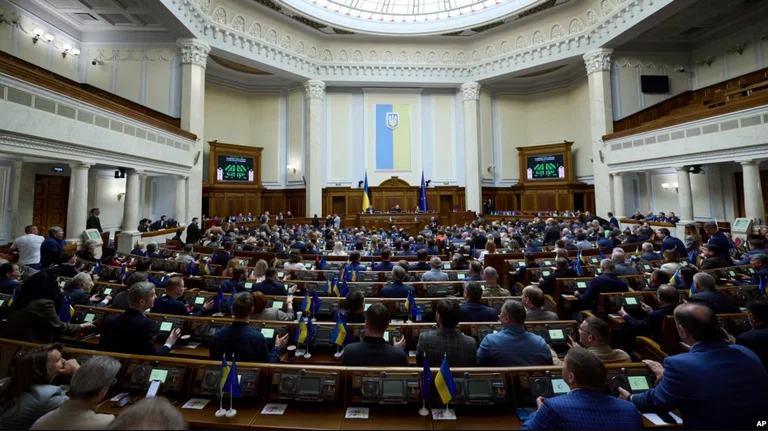
(a year ago)Ukrainian lawmakers have decided on hardening restrictions on the two main anti-corruption agencies, increasing concerns over state pledges to root out corruption. In the 450-seat parliament, 263 MPs voted for the law limiting the independence of the Ukraine National Bureau Against Corruption (NABU) and the Specialised Anti-Corruption Prosecutor's Office [...]
In the 450-seat parliament, 263 MPs voted for the law restricting the independence of the Ukraine National Bureau Against Corruption (NABU) and the Specialised Anti-Corruption Prosecutor's Office (SAPO).
The law, which was proposed by President Voldymyr Zelensky's People's Party, causes the general prosecutor to be de facto SAPO leader, removing authority from the head of agency.
The law also allows the general prosecutor unilaterally to close cases involving senior officials and gives him the right to transfer cases that are being investigated by the NABU to other agencies.
With this decision, parliament not only removes society from one of the biggest achievements since the Dinjisia Revolution ? independent anti-corruption institutions ? but also undermines the confidence of Ukraine's international partners”, Transparency International Ukraine said in a statement after the vote.
The only way to undo the damage is for the president to veto the law. Otherwise, President Volodymyr Zelensky will share responsibility with Parliament for destroying anti-corruption infrastructure in Ukraine”.
These legal challenges come when the NABU has faced some challenges as well. On July 21st, the Internal Security Agency, the SBU, arrested two NABU officials one for spying on Russia and one for alleged business links to Russian entities, and authorities have conducted raids targeting employees of this agency.
The SBU claimed that some officials were linked to banned political groups, including the former partina of a fugitive Ukrainian MP.
The NABU, which has led high profile investigations, said the SBU operation went beyond legitimate security concerns, including unbounded issues as traffic violations committed years ago.
Transparency International named the raids as an example of “masspression” to anti-corruption institutions in Ukraine.
Ambassadors of the 7th Group (G7) countries in Kiev, who met with NABU leaders shortly after the event, issued a statement expressing “serious concerns” and said they would raise the issue directly with government leaders.
Recent moves have revived greater fears that Ukraine's deep problems with corruption are not addressed, while efforts to promote accountability and transparency are facing opposition. / REL/ Periscopi/