6 hours ago
Terras: New elections, recent option '%s' does block European integration
Periskopi(a year ago)
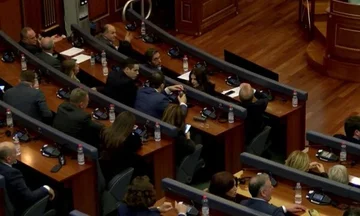
(a year ago)The rapporteur for Kosovo in the European Parliament, Riho Terras, has been loud with criticism of MPs for the formation of the new Kosovo Parliament legislature, of which he called for the constitution as soon as possible. In an interview for Klankosova.tv, he has declared that Kosovo should be determined within 30 days by [the] court action....
In an interview for Klankosova.tv, he has declared that Kosovo must within 30 days determined by the Constitutional Court's act of judicial decision form new institutions on which the road would be opened so that the EU can also free official Pristina from the current penalty measures.
According to him, the deadlock should be gone, but new elections should be the last option, while stressing that Kosovo is also causing the road to European integration. /Periscope/
Rího Terras' full interview:
Kosovo is still without new institutions, what is your message to Kosovo politicians, what do you see as a solution?
Terras: First of all, all the main parties in Kosovo are strongly in favour of EU integration, and this is a positive sign for bilateral interests and EU enlargement. The Constitutional Court's recent decision to grant parliament 30 days to elect a chairman, and vice-presidents is an obligation, not a recommendation. So it should lead to a concrete outcome. If Parliament still fails to establish a functional leadership, Prime Minister Kurti could continue to be prime minister in office, acting as prime minister, though without a formal mandate. In my opinion, new elections should be a last option. After all, the sooner Kosovo resolves the current impasse, the better for all.
What harm does this political blockade do to Kosovo in terms of European integration?
Terras: This is the first substantial obstacle we have to overcome in order to move ahead with the entire enlargement process and to restore EU funds. But only this, of course, is not enough for full integration. The latest report describes the long - term challenges still ahead. Kosovo has made great progress in some areas, but significant improvements are still required. Competition policy remains a crucial issue, as without adequate supervision, justice and balance are at stake in the market. The education and health sectors are also priorities, for they play a key role in developing individual skills and improving quality of life.
During his visit to Kosovo, Kaya Kallas said the EU would begin removing the measures. Have you seen any progress in this regard?
Terras: Here we face the same obstacle, already mentioned, the formation of a functional government. This is the first and most important task, because only then can the EU normalise relations and resume financing and development projects.
You have been critical of Aleksandar Vuciq's recent visit to Russia. Do you think the European Union has reflected on its approach to Serbia since 9 May?
Terras: My Eurodeput colleagues condemned the visit, as well as the subsequent visit of European Council President Costa to Serbia to meet with President Vuciq. I wrote an open letter asking President Costa to cancel his planned meeting with Vuciq because of his participation in May 9th celebrations in Moscow. Unfortunately, the meeting took place, although reactions to my letter were explosive. As I said then, and I repeat again: Serbia's president indicated he is not in line with EU values and goals. President Costa's visit to Serbia that followed was a disgrace and a diplomatic failure for the European Union.