9 hours ago
Tensions mount: Russian military Dron falls in Lithuania
Periskopi(a year ago)
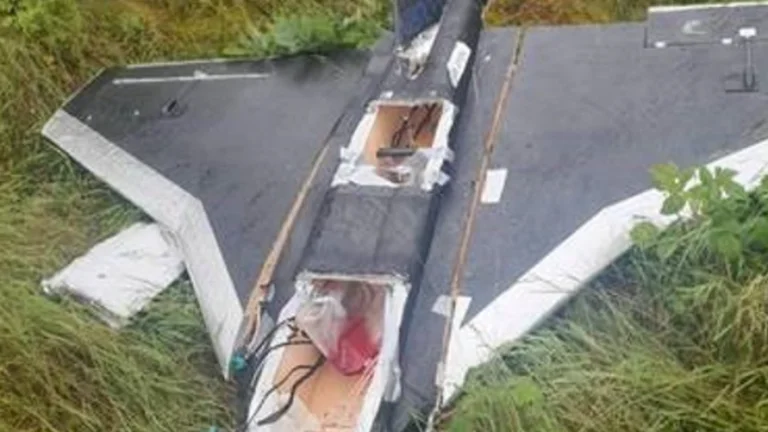
(a year ago)An incident that has caused major concern in the region has occurred this week, when a Russian military threat, suspected as part of Russia's weapons used in the war in Ukraine, collapsed on Lithuania's territory of a NATO and European Union member state. According to the State Border Service [...]
According to Lithuania's State Border Service, a flying vehicle similar to an improvised presumption (UAV) entered Lithuanian airspace from the direction of Belarus, a Russian close ally and often a platform for its military operations. The Drone collapsed near the eastern border, and authorities are investigating the exact circumstances of the event.
According to local media sources, including the Delphi portal, it is believed that the fears in question are a “Gerbera”, a Russian model produced at low cost, which has been present in Moscow's military campaigns in Ukraine over the past year.
What is it you fear “Gerbera”?
“Gerbera” is described as a more simplified and economic version of the Iranian Kamikaze drive Shahed-136, which has caused significant damage to Ukraine through repeated air attacks on civilian and military infrastructure, sends the telegraph.
This fears is not only a means of suicide shock, but is also capable of detection, surveillance, precise attacks and distracting enemy air defence systems. This makes it a valuable tool in the hybrid strategies of the new war Russia has embraced in Ukraine and beyond.
What does it mean for the safety of the region?
This incident is particularly sensitive considering that Lithuania is one of the countries most exposed to Russian pressure, due to its border with Kaliningrad and its proximity to Belarus. The collapse of a Russian threat on its territory raises serious concerns about border security, as well as respect for NATO countries' air sovereignty.
Lithuanian officials have indicated they are conducting a thorough investigation to confirm the origin of the drive and its possible goal. Meanwhile, the incident has sparked new discussions on strengthening air defence and intelligence capabilities along the eastern border of the Euro-Atlantic alliance.
This case also comes at a time when tensions between NATO and Russia are high, and any breach of borders can be seen as provocation or testing the military readiness of member states. /Periscope/