6 hours ago
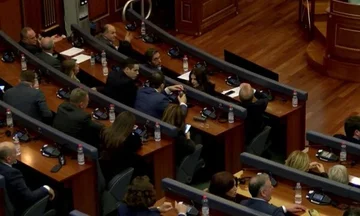
Special Court Disposes Lawyers' Request, None of the charges brought against former KLA leaders
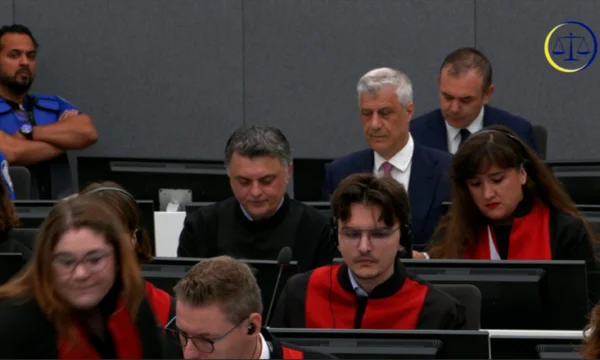
Periskopi(a year ago)
(a year ago)The Special Court has decided to drop the KLA leaders' defence motion, leaving all charges in force. The protection of KLA leaders had sought to drop charges concerning the period of the indictment. According to lawyers, there has been no conflict in Kosovo after June 1999, and before the end of May 1998. As a result, they had [...]
The protection of KLA leaders had sought to drop charges concerning the period of the indictment.
According to lawyers, there has been no conflict in Kosovo after June 1999, and before the end of May 1998.
As a result, they had sought to crash for incidents that took place before or after these dates.
Under the decision, if the request was approved, it would disrupt the fragmentation of the case.
However, that evidence has been examined about each of the points of the indictment. In the case in question, defence actually objects to only one of the key aspects of SPS evidence, and has sought to bring down what it describes only about the question of two time periods the defence says falls beyond, or goes beyond the scope of the alleged armed conflict. Z The SP estimates that non-international conflict has existed in Kosovo from March 1999 to September 1999, defence predicts the prosecution has not proven there has been conflict before the end of May 1998, and June 1999. The defence seeks to drop charges of crimes allegedly committed before the end of May 1998, and June 20, 1999”, Said the judge of the case, Charles Smith.
In its motion, the defense makes long statements about what it thinks is the authority of the court, to bring down not only points, but also elements of the indictment's points, and is based on interpretations of the judges of the preliminary procedure. The defense suggests that the court would have the authority to bring down war crimes allegedly committed outside the alleged period of conflict. The prosecution rejects defence claims, and says the assessment should be made point by point”, He said further.
The court's “Trup notes that neither law nor regulation makes mention of points, but the charges, though the prosecution has mentioned the points. Rule 130 allows protection to require that the court bring down any, some, or some points of the indictment. As far as opposition is concerned, the court notes that incidents and accusations at the time are not accusations, they are material facts involving the charges. What opposes protection is not a charge, but part of the charge in the form of material, facts. The defence suggests that there is authority regarding intervention and provisions where, according to defence, the first charges in relation to all points have been dropped by the juries, however, I would like to stress that these are decisions in the old” version., He said.
The judge stressed that if the motion was accepted, it would fragmentate the case.
The trial “Trup proves that these cases do not support defence opposition. The Court has also found no authority to support such an approach. If the defense request were accepted, it would lead to fragmentation of the case. However, as noted and described, rule 130 has been repeatedly targeted and interpreted that it requires review of the evidence, not any material fact. The court notes that a similar interpretation applies to the 163 rule. The court refers to the act of prejudice in the Gucati and Haradinaj case. Each, and all relevant incidents that are also charges in the context of crimes against humanity, which, unlike war crimes, do not take into account the existence of conflict at the right time, therefore even if it was considered in the foundation, and defence objections are deemed successfully, the defence motion would not lead to the collapse of any points of the indictment. They in themselves do not create an independent legal base”, He said.
“Based on the above the court is not convinced that he has authority to drop part of the charges, or materials part of the indictment. On this court basis, the court lowers the motion in its entirety, does not go to the very foundations of the arguments for the period of armed conflict”, He said.