6 hours ago
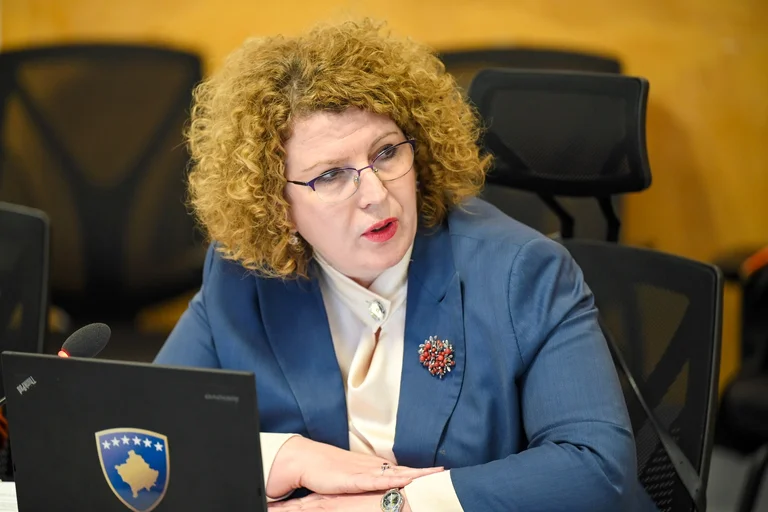
State scandal: Roseta Hajdari's failure, no litre of oil tested from last year in Kosovo
Periskopi(a year ago)
(a year ago)The state-owned derivative control system on the domestic market has completely failed. Acting Minister of Industry, Trade and Enterprises Roseta Hajdari has not continued authorising the only laboratory to perform quality tests, leaving citizens vulnerable and the uncontrolled derivative market since December [...]
In the absence of such authorisation, no laboratory analysis for oil quality in Kosovo has been conducted since December last year. The ministry, which has a legal obligation to protect public interest and control the quality of derivatives in the market, has allowed the functioning of a free and uncontrolled market -- a move that seriously jeopardises the health and safety of citizens.
Several months ago, citizens complained about the quality of derivatives at a gas station in Pristina. Instead of the intervention of the Market Inspectorate, which has legal office control of the market, only the punitives and citizens, who took samples in plastic bottles, an action that guarantees neither a professional nor legal standard.
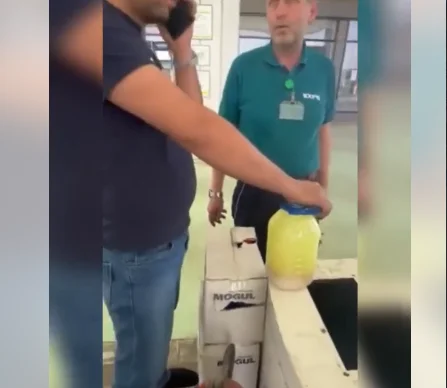
In the absence of authorisation for the KosovaLab laboratory, there has been no longer a certified body to accept and analyse samples. As a result, since last year the quality of the derivatives citizens use have remained out of every state control.
Periscop sources have shown that the ministry through market inspectorate has taken some samples, but this is contrary to the law, as it is not determined with the Law of Oil or the Administration that is in force.
Arben Zeneli from Kosovo Lab labs had declared for Periscope that the Market Inspectorate has no competence for the taking of samples, based on administrative instruction in power.
“According to Article 3 points of administrative instruction, the Market Inspectorate has no professional competence for taking samples and sending them for analysis to Kosovo Customs, because they are not accredited. This is an act contrary to the oil trade law, the Law for Inspectorate and the administrative directive itself in force”.
According to Zenel, to allow the Inspectorate to take samples, existing laws must be changed. On the contrary, any attempt to engage in inspection is illegal. The state's “should be just an overseer. Taking samples and testing them should be left to third parties accredited”, he added.
Periscop has sent questions to the Ministry of Industry and Trade, but until the moment of publication of this writing, he has not received answers.
Meanwhile, at a media conference on June 18th, Minister Hajdari stated that “checks have increased 100 percent”, not to mention that the market Inspectorate currently has no legal basis for obtaining samples.
Inspectorate attempts to take samples have in some cases failed because of disrespect of legal procedures and a lack of accreditment.
Citizens continue to complain about the quality of fuel, while due to the failure of new labs, cases are not being processed for testing.
The Ministry's exclusiveness -- that because of the cost of tests -- will only take place in Kosovo Customs -- falls down when it remembers that Customs does not take responsibility for testing, but only offers co-operation according to the capacities it has that are not enough to guarantee quality. So at least it says the deal between MINT and Dogan, which has published Periscope.
The deal that has published Periscopi between Customs and MINT reportedly for testing the cost derivatives is zero, while for all food products that enter Kosovo are paid for toll tests of the men around 90 euros per charge. /Periscope/