6 hours ago
Poland imposes border controls with Germany, Lithuania
Periskopi(a year ago)
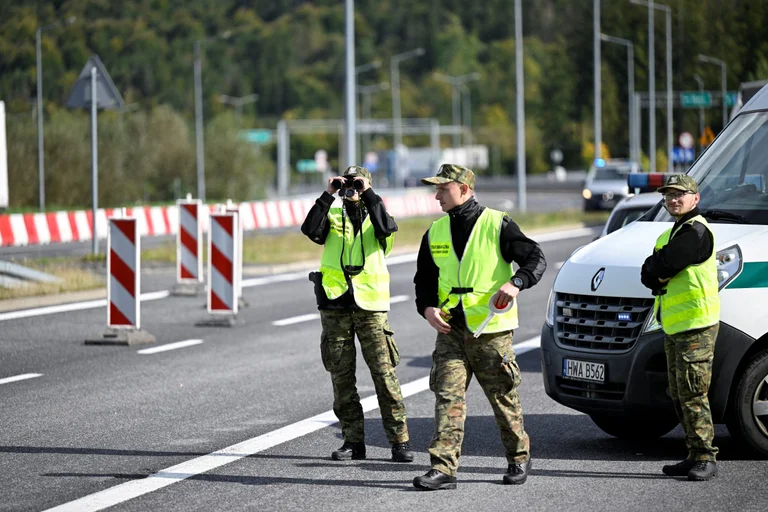
(a year ago)Poland resumed raids on borders with Germany and Lithuania on Monday, following the example of similar measures taken by Germany earlier, aimed at preventing asylum seekers. Polish Prime Minister Donald Tusk, whose government survived a vote of confidence in parliament late last week, warned these restrictions since last week. Pressure [...]
Polish Prime Minister Donald Tusk, whose government survived a vote of confidence in parliament late last week, warned these restrictions since last week.
Pressure increased after far-right groups in Poland accused Germany of transporting migrants to Polish territory after their arrival in Western Europe.
The raids that started Sunday night will initially last 30 days, but authorities can extend even further if necessary, Poland's Interior Ministry said, Periscope.
“Illegal immigration is simply a crime”, Polish Interior Minister Tomasz Siemoniak said during a media conference.
Poland's border with Lithuania, which spans 104 km, will have controls at 13 crossing points. While the border with Germany, measuring 467 km, will have controls at 52 points.
Lithuanian authorities said Monday they are ready to face possible traffic jams on the Polish border.
If increased traffic is created, we will start managing the movement... to minimize disruptions and to do as fast as we can, Antanas Montvydas, deputy head of Lithuania's State Border Service, told Lithuanian Radio.
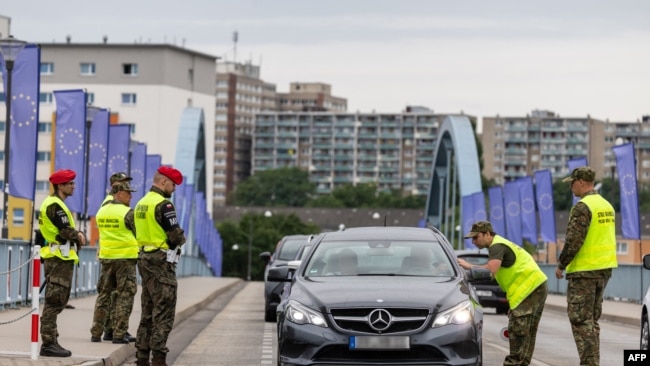
After taking office in May, German Chancellor Friedrich Merz, who made the strictest policy of his election campaign's impeding migration, ordered increased police presence at the border and said some asylum seekers would be prevented from entering Germany.
Last week, Merz said Poland and Germany are co-operating closely to ensure that Germany's border controls cause fewer problems and delays.
The protection of borders against irregular migration is an interest Germany has, Poland has, and our European neighbours share with us”, Stefan Cornelius, Merz's spokesman, said on Monday.
“We do not want permanent border controls”, he added.
The European Union has a visa-free travel zone called Schengen, which enables citizens of most member states to travel freely across borders.
Switzerland is also part of the Schengen area, even though it is not an EU member.
According to the EU, member states are allowed to temporarily restore border controls, in case of any serious threat, such as internal security.
With rules, border controls must be implemented as the last tool in extraordinary situations and should be limited in time. /REL/