6 hours ago
Can Kosovo face two sets of elections within a year?
Periskopi(a year ago)
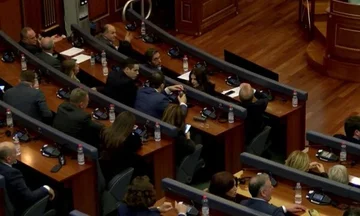
(a year ago)Over five months after holding the February 9th 2025 parliamentary elections, Kosovo continues to remain without a functional Assembly. So far 48 failed attempts to elect the head of the Assembly have been recorded. Meanwhile, some opposition voices have cited the possibility that the country will go back to parliamentary elections, though there is still no [...]
So far 48 failed attempts to elect the head of the Assembly have been recorded. Meanwhile, some opposition voices have cited the possibility of the country going back to parliamentary elections, though there is still no concrete step towards the distribution of the Assembly.
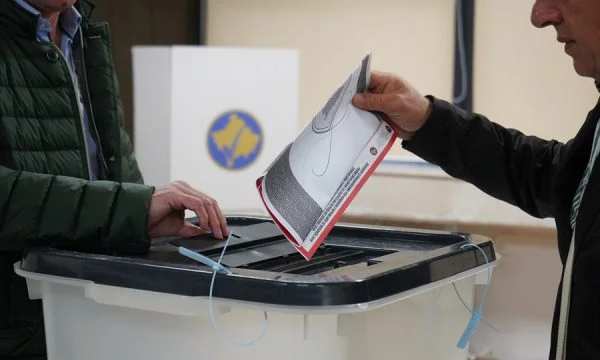
However, one thing is clear: if such a scenario occurs, Kosovo would face two parties of parliamentary elections within the same calendar year, just when local elections are scheduled in October.
But how real is the possibility of this happening? And the next question: does Kosovo have the capacity, in financial, technical and institutional terms, to organise two sets of general elections within a year?
Double Cost for Economy, Stability
According to Lulzim Rafuna, chairman of the Kosovo Economic Ode (OEK), economic risk from two sides of elections within a year is serious and multidimensional.
“About 8.7m euros have been spent on the February 9th elections. But, in addition to the direct cost from the budget, holding two parties of elections within a year creates indirect costs for all parties involved”, he said.
On the other hand, OEK leader stresses that this would imply suspension of work in administration, lack of services for citizens and businesses, as well as a political focus oriented towards campaign, not reforms.
“A lack of work in administration, lack of quality and time-time services for citizens and businesses, a political focus oriented on campaigns, not reform, businesses feel a lack of support from the state, thus affecting the slowdown of consumption, reducing production, export, etc.”.
Political and institutional uncertainty sends negative signals to investors. The packaged framework cannot pass laws, international agreements or fiscal incentives, while infrastructure projects and private sector aid are blocked”, Rafuna adds to the clancosova broadcasts Periscope
institutionally, the Central Election Commission (KQZ) remains focused on the current task, organising October local elections.
“Currently, the Central Election Commission is fully focused on organising the local election process. We do not comment on political developments”, said CEC spokesman Valmir Elezi.
He adds that the CEC operates only on the basis of official decisions.
“The CEC is a permanent constitutional body. We begin organising an election process only after it is announced and set the date for keeping it. If that is required, we will take all necessary steps”, he said.
Proselyses and Confusion for Citizens
Meanwhile, Eugen Cakoli from the Kosovo Democratic Institute (KDI) estimates that, beyond logistical and financial challenges, holding two sides of parliamentary elections in one year poses a procedural risk and includes an inevitable burden for institutions and citizens.
Kosovo's “for 2025 has had two sets of elections planned -- the parliamentarys, which were held in February and local ones in October. Another election process in this period would be a logistics and procedural nightmare”, he told Cankosova.tv.
According to him, printing various ballots, various ways of voting, and overlapping campaigns can cause confusion in voters.
“would also be a vague situation for citizens: are the campaigns for local elections or for parliamentary ones? What are the topics under discussion? All of this creates an unhealthy environment for a genuine democratic process”, Cakolli said.
The Constitutional Court, on 26 June, ruled that MPs are obliged not later than 30 days from publishing this act to complete the constitutional session of the Parliament, electing mayors and vice-presidents.
President Vjosa Osmani, at a media conference on Thursday (July 17th), said that if the parties do not resolve the stalemate by the weekend, the Constitutional Court will address it.
Meanwhile, in light of the attempt at resolving the institutional blockade on Friday (July 18th), the first state held a meeting with Social Democrat Initiative head Fatmir Limaj.
From the February 9th elections, Vetevendosje came first, winning 48 seats, PDK second with 24 seats, LDK third with 20, AAK-Nisma 8 and Serbian List 9. /Kankosova