7 hours ago
Interest in Kosovo public universities decline year-on-year
Periskopi(a year ago)
(a year ago)The number of candidates for students in Kosovo's High Education Institutions, especially in public ones, has marked decline in recent years. Educators are praising the decline of nightiness, the departure of young people from Kosovo, and the large number of public and private institutions in the country have affected the decline [...]
Interesting in public universities in Kosovo has declined over the years, due to several factors. Education field acquaintance Whitea Qolaku told Kosovo's Radio statistics, the number of students at public and private universities is almost the same. In addition, she said that young people's interest in enrolling in private institutions is the issue of easier criteria.
“The statistics we receive from the Kosovo Statistics Agency show an almost equal participation of student presence at public university with private ones. We have about 43 to 47 percent of student presence in private universities compared with public ones. What is noteworthy is that we have a general decline in students in all universities in recent years. The reason students choose private universities is that there are public universities with admissions, and students find it difficult to accept in certain areas because of the student's criteria for admission exams. While, in private universities, the criteria for accession do not apply in most cases, the average grade or result of the State Matura”, Qolaku said
The director of the organisation, which deals with the Kosovo education assessment “Tech for Kosova”, Egzon Gashi, told Radio Kosovo that the decline of nighthood and the large number of senior public and private educational institutions are now influencing that there are fewer students at public university.
We have fewer registered children in elementary schools in recent years, and this is certainly contributing to fewer students in universities. And the second factor that is very important is that we have many public faculties and private colleges in Kosovo. I think universities and schools shouldn't be profitable because they're registering students who aren't able to enroll in public university. I think that even in terms of public and private universities, we have exceeded the number”, Gashi said.
Meanwhile, Kosovo Agency for Accreditation Director Naim Gashi told Radio Kosovo that this agency has increased standards and that many private higher education institutions in the country fail to meet the criteria.
“As an agency, we have tremendously raised standards for the accrediting process. Many private higher education institutions have not been able to meet those standards. The European Commission in a report two years ago says the number of institutions of higher education and student quotas has been reduced by the Agency for Accreditation based on quality criteria”, Gashi said.
Even university professor Blerim Rexaj has estimated that for many young people, programmes in the Private Higher Education Institutions are the first choice so public institutions should review their programmes and policies and establish relevant re-entry mechanisms for the missing market of seniors.
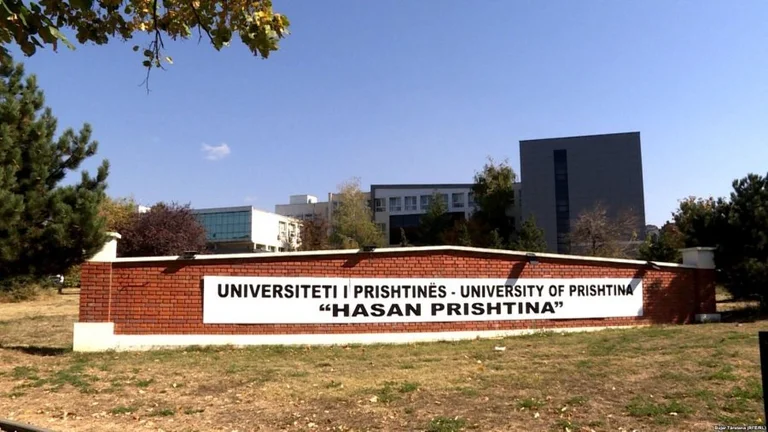
According to Rexhaj at Pristina University, some programmes had high competition, in others less than 30 %s of the quota was completed. He says this is a clear signal that planning should be revised and that the UPP and MASTI should balance academic staff requirements with market reality and that students do not waste time in a program that is not appropriate and the job market gets the most prepared graduates in the right field. He also finds early career orientation and public university lobby important.
In 2025 The Matura State Test has been subjected to 18,130 seniors.. /Periscopi/