6 hours ago
Kosovo in political blockades, new institutions or extraordinary elections?

Periskopi(a year ago)
(a year ago)The political crisis in Kosovo has locked the country between two options, forming new institutions or moving to extraordinary elections. In this situation, political parties and analysts have opposing positions on the way out of the blockade. In the LVV-Guxo-Alternative coalition, they insist on restoring the Assembly and forming the new government, but say [...]
The political crisis in Kosovo has locked the country between two options, forming new institutions or moving to extraordinary elections. In this situation, political parties and analysts have opposing positions on the way out of the blockade.
In the LVV-Guxo-Alternative coalition, they insist on restoring the Assembly and forming the new government, but say if the current situation continues, the elections can also be seen as a solution.
The other two parties, The PDK and LDK say the new extraordinary elections do not coincide with the country, but are ready for one more.
Meanwhile, political analysts consider the new elections inevitable, on the basis of the crisis and excessive polarisation among political parties.
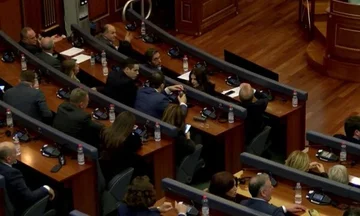
Kosovo, even five months after the February 9th parliamentary elections, has not formed new institutions. Political parties represented in the Kosovo Assembly are not agreeing to the election of legislative troops that would then pave the way for forming the government.
The Assembly on Saturday failed for the 42nd time in the Assembly Constitution. Meanwhile, the Constitutional Court on June 26th has ruled that it imposes MPs who until July 26th to constitutionalise the ninth legislature, but has not mentioned whether the consequences are the new elections.
The Speaker of the Alternative, deputy from the Vetevendosje Movement ranks, Mimoza Kusari-Lila, tells Kosovo that if the legislature's troops are elected as preconditions for exiting the crisis, then the Kurti III government, according to her, will be formed as numbers for simple majority exist.
However, it does not show which other MPs will vote for, in contrast with Albulen Hadziu's election to the chief parliament, which in six votes received the support of only 57 deputies.
“under current circumstances I believe it is the formation of the Kurti III government, I don't believe it's the distribution of the Parliament. However, if the situation continues... As for the executive, the numbers for the Kurti III government are and it is possible to form a government with a new mandate. It remains to be seen, but this House Constitution procedure needs to be exceeded, which was unjustly extended to citizens and other processes that were being blocked. We can't postpone voting despite having to vote on opposition representatives to the current”, Kusari-Lila declares.
Meanwhile, Democratic Party of Kosovo deputy Ferat Shala tells Kosovo that the country does not block new elections, however, he adds that if there is no unblocking of the political crisis, The PDK is ready for elections.
Kosovo, the economy and the political and strategic situation of the Republic of Kosovo do not block the elections. But the Democratic Party of Kosovo is ready in any situation, as never before, mobilised and prepared”, he says.
Categoric against the extraordinary new elections after those on 9 February is LDK deputy chairman Lutfi Haziri.
He declares for Kosovo that there is no vote for legislative distribution, as the country, as Haziri says, has no comfort for new elections every three months.
I don't vote for distribution. Kosovo has no ease going to elections every time the demands and egos of political leaders -- in this case, the leader of the first party -- are for hidden political agendas. I don't think there are reasonable deputies and legitimate mandates, except for some who entered with manipulated and stolen votes. Others refuse to enter such arrangements. Kosovo is not rich enough to spend seven million euros in elections every three months”, potential Haziri.
However, political analyst Dritaro Arifi says of Kosova Preris, that the new elections are inevitable, as a result of the political parties' equalisation, especially after the Constitutional Act.
42 successive failures: Parliament on Monday Continues Next Constitution Efforts
The new elections are inevitable due to the blocking of parties, and especially the first party. It must be noted that the greatest responsibility is only for the first party, both political and constitutional and legal. They must provide solutions because they are not capable of making solutions. When the attempted prime minister is unable to make a head of the Parliament, imagine other complex things. I don't think the elections will change much, but they will give a easier breath”, he says.
The coalition of Vetevendosje, Guxo Movement and Alternatives -- as the first in the election -- have the right to the owner's proposal, but their proposed, Albulen Haxhiu, in six cases in the open vote -- has not received the 61 votes needed to take this post. As a result, the head of the constitutional hearing, deputy of this party, Avni Dehari, has made the decision that the election of the chief parliament will be made in secret voting.
That is not being accepted by parties that so far were in opposition, saying that the constitutional session agenda -- where open voting is presented -- has voted the old Parliament leadership and has no right to change Dehari.
The same are not voting for the formation of the verifiator commission, as they say it is unconstitutional. / KP/ Periscope.