9 hours ago
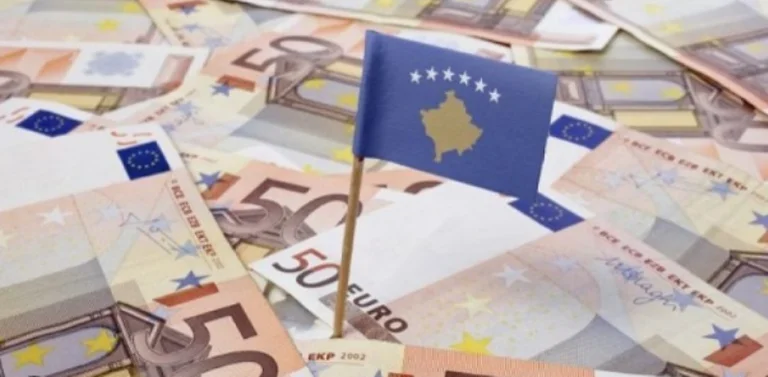
Kosovo outside the Brit States List: What does it mean for the economy?
Periskopi(a year ago)
(a year ago)In less than ten days, two of the largest international financial institutions -- the World Bank and the International Monetary Fund -- have removed Kosovo from the list of states in the situation of Christ and Conflict. After more than 15 years on this list, Kosovo now returns to the map of countries considered institutionally [...]
After more than 15 years on this list, Kosovo now returns to the map of countries considered institutionally more stable and financially more consolidated.
For both the Central Bank of Kosovo and the incumbent Government, this is a “important recognition of the country's institutional and economic progress”.
Economy experts say this development can strengthen Kosovo's image as a stable and reliable country for international investors and partners.
What economically means removing Kosovo from this list?
Majid Bektashi, professor of economics at the University of Pristina, says World Bank and IMF decisions to remove Kosovo from the list of states in the situation of BiH and Conflict are stimulating for future developments, to which Kosovo must adjust.
According to him, Kosovo, from now on, will have numerous benefits, not only from the World Bank and the IMF as financial institutions, but also from other financial markets operating in the more developed states.
“essentially, increasing access to credit, reducing risk rate, meaning reducing the interest rate, with which Kosovo can borrow loans or loans from these institutions or other financial markets”, Bektas explains Radio Free Europe.
For the other economics professor, Berim Ramosaj, removing Kosovo from the US List in the situation of Christ and Conflict increases the trust of local and foreign investors, expands opportunities for more favourable loans, both national and international, and gives banks the chance to perform better.
Other Benefits
Bektash says support from the World Bank and the IMF provides macroeconomic stability for Kosovo, benefiting not only the public sector, but also the private one, which will have easier access and more favourable conditions in loans from developed countries.
However, he stresses that most financial activity in Kosovo is linked to the European Union, which has imposed austerity measures on the country for two years due to tensions in the north.
The austerity measures, set by the European Commission, as well as the non-formation of institutions (of Kosovo) that are lasting for months, are very bad, very desperate signals to even the most important financial institutions, but also to the EU”, Bektash says.
He adds that World Bank and IMF decisions should now serve as a positive signal to the EU itself to lift austerity measures and adopt a more moderate approach to Kosovo.
Are World Bank and IMF decisions a reflection of real improvements?
The World Bank and IMF decisions for Kosovo are a “stimulating budget”, Bektas says.
He notes that there is still political interference in the justice system in Kosovo, which questions ensuring the right decisions.
He says the trade deficit remains high, while the government's economic policies in office have not brought about the expected improvements.
I believe that we, in reality, have no improvement in the macroeconomic and financial situation. But it is a more political decision (of the World Bank and the IMF), where the Central Bank of Kosovo has contributed more than the current government in office, as the talks or contacts of these institutions, ultimately, have to do with the CEC at”, Bektash says.
Ramosaj also estimates that credit for this decision lies with the Kosovo Central Bank.
He says Kosovo has made progress in economic and institutional sustainability, but that, in essence, the economic and political reality is not yet fully sustainable.
There are improvements in budget revenues governance as well, especially in macro-financial policies. However, there are also problems of other nature, whether in failing to establish long-term institutions or in failing to carry out the function of the legislature, which is also the founder of several independent agencies, or in non-resisting a government in the full sense, except for the incumbent”, Ramosaj says of Radio Free Europe.
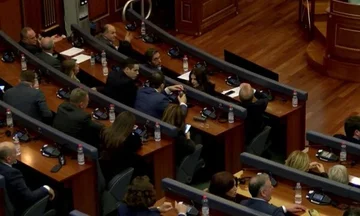
It refers to the fact that Kosovo has not yet managed to forge the new Assembly, even though elections were held on February 9th because of political disagreements, and thus operates with government in office.
Despite that, incumbent Prime Minister Albin Kurti has described Kosovo's exit outside the Brit States List as the result of his government's continued and dedicated “ ” over the past four years.
“and is just one step towards the achievements to come”, it wrote on X.
Is Kosovo in danger of returning to the list and what should authorities do?
Bektas does not believe that Kosovo can return to the situation it was in terms of treatment from the World Bank and the IMF.
According to him, decision-making in these two financial institutions “is very complicated to return after”.
I think that with the constitution, as well as the Government, we will have a significant flow of tools, both from these two institutions, but also from the EU. The economy will be liberalised and we will have more foreign investment”, he points out.
Ramosaj shares the same view, stressing that World Bank and IMF decisions for Kosovo are the result of a careful and long process.
The “means a powerful database that gives them a meaning for a decision. Even to make another evental decision, in the worst case... he cannot be taken immediately. It should happen decadent in the sense of institutions, poverty, politics and then it can happen”, Ramosaj says.
Both experts recommend that Kosovo continue to strengthen institutions and implement sustainable economic policies, carefully following suggestions from the World Bank, the IMF and international partners to ensure sustainable development and increased investor confidence. / REL/ Periscopi/