6 hours ago
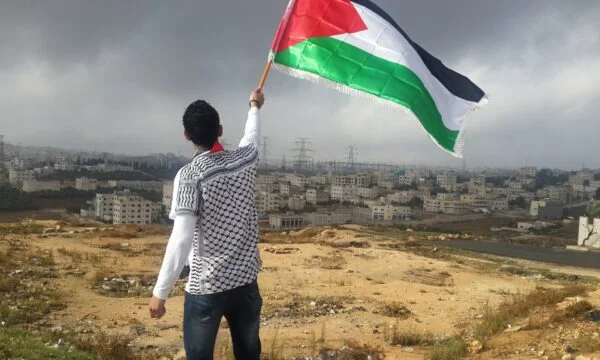
What does knowing the Palestinian state mean?
Periskopi(10 months ago)
(10 months ago)The United Kingdom is making a big political difference to recognise Palestine as a state. Sir Keir Starmer has been under pressure since more than 250 deputies over a third of the House of Communities signed an interparty letter asking him to take this step. The prime minister had [...]
The United Kingdom is making a big political difference to recognise Palestine as a state.
Sir Keir Starmer has been under pressure since more than 250 deputies over a third of the House of Communities signed an interparty letter asking him to take this step.
The prime minister had initially resisted calls, saying recognition should be part of a broader peace plan, writes.
But now he has changed his attitude, though under certain conditions.
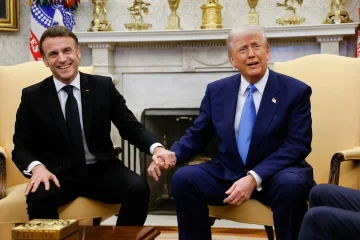
This also comes after France's recent decision to recognise Palestine as state, becoming the first country to do so in G7, a group representing seven of the world's largest advanced economies.
Here is what you need to know about the importance of recognising a Palestinian state, the timing of the decision, and whether other countries are likely to follow France's example.
What does knowing the Palestinian state mean?
According to the 1933 Montevideo Convention, there are several criteria before Palestine is recognised as a sovereign state under international law.
The process requires the state to have:
• a permanent population
• a defined territory
• A government and effective international relations
• Official diplomatic processes including embassies, ambassadors and treaties
Of the 193 United Nations member states, 147 have already known Palestine as a state since March 2025.
This includes Russia, China and India, as well as more than a dozen others in Europe, including Spain, Ireland and Norway, and finally France.
How does the UN accept the new member states?
The countries usually address the UN secretary-general, who sends him to the Security Council for initial assessment and a possible vote.
The approval requires at least nine votes, and no veto by the United Kingdom, the US, France, Russia or China.
If the Council approves the application, it passes to the General Assembly for approval, where a two-thirds majority is needed.
A state cannot join the UN without the support of the Security Council and the General Assembly.
What happened to the Palestinian application in 2011?
The Security Council reviewed the application for several weeks to see if it met the conditions for membership.
However, it failed to reach a unanimous stance, so a formal vote never took place.
Even if it had adopted this step, the US said they were planning to veto the application.
Why have the United Kingdom and France now acted?
Sir Keir says the time to recognise Palestine is now, as it will have the highest impact, since the hope of a two-state solution ♫ an Israeli “safely” along with a Palestinian state “sustainable” He's in danger.
He says it is part of an eight-part <x0 plan, currently discussed with France and Germany, but denies that it represents a turn behind pressure from lab MPs, saying instead it has always been part of the plan to recognise Palestine.
After addressing a UN summit on a two-state solution, United Kingdom Foreign Secretary David Lammy described what is happening in Gaza as the terrifying “ ” and called for a ceasefire.
The time has come for the hostages to be released and the time has come to alleviate the suffering of the Palestinian people to provide them with the assistance, equipment and medical supplies they need”, he added.
Emmanuel Macro has been keen towards recognising a Palestinian state for months, as part of an effort to keep the idea of a two-state solution alive, despite pressure from other countries not to do so.
What is a two-state solution?
A two-state solution would see an independent Palestinian state founded alongside the existing state of Israel, giving both people their territory.
The Palestinians seek an independent state in the occupied West Coast, annexed by East Jerusalem and Gaza, territories occupied by Israel since the Six - Day War of 1967.
Israeli Prime Minister Benjamin Netanyahu and most of Israel's political class have long been against Palestinian citizenship and argue that this would reward militants after the October 7th Hamas attacks launched in 2023.
One of the biggest obstacles to a two-state solution would be deciding what the borders of a potential Palestinian state would be.
Many believe that they must be the same as before 1967, but since then a growing number of Israelite settlements have been formed within the West Coast, with some 600,000 Israelites now living there and in conquered East Jerusalem.
How have Israel and Palestine reacted?
Not surprisingly, Israel has condemned the decision.
The country's foreign ministry said in an X post: “change in the British Government's stance at this time, following French action and domestic political pressures, constitutes a reward for Hamas and undermines efforts to reach a ceasefire in Gaza and a framework for the release of hostages. ”
Israeli Prime Minister Benjamin Netanyahu has strongly condemned France, saying recognition of a Palestinian state would now be a <x0-point starting point to destroy Israel not to live peacefully next to him”
Meanwhile, Palestinian President Mahmoud Abbas in Jerusalem expressed “thanks and assessment” to the French leader.
What about other places?
In response to France's decision, the German government said Berlin still supports a two-state solution, but will not recognise a Palestinian state at the moment, stressing instead the need for a ceasefire in Gaza, the release of hostages and urgent humanitarian aid.
Canada also pressured Israel to seek peace, with Prime Minister Mark Carney repeating support for a two-state solution, but has so far not recognised Palestine as a state.
Australia's prime minister, Anthony Albanese, described the situation in Gaza as a <x0-cypher humanitarian disaster” and said his country is “dedicated to a future where both the Israeli and Palestinian people can live in peace and security within the internationally recognised and secure borders”.
Italy's foreign minister said recognition of a Palestinian state should also recognise Israel as a state.
“A Palestinian state that does not recognise Israel means that the problem will not be solved”, Antonio Tayan said at a meeting of his conservative party Forza Italy in Rome.
Spain, which already recognises Palestinian citizenship, welcomed Mr. Macron's announcement. Prime Minister Pedro Sanchez wrote in an X statement: “S together, we must defend what Netanyah is trying to destroy. The two-state solution is the only solution”.
The Saudi Arabia Foreign Ministry also said that “lauds this historic decision” and called on other countries to undertake similar positive “steps”.