6 hours ago
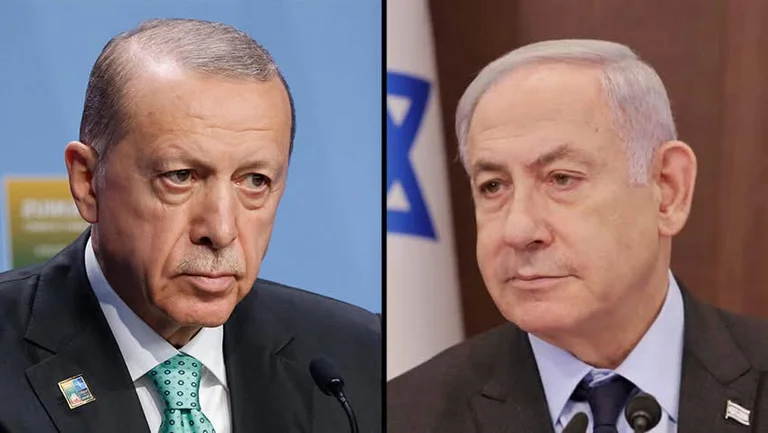
Israel, Turkey risk heading towards crash
Periskopi(a year ago)
(a year ago)The Financial Times reports that the 12-day battle between Israel and Iran has rewritten the balances of power in the Middle East, bringing a brave Israel seeking to redefine the region, a weakened Iranian regime struggling to survive and a reluctant US to be plunged into another prolonged conflict. But consequences [...]
Turkish Foreign Minister Hakan Fidan, at a summit of the Organisation of Islamic Co-operation, reflected the new spirit in Ankara: “There is no Palestinian, Lebanese, Syrian, Jeenas or Iranian problem, but there is clearly an Israeli problem. ”
This approach shows a marked change in Turkish thinking for Israel's role in the region. By a former ally, then rival, Israel is now perceived openly as opponent.
According to the Financial Times, Ankara is increasingly concerned by Israel's new self-confidence and hegemonic role -- a status that Turkish President himself Recep Tayip Erdogan has coveted for years.
A close ally of him, Devlet Bahceli, even recently accused Israel of trying to surround Anadal” and destabilise Turkey. Once the theories, these positions are now part of the official Turkish discours and the media.
But a similar obsession exists in Israel, where parts of the security device see Turkey's regional influence as a long-term <x0 most dangerous threat than Iran”. Erdogan's open support for Hamas has prompted harsh reactions from Prime Minister Benjamin Netanyahu's government, leading to harsh exchanges and Israeli efforts to deepen ties with Syrian Kurds, long perceived as enemies from Ankara.
Both ideology and geopoliticalism are based on this conflict.
Erdogan's government has combined Islamist Sunni populism with Turkish nationalism, embedded on platform “Turkey's” century aims to restore its regional power. Meanwhile, a rightist coalition in Israel has an equally fixed vision of military domination in Lebanon, Gaza and Syria.
These competitive visions leave little room for compromise.
Syria is expected to be the main area of confrontation.
Following the collapse of the Assad regime at the end of 2024, the two countries try to form new order. Turkey has expanded its influence by supporting its allies and controlling large parts of northern Syria, with ambition for more economic and military presence. Israel, on the other hand, has stepped up air strikes and voiced support for the autonomy of Kurds and drunks, seeing the new Syrian government with distrust due to jihadist ties.
Tensions peaked in April, when Israel bombed a country where Turkey was planning to build a base. According to the Financial Times, there is already a military contact line between the two sides, but diplomatic relations are frozen. Ankara, meanwhile, has learned lessons from fighting Iran, beginning to strengthen defence in the face of Israel's air and intelligent supremacy.
US President Donald Trump, according to the Financial Times, should use his good relations with Netanyahu and Erdogan to manage this crash. A solution to the war in Gaza may ease a bit of Turkish discontent, but the long rivalry between the two countries seems not to be extinguished.
For decades, the US has treated Turkey and Israel as necessary allies, though often difficult, and as pillars of regional stability. Now these two pillars are crashing between them.
With Iran weakened, Washington and its allies must understand that the next Middle East test could come precisely from rivalry between its two closest partners. /Periscope/