6 hours ago
IKD: Four independent institutions are dysfunctional, blocked Assembly is jeopardising state
Periskopi(a year ago)
(a year ago)The senior researcher at the Kosovo Institute for Justice (IKD), Gezim Shala, has raised the alarm for the serious consequences that Kosovo's Assembly failure is causing. Shala said institutional blockades have left 17 incomplete agencies and independent institutions, while four are currently dysfunctional due to lack of [...]
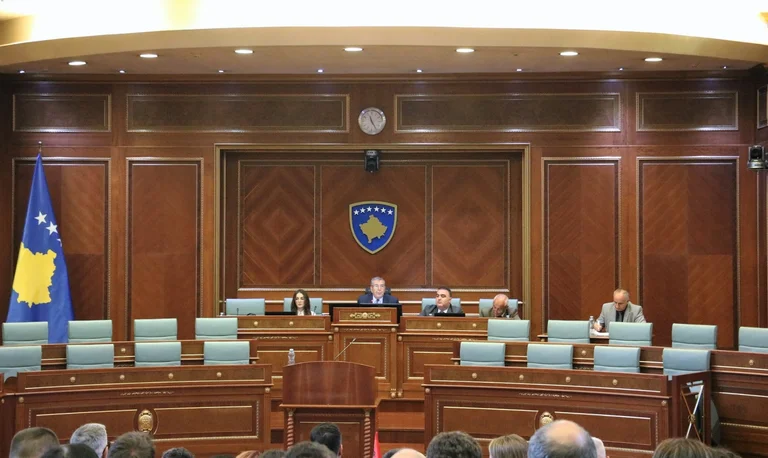
The senior researcher at the Kosovo Institute for Justice (IKD), Gezim Shala, has raised the alarm for the serious consequences that Kosovo's Assembly failure is causing.
Shala said institutional blockade has left 17 incomplete agencies and independent institutions, while four are currently dysfunctional due to lack of quorum.
According to him, the lack of a functional Assembly is directly affecting the lives of citizens, implementing laws and delaying important reforms that await the support of international partners.
“Currently, the non-function of the Parliament has no consequences only within the Parliament. There are widespread consequences in many areas. In addition to other aspects, which we have just mentioned, that there is currently no regular government, there is no government, which is supervised by the Parliament, there is no government that reports to the Parliament, there is no nation that approves laws. There are also a number of other specific consequences even in different independent institutions, in various college organs, which are at risk of malfunction, some even are not working because of lack of quorum, due to the ability of the Assembly to elect new members”, he said.
Shala cited the case of the Independent Commission for Media, which is currently not functional due to the Parliament's failure to elect new members, as well as board complaints within this commission. According to him, this situation is directly violating the implementation of citizens' laws and rights.
Other institutions that in many cases lack elected members are also “, in some other cases, fully dysfunctional due to the non-election from the Parliament. This situation directly affects the failure to implement laws, even in violation of citizens' rights, which receive services different from those institutions”, Shala said.
He estimated that citizens' representation is missing in the Assembly and that this situation is negatively affecting the adoption of important reforms and laws, including EU financial assistance and other international partners.
The “Ide is that citizens are not represented in the Kosovo Assembly, because MPs are not exercising their representative role, and because of the Kosovo Assembly's non-compliance. The second is that in some sectors independent institutions are not functioning or are operating in incomplete compounds, and this necessarily affects law enforcement anymore. There are also a host of other issues, a series of reforms that await the adoption of laws on the part of the Assembly, and that cannot be done. It should be highlighted as there are hundreds of millions of euros from international partners, from the EU and others, who expect approval from the Kosovo Parliament, and this situation directly affects citizens' lives”, he told EO. /Periscopi/