6 hours ago
Hoti: The Constitution resolves the problems that it has created itself. Proposal for the Chief Parliamentary Limited
Periskopi(a year ago)
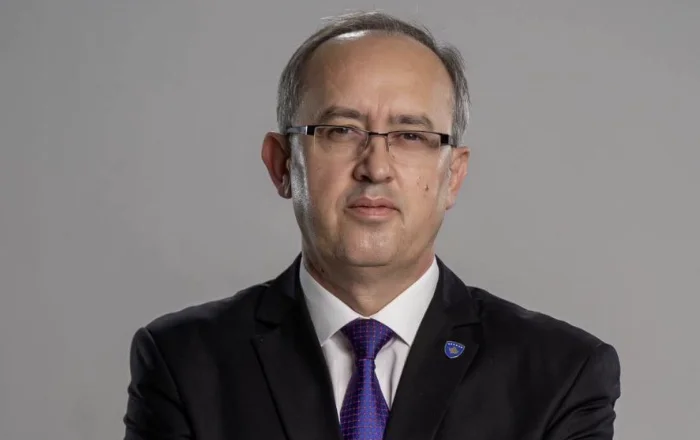
(a year ago)LDK deputy Avdullah Hoti has said that the Constitutional Court does not need and should not solve any political problem, but only the problems it created itself. The Constitutional Court does not need and should not solve any political problem. It must solve, first of all, the political problems it has [...]
The Constitutional Court does not need and should not solve any political problem. It must solve, first of all, the political problems it has created itself”, follows Periscope.
He has said that, under a 2014 conviction, the Constitution has set up the constitutional process by violating two fundamental principles of parliamentary democracies.
“With the act of 2014, which was cited even in the act of June 26, 2025, informing the first party to come out of the elections absolute right for the candidate's proposal for the Parliament's chairman, the Constitutional Court has set the constitution's binding process by violating the two fundamental principles of parliamentary democracies”.
According to him, violations of the majority domination principle and constitutional principle under which the MP's mandate is free and unconditional.
The first “has violated the principle of dominant the majority. As a basic rule, in parliamentary democracies, acting under the constitutional spirit, most always decide. The 2014 Act has violated this principle, granting the sole right to the first party to propose the Speaker of the Parliament, although that party has not secured the parliamentary majority. As a result, there may be 80 deputies enough to change the constitution as well as support a certain candidate, but it is impossible to vote without the minority's will to propose that candidate. Second, the 2014 court has violated the constitutional principle under which the MP's mandate is free and unconditional. Recognising the absolute right to the first party to propose the candidate for Parliament's chairman, the Constitutional Court has violated this constitutional principle. The MP is not free to exercise the mandate because he can only vote on the proposal coming from the first party”.
Hoti has added that this political crisis must be resolved to get out of the current stalemate and not repeat itself.
He has said the solution is that the first party is granted the right to the proposal, but that right is limited over time. After a certain deadline is completed, the right passes on to anyone who can form a parliamentary majority.
This political crisis, created by the Constitutional Court, must be resolved to get out of the current political stalemate, as well as prevent similar situations in the future. The solution is clear: as in the case of the Government's election, the first to emerge from elections, or as it is known, the relative winner has the right to the candidate's proposal for the Speaker of the Assembly, and later the mandated form the Government automatically. But this automatic right should be limited in time. After a reasonable deadline, as set in the government's election case, the right passes to anyone who manages to form the parliamentary majority”.
Hoti says this solution is within the constitution, in line with the basic principles of functioning of parliamentary democracies and in line with the practices of many European countries.
Even if, as some days are being commented on by connoisseur of constitutional issues, the Constitutional Court decides to turn the constitutional session to the date when, in an unconstitutional and arbitrary way, the agenda on the part of the interim Speaker of the Parliament has yet to be applied -- the majority decides. The relative winner of the elections may exploit its right within a reasonable deadline, after which the right is passed to anyone who manages to form a majority in the Assembly. Only such a solution respects the majority principle and the unconditional and free mandate of MP”.